
Roadside Assistance for Commuters Who Can't Wait

A dead battery at 7:10 a.m. can turn a normal workday into a missed shift, a late school drop-off, or an expensive scramble for a ride. Roadside assistance for commuters is not just for long highway trips. It is practical support for the daily drive when a flat tire, lockout, or no-start problem stops the vehicle you rely on.
For Louisiana drivers, the right response is usually not complicated: get yourself out of traffic if possible, secure the vehicle, and call for the type of help the problem actually requires. Knowing what roadside service can do before you are stranded helps you make that call faster.
Why Commuters Need Roadside Assistance
Commuters put steady, repeat mileage on their vehicles. That means more chances for routine wear to become an urgent problem. Tires pick up nails. Batteries lose charge in heat. Keys get left inside during a rushed stop. A warning light that seemed minor on the drive home can become a vehicle that will not start the next morning.
The cost of a breakdown is often measured in more than a repair bill. You may lose work time, miss an appointment, have a child waiting for pickup, or be stranded in an unfamiliar parking lot after dark. For commuters, roadside help is about restoring movement or getting a clear next step without wasting hours trying to solve a roadside issue alone.
Not every problem has the same solution. A jump-start may get a vehicle moving, but a battery that repeatedly dies needs testing and replacement. A flat tire may be changed if you have a usable spare, while tire damage with no spare may require a tow or tire service. A locked vehicle needs automotive locksmith assistance, not a coat hanger and a damaged door seal.
What Roadside Assistance for Commuters Can Handle
A dependable roadside provider should help you identify the service category quickly. The goal is not to guess at a repair over the phone. The goal is to dispatch practical help for the situation in front of you.
Dead Batteries and No-Start Problems
A vehicle that will not start may have a weak battery, corroded terminals, a charging-system issue, or another mechanical problem. If the lights are dim, the engine clicks, or the vehicle has been sitting for several days, a jump-start may be appropriate. If it starts but stalls again soon after, do not assume the issue is solved.
Louisiana heat can be hard on batteries, and short daily trips may not always fully recharge one that is already weak. A roadside technician can help get you moving when possible, but recurring no-start issues should be checked before they leave you stranded again.
Flat Tires and Tire Changes
A tire can lose pressure slowly or fail all at once. If you feel a sudden pull, hear repeated thumping, or see a tire-pressure warning, slow down carefully. Avoid hard braking or sharp turns. Pull into a safe location away from moving traffic when you can.
Roadside tire service is especially useful when the lug nuts are seized, the spare is missing or low on air, or the roadside location is unsafe for a driver to work beside traffic. A spare tire is a temporary answer. It should still be inspected and replaced or repaired properly as soon as possible.
Vehicle Lockouts and Lost Access
A lockout can happen in seconds. You set bags down, shut the door, and see the keys through the window. Modern key fobs add another complication: a dead fob battery, damaged key, or electronic access issue can leave you unable to enter or start the vehicle.
Automotive locksmith service is the right option when access is the problem. Trying to force a door open can damage the glass, weather stripping, lock cylinder, or electronic components. A trained provider uses the appropriate methods to regain access while protecting the vehicle.
Fuel Delivery and Minor Roadside Problems
Running out of fuel is more common than many drivers admit, especially when traffic, detours, and a busy schedule interrupt a normal routine. Fuel delivery can get a commuter to the nearest station instead of leaving them walking on a shoulder or waiting for a friend.
Other minor issues may be resolved roadside, depending on the vehicle and the failure. The key is setting realistic expectations. Roadside service is designed to address common mobility problems where the vehicle stopped. It cannot replace a full repair shop when an engine, transmission, cooling system, or electrical system needs deeper diagnosis.
What to Do While You Wait for Help
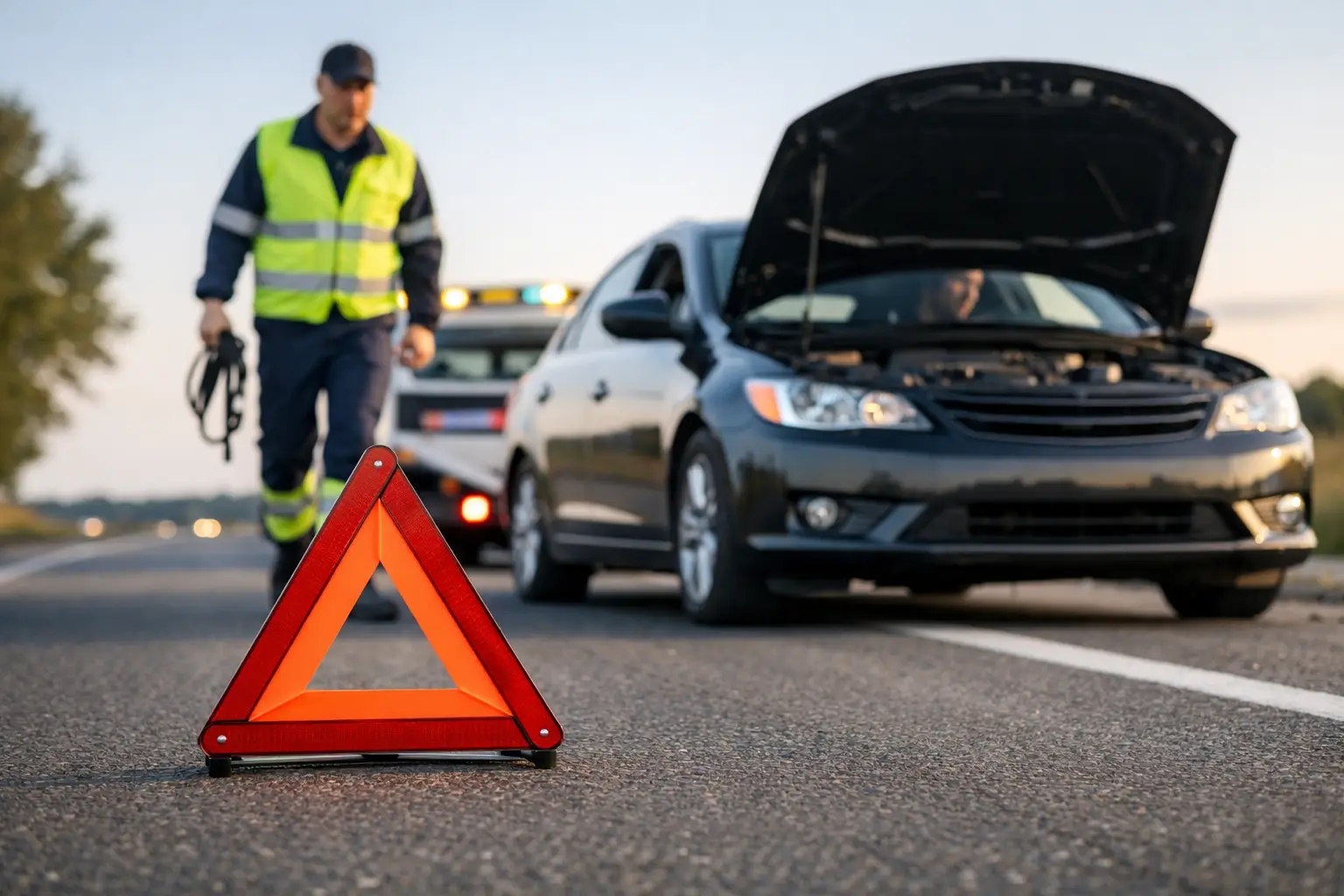
Your first priority is your safety, not the vehicle. If the car can move, pull as far from active traffic as possible. Turn on hazard lights. At night, use interior lights only as needed so you do not drain a weak battery further.
Stay inside the vehicle with the doors locked when the location feels unsafe, particularly near busy roadways or in isolated areas. If you must exit, use the side away from traffic and move well clear of the road when conditions allow. Do not stand between your vehicle and approaching traffic.
When you call for service, have these details ready:
- Your exact location, including nearby cross streets, mile markers, business names, or parking-lot entrances
- The vehicle year, make, model, color, and license plate when requested
- A simple description of the issue, such as “flat front tire,” “keys locked inside,” or “engine clicks but will not start”
- Whether you are in a safe location and whether the vehicle is blocking traffic
- A callback number and any useful access details, such as a gated lot or apartment complex
Clear information helps a dispatcher send the right kind of assistance. It also prevents delays caused by a vague location or a service request that does not match the actual problem.
When Roadside Help Is Enough and When It Is Not
Roadside assistance is often the fastest option for a battery jump, lockout, spare-tire installation, or fuel delivery. It may also help determine whether a vehicle can safely continue. But there are times when driving away would create a larger problem.
Do not continue driving if the engine is overheating, oil pressure is low, brake performance has changed, steering is difficult, smoke is visible, or the vehicle has severe tire damage. A vehicle that starts after a jump may still have a failing alternator. A tire that has been driven while flat may be unsafe even after air is added.
This is where good judgment matters. Being late is frustrating. Being stranded again miles farther down the road, or causing more damage by driving an unsafe vehicle, is worse. Ask the roadside technician what they observed and make the next decision based on the vehicle’s condition rather than the clock alone.
Build a Commute-Ready Vehicle Kit
A few basic items make a roadside delay easier to manage. Keep a phone charger, flashlight, reflective vest, bottled water, rain gear, and current insurance information in the vehicle. If you use a spare tire, check its pressure periodically. Many drivers maintain their four road tires but forget the spare until the day it is needed.
It also helps to save a local provider before an emergency. Hopper Roadside serves drivers in the Hammond area with roadside assistance and automotive locksmith support, so commuters have a direct option when a vehicle problem interrupts the day. Saving the correct number while calm is better than searching while stopped on the shoulder.
For commercial drivers and fleet operators, the same planning matters on a larger scale. A truck breakdown can affect a route, delivery commitment, driver hours, and customer schedule. Having one local response partner that can address roadside needs, vehicle-access issues, and commercial truck repair can reduce the time spent coordinating separate providers.
A commute will never be completely free of surprises. But a charged phone, a safe place to wait, and the right roadside call can turn a bad start into a manageable delay instead of an all-day problem.