
Roadside Assistance for Travelers on Louisiana Roads
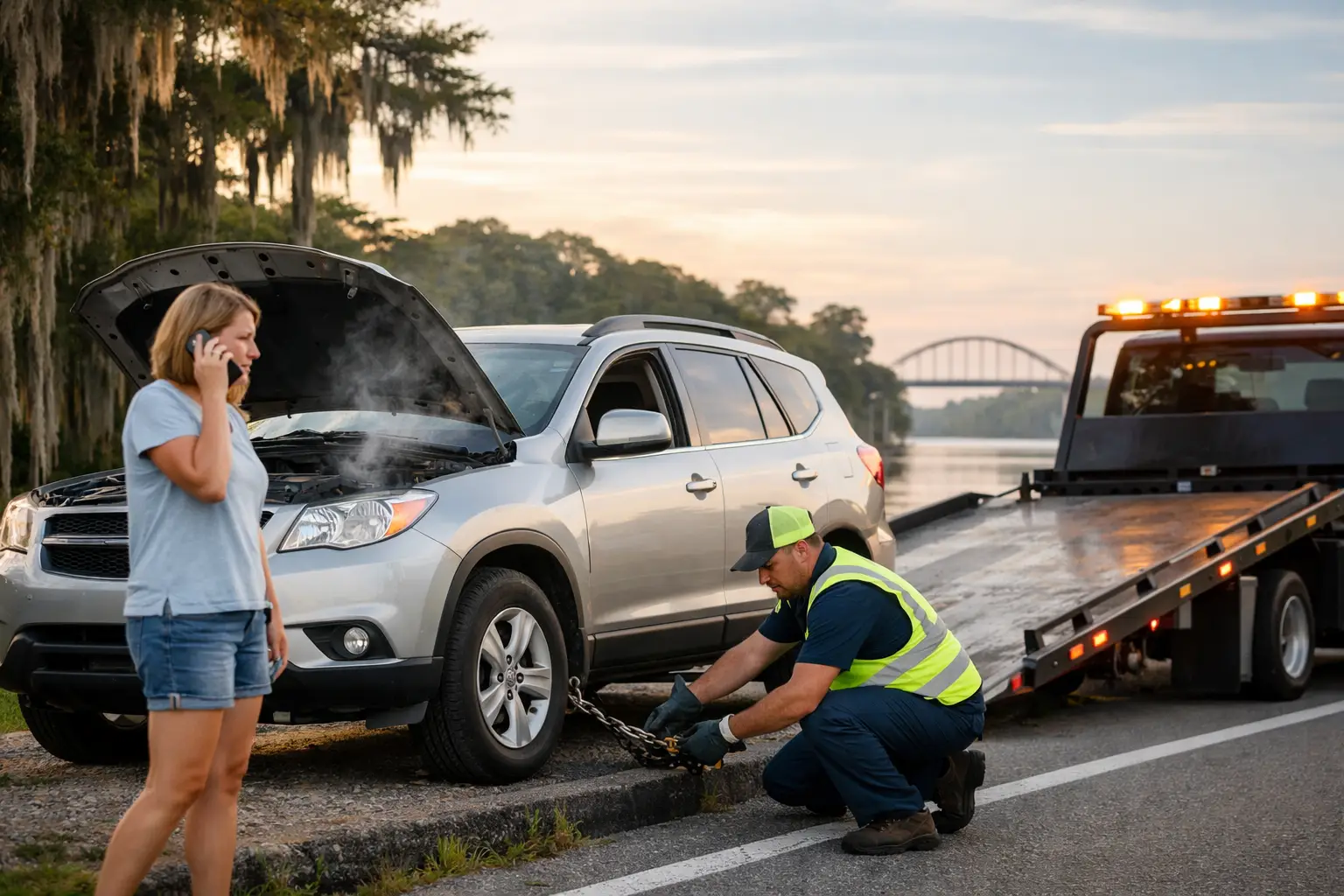
A tire goes flat outside an unfamiliar exit. Your keys are sitting on the driver’s seat. A warning light comes on while you are hauling a load through Louisiana. These are the moments when roadside assistance for travelers stops being an optional add-on and becomes the practical next call.
When you are away from home, the problem is rarely just the vehicle. You may not know the area, have a trusted shop nearby, or have time to sort through several providers. The right response is local help that can address the issue in front of you, whether that means roadside service, vehicle access, or commercial truck repair.
What Roadside Assistance for Travelers Should Handle
Travel disruptions come in different forms, and not every provider is equipped for every one. A basic roadside call may involve a dead battery, flat tire, fuel delivery, or a vehicle that will not start. Those problems are stressful, but they can often be resolved where the vehicle sits.
A lockout creates a different kind of urgency. You may be parked at a fuel station, hotel, job site, or roadside stop with no way to access your vehicle. Automotive locksmith support matters because it addresses the access problem directly instead of treating it as a separate issue you have to solve after arranging roadside help.
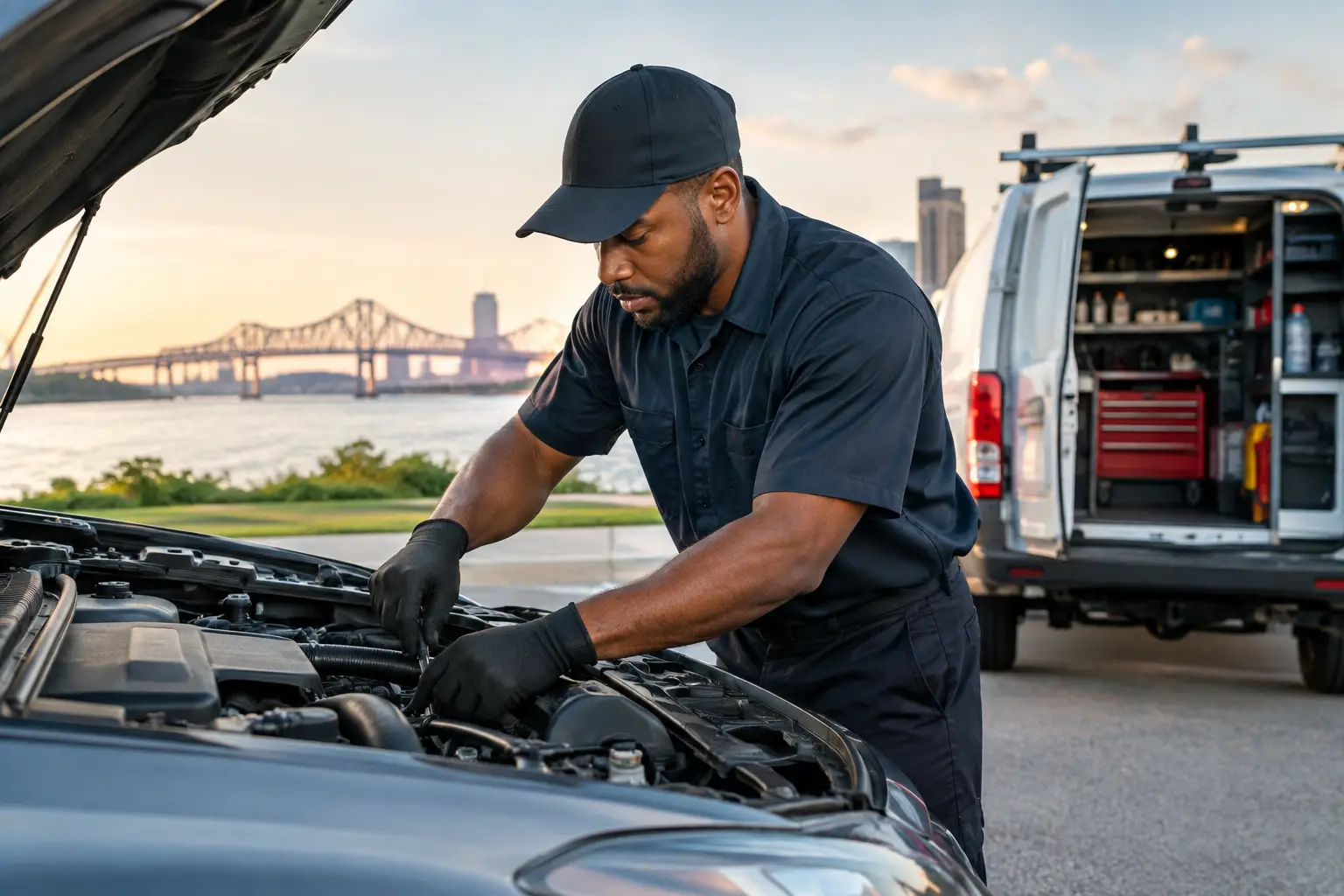
For commercial drivers, the stakes are higher. A truck issue can affect delivery windows, driver hours, customer commitments, and the next load on the schedule. A minor mechanical concern may be manageable until it is not. Commercial truck repair support gives owner-operators and fleet teams a clearer path to getting equipment assessed and moving again without starting from scratch with a provider unfamiliar with the situation.
The most useful roadside response is not necessarily the one with the longest list of benefits. It is the one that matches the vehicle, the issue, and the location. A passenger car lockout, a disabled SUV, and a commercial truck mechanical problem need different capabilities.
Make the First Call More Productive
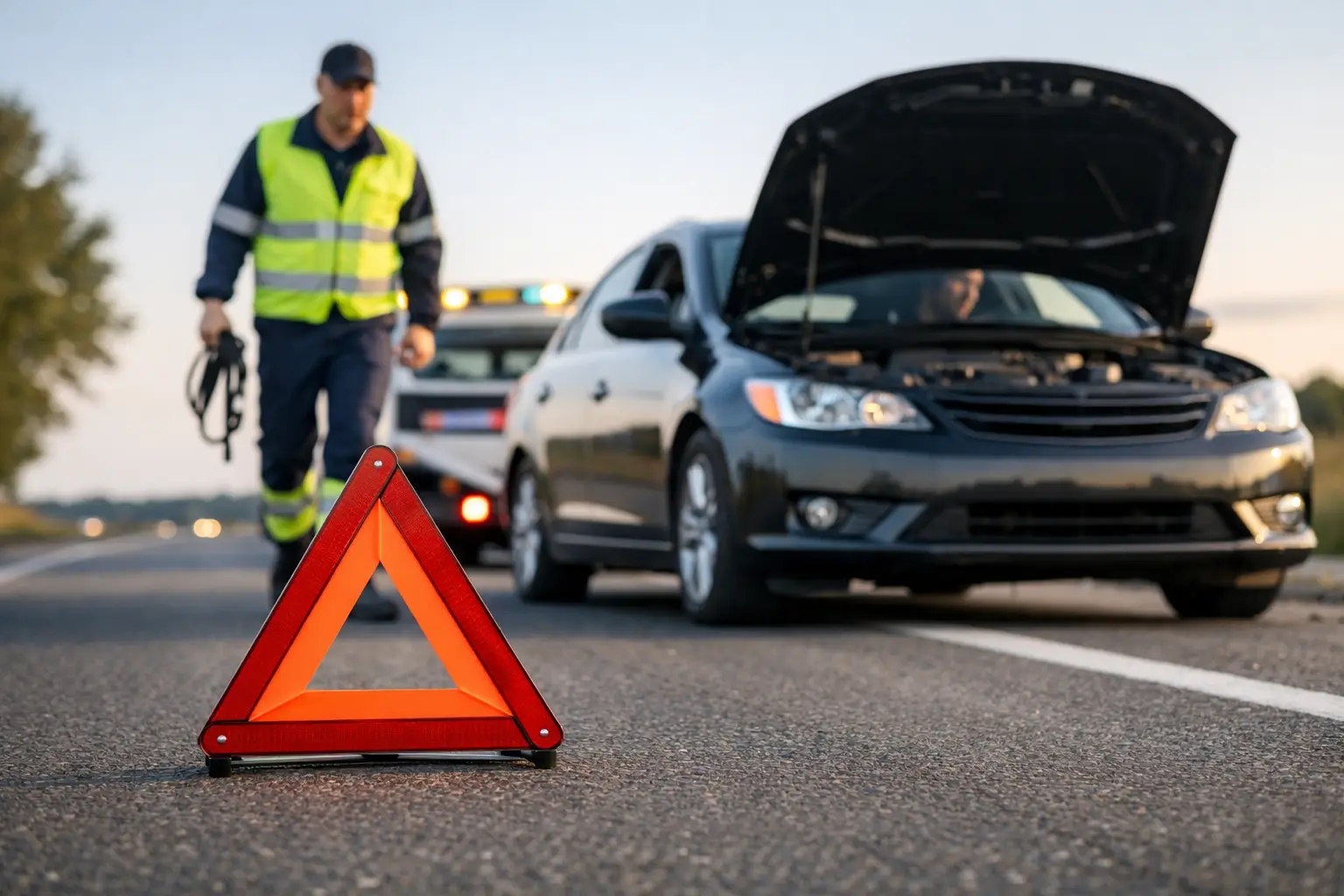
When a trip stops unexpectedly, take a minute to make the scene safer before focusing on the vehicle. Pull as far from traffic as conditions allow, turn on hazard lights, and move occupants away from active lanes when it is safe to do so. On busy highways, narrow shoulders, bridges, and poorly lit areas, personal safety comes first.
Then gather the information a dispatcher needs. Your exact location is more useful than a general description of the town you passed through. Use a highway number, mile marker, nearest exit, cross street, recognizable business, or a shared map location if available. For commercial vehicles, be ready to provide the truck type, the nature of the issue, and whether the load or parking position creates additional concerns.
Describe the problem plainly. Say whether the vehicle has a flat, will not start, is locked with keys inside, has a broken key, or has a truck mechanical issue. Do not guess at a diagnosis if you are unsure. Symptoms such as clicking when you turn the key, overheating, a warning light, tire damage, or a loss of power are enough to help direct the response.
If you are traveling with children, older adults, pets, or temperature-sensitive cargo, mention that as well. It may affect the urgency of the situation and the decisions you make while waiting.
Why Local Service Matters When You Are Passing Through
Membership programs and insurance benefits can be useful, especially for routine breakdowns. But they may involve a centralized dispatch process, limited service categories, or a provider who is farther away than expected. The trade-off is often cost certainty versus response flexibility.
A local roadside provider can be especially valuable when you need help in the Hammond area and do not have the time or local knowledge to coordinate a roadside company, locksmith, and truck repair service separately. Hopper Roadside is built around that practical need, serving passenger vehicles and commercial operators with on-demand roadside, automotive locksmith, and truck repair support.
Local knowledge also matters after dark, during heavy rain, or when traffic patterns complicate access. Louisiana travel can include long highway stretches, sudden weather changes, rural routes, and crowded freight corridors. A provider familiar with the region can focus quickly on getting to your location and identifying the service needed.
That does not mean every roadside issue can or should be repaired on the shoulder. Damage, safety conditions, parts availability, and the vehicle’s mechanical condition all matter. Sometimes the correct outcome is a quick fix. Other times, the right decision is to avoid further operation and arrange the next appropriate step. Good roadside service is about making that call based on the actual condition of the vehicle, not forcing every problem into the same solution.
Lockouts Are More Than an Inconvenience
A lockout can derail a trip faster than many mechanical problems. Modern vehicles may have proximity keys, electronic fobs, damaged key blades, or door locks that should not be forced open. Trying to improvise with a coat hanger, wedge, or online trick can damage weather seals, window glass, door frames, wiring, or locking mechanisms.
Professional automotive locksmith assistance is the safer option when keys are inside, lost, damaged, or not working correctly. It is also more efficient than waiting for a roadside provider who can only get you near the vehicle but cannot resolve the access issue itself.
Travelers should keep proof of ownership available when possible. Registration, insurance information, a rental agreement, or identification can help confirm that the vehicle can be legally opened. If the vehicle is a rental, contact the rental company as required by its agreement, but do not leave yourself stranded while waiting for a generic answer if immediate local assistance is needed.
Commercial Drivers Need a Downtime Plan
For an owner-operator or fleet manager, roadside trouble is not just a personal inconvenience. It can become an operating loss. A truck sitting on the shoulder may mean missed appointments, rescheduled freight, idle labor, and a driver dealing with a stressful safety situation.
The first priority is to protect the driver and secure the scene. The next is to communicate clearly with dispatch, the customer, or the load coordinator. Give them the location, issue, estimated impact, and whether the truck can be moved safely. Clear updates are better than optimistic guesses that later change.
Commercial truck repair needs vary widely. A concern that leaves a truck unable to continue is different from a problem that can be evaluated and managed until a scheduled repair. The truck’s condition, the cargo, the route, and safety requirements determine the right choice. Drivers should not continue simply because they are close to a destination if the vehicle presents a safety risk.
Keeping basic truck information ready can shorten the process. Have unit numbers, vehicle details, equipment type, and any known symptoms available for the service call. Fleet managers can help their drivers by establishing one simple rule: report the issue early, before a small concern becomes an out-of-service event.
Prepare Before the Next Trip
Preparation does not prevent every breakdown, but it reduces confusion when one happens. Before leaving, check tire condition, fuel level, battery performance, coolant, lights, and any warning indicators. If a dashboard warning has been appearing intermittently, do not assume it will wait until you return home.
Keep your phone charged and carry a vehicle charger. Store registration, insurance details, rental paperwork if applicable, and emergency contacts where they are easy to find. For longer trips, a flashlight, drinking water, reflective items, and weather-appropriate supplies are sensible additions.
Most of all, do not wait until the vehicle is fully disabled to decide what help you may need. If you notice steering changes, repeated starting trouble, overheating, unusual tire wear, or a key that is becoming unreliable, deal with it before the road makes the decision for you.
A breakdown can interrupt the route, but it does not have to turn into hours of uncertainty. Get to a safer position, provide an exact location, explain the problem clearly, and call for the service that fits the vehicle in front of you.