
Roadside Assistance in Hammond Louisiana
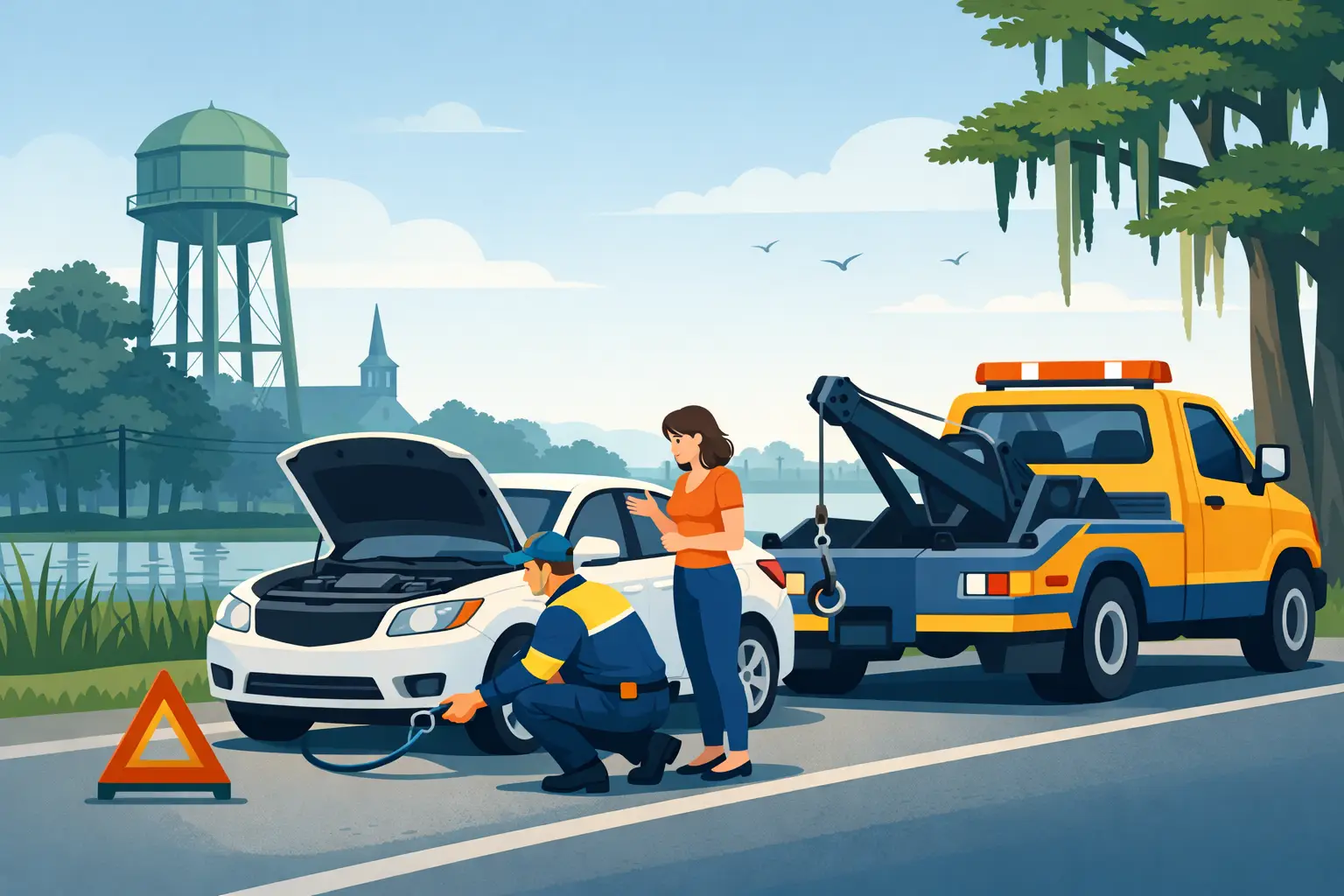
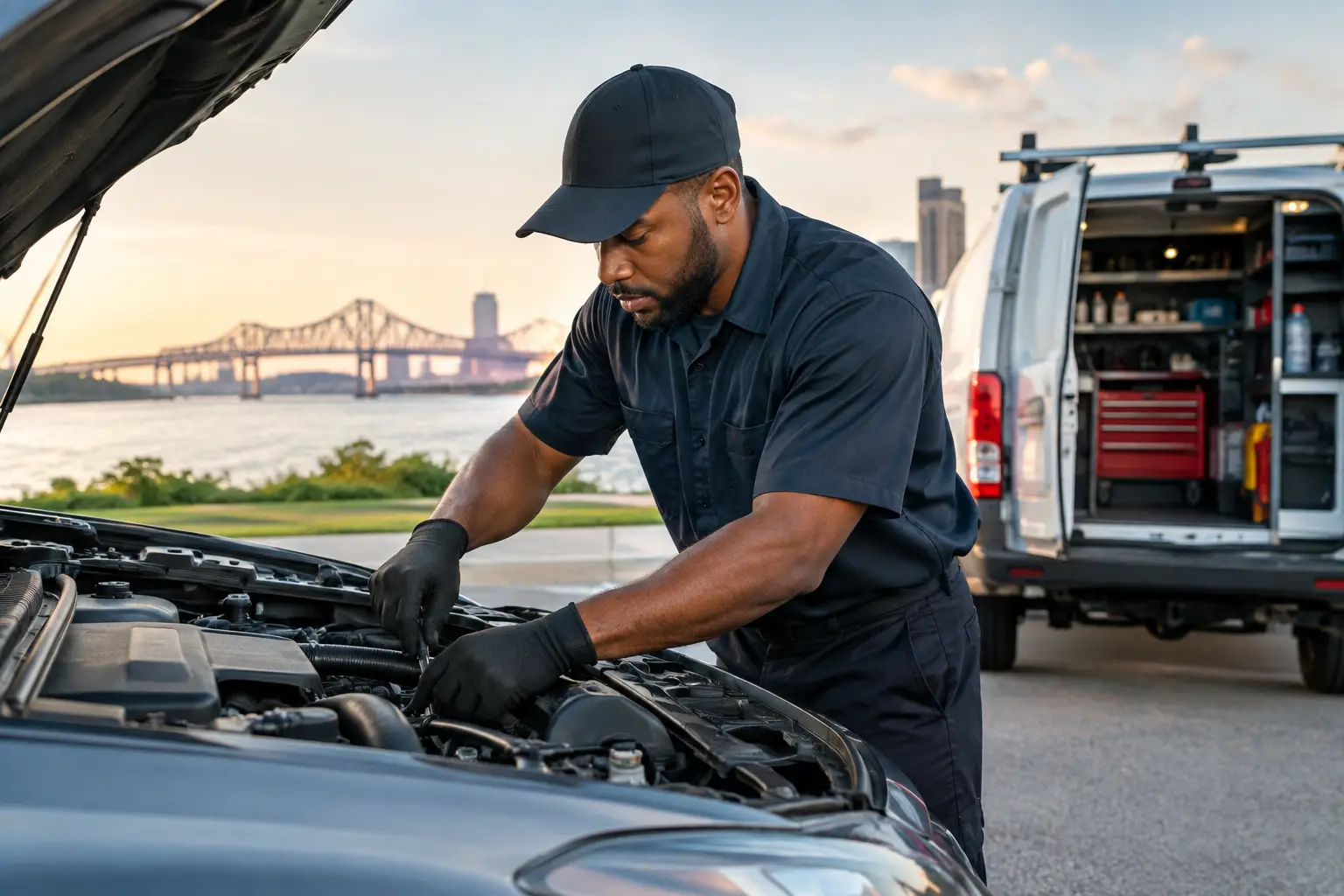
A vehicle problem rarely happens at a convenient time. It happens when you are headed to work, picking up a child, moving freight, or trying to get home after a long day. Roadside assistance in Hammond Louisiana gives drivers a direct way to address the immediate problem: a vehicle that will not start, a flat tire, an empty fuel tank, locked keys, or a truck that cannot stay on schedule.
The right response depends on the issue, the vehicle, and where it is stopped. A dead battery in a driveway is different from a lockout in a busy parking lot. A disabled commercial truck carries higher stakes than a passenger car because every hour off the road can affect deliveries, drivers, customers, and operating costs. Clear information at dispatch helps bring the right kind of help from the start.
Roadside Assistance in Hammond Louisiana Starts With the Problem
When calling for roadside help, lead with the issue you can see or hear. Explain whether the engine will not crank, the vehicle has a flat, the keys are inside, a warning light is on, or the vehicle is unsafe to drive. Give the vehicle type, make, model, color, and your exact location. If you are near a highway, include the direction of travel, the nearest exit, mile marker, cross street, business, or recognizable landmark.
That detail matters because roadside service is not one-size-fits-all. A jump-start may be the answer when a battery has drained, but it will not correct a damaged battery, a loose connection, or a charging-system failure. Changing a flat can get a driver moving again when the spare is usable. It cannot solve a damaged wheel, multiple tire failures, or a tire problem that makes the vehicle unsafe to operate.
The practical goal is to restore safe mobility when possible and identify when a vehicle needs a different next step. Trying to force a quick fix can create a larger repair or leave a driver stranded again a few miles down the road.
Common Passenger Vehicle Emergencies
Dead Battery and No-Start Calls
A vehicle that will not start is one of the most common roadside calls. Headlights left on, interior lights, extreme heat, an aging battery, and a weak charging system can all leave a driver with no power. If the dashboard lights come on but the engine only clicks, a battery or connection issue may be involved. If there are no lights at all, the problem could be a fully discharged battery, a cable issue, or another electrical fault.
A jump-start is useful when the battery is the immediate reason the vehicle will not start. Afterward, pay attention to how the vehicle runs. If it needs another jump soon, the battery may no longer hold a charge or the alternator may not be recharging it. Do not assume a successful jump-start means the problem is fully resolved.
Flat Tires and Tire Changes
A flat tire can turn a normal commute into a roadside safety concern, especially near fast traffic or in bad weather. Pull as far away from moving vehicles as possible, use hazard lights, and avoid standing on the traffic-facing side of the vehicle. If the tire has separated, the wheel is bent, or the vehicle is sitting in an unstable location, it is better not to attempt a roadside change yourself.
A roadside tire change typically depends on having an inflated spare, the correct tools, and a vehicle that can be safely accessed. Temporary spare tires also have speed and distance limits. They are meant to get you to a tire shop, not to support normal long-distance driving.
Fuel Delivery and Minor Roadside Needs
Running out of fuel is frustrating, but it does not need to become a dangerous walk along a road or highway. Fuel delivery can help a driver reach a nearby station safely. Be accurate about the fuel type. Gasoline and diesel are not interchangeable, and a fuel mistake can turn a simple delivery call into a costly mechanical problem.
Other minor issues may be handled at the roadside when conditions allow. The important question is always whether the vehicle can be safely driven after assistance is provided. When there is doubt, protect the driver, passengers, and vehicle first.
Automotive Locksmith Help When You Cannot Access the Vehicle
Locked keys, a lost key, a damaged fob, or a key that will not turn can stop a trip just as effectively as a mechanical breakdown. Automotive locksmith support is different from general roadside service because modern vehicle access systems often require the right tools and vehicle-specific knowledge.
Do not pry open a door, force a key, or break a window unless there is an immediate life-threatening emergency. Those actions can damage weather seals, wiring, glass, locking mechanisms, and airbags. They can also make a straightforward lockout more expensive to correct.
When requesting locksmith help, have identification and proof that you are authorized to access the vehicle available. Be ready to provide the year, make, model, and location. A clear description of whether the keys are locked inside, lost, broken, or not recognized by the vehicle helps determine the appropriate response.
A lockout may be resolved quickly when the key is visible inside the car. Lost or malfunctioning keys can require more work, particularly on vehicles with transponder chips, proximity fobs, and programmed immobilizer systems. The fastest realistic solution depends on the vehicle and the exact access problem.
Commercial Truck Repair Requires a Different Response
Commercial drivers and fleet managers do not measure downtime the same way a passenger vehicle owner does. A truck stopped on a route can affect appointment windows, freight condition, hours-of-service planning, customer commitments, and the next scheduled load. The response needs to account for both mechanical needs and the operational pressure behind them.
Commercial truck repair calls should begin with the truck's location, unit number, make and model, engine information if available, load status, and symptoms. Mention warning lights, loss of power, air-system concerns, tire issues, starting problems, fluid leaks, or unusual noises. If the truck is carrying a sensitive load, say so early.
Not every truck issue can be repaired where it stops. A mobile repair response is valuable when the fault can be diagnosed and corrected safely on site. More extensive failures may require a repair facility, specialized equipment, or parts that are not immediately available. Knowing that early helps a fleet make decisions around dispatch, cargo, and driver time rather than waiting on a solution that is not realistic.
For owner-operators, fast communication matters just as much. Give the service provider the symptoms without guessing at a diagnosis. A report such as "the truck lost power after a warning light came on" is more useful than a vague statement that it is "running bad." Accurate details help focus the repair effort and reduce unnecessary delays.
Stay Safe While Waiting for Help
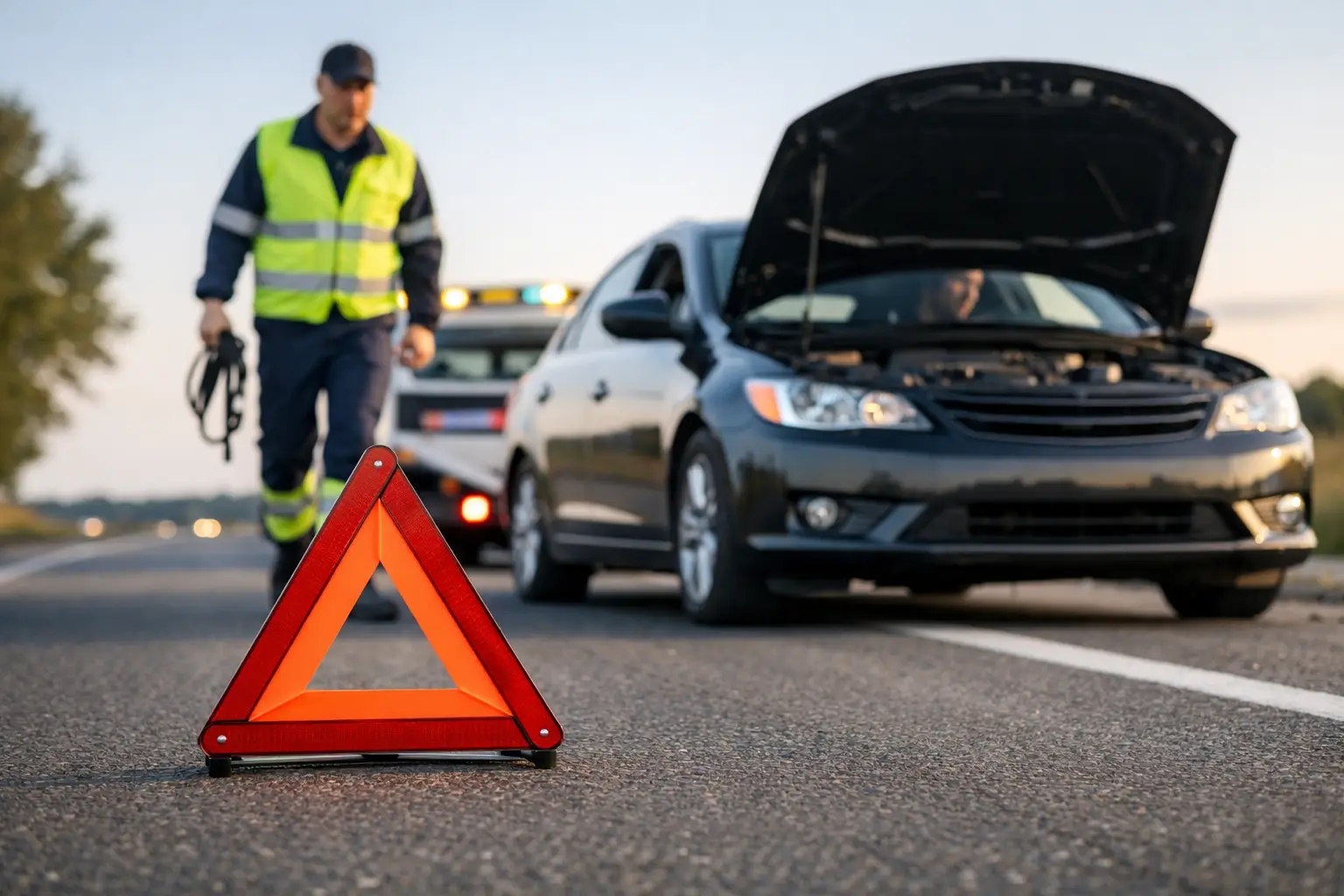
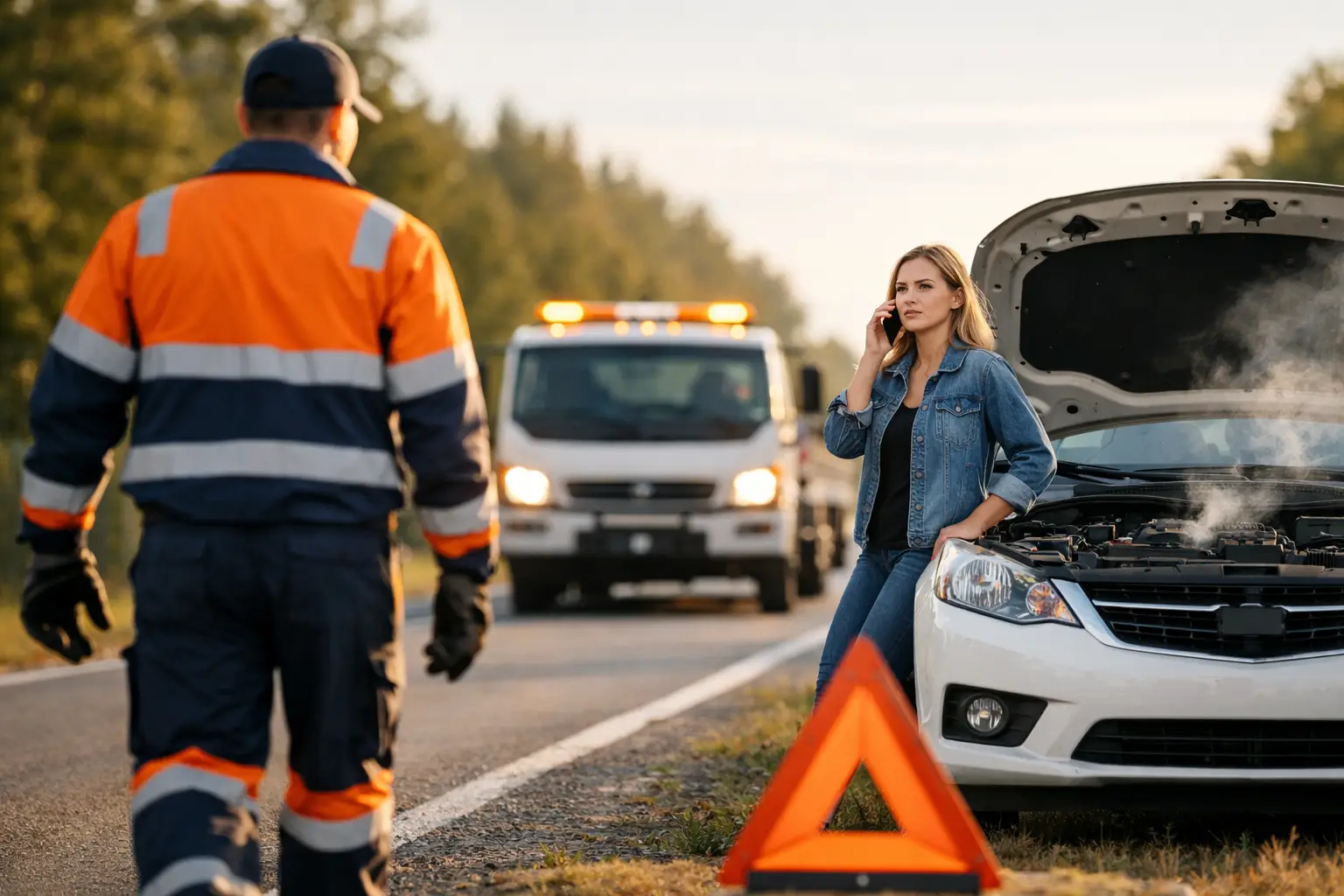
Your location and surroundings can change the safest course of action. On a busy road, move the vehicle out of traffic if it can be done without risking further damage or injury. Turn on hazard lights. Keep passengers away from traffic, and do not stand between vehicles or near the road edge.
If the vehicle cannot be moved and traffic is passing close by, remain in a safer position based on the conditions. In many situations, staying inside with seat belts fastened is safer than standing beside a disabled vehicle. If there is smoke, fire, a fuel leak, or another immediate hazard, get everyone away from the vehicle and call emergency services.
At night, use interior lights sparingly if battery power is already a concern, but keep hazard lights on when visibility requires them. In heavy rain or fog, make your vehicle easier to see and avoid working on it yourself near moving traffic. A roadside problem is already inconvenient. It should not become an injury risk.
What to Have Ready Before You Call
A few details can make dispatch more efficient. Keep your phone charged when possible, and know the vehicle's basic information. For commercial operations, drivers should have unit numbers, fleet contact details, and relevant maintenance information available.
It also helps to tell the dispatcher about access restrictions. A vehicle in a parking garage, gated apartment complex, soft shoulder, construction area, or tight loading zone may require a different approach. Mention if you are hauling a trailer, carrying cargo, or parked in a location with limited clearance.
Hopper Roadside serves Hammond drivers, travelers, and commercial operators with roadside assistance, automotive locksmith support, and commercial truck repair. The service category matters, but so does the information you provide. A precise location and a plain description of the problem help move the response in the right direction.
Keep a roadside issue from becoming a longer delay by focusing on safety first, giving accurate details, and avoiding repairs that exceed what can be done safely where you are. Whether you are locked out near downtown Hammond or managing a truck stopped on a route, the next useful step is the same: identify the problem, protect the scene, and get the appropriate help moving your way.