
What Does Roadside Assistance Consist Of?
A dead battery in a grocery-store parking lot, a flat tire on the way to work, or keys locked inside the cab can stop your day immediately. So, what does roadside assistance consist of? It is mobile help for common vehicle problems that leave a driver stranded or unable to safely continue. The exact services vary by provider, but the goal is straightforward: get the vehicle moving again when possible, restore access when keys are the problem, or identify the next practical repair step.
For Louisiana drivers, the right response depends on what failed, where the vehicle is located, and whether it is a personal vehicle or a commercial truck. A passenger car with a drained battery may need a jump start. A truck with a mechanical issue may need an experienced repair response to reduce downtime and protect the delivery schedule.
What Does Roadside Assistance Consist Of in Practice?
Roadside assistance usually begins with a basic assessment. The technician needs to know the vehicle type, the symptom, the exact location, and any safety concerns. That information helps determine whether the problem can be handled on site or whether the vehicle needs a more extensive repair solution.
Most calls fall into a few clear service categories:
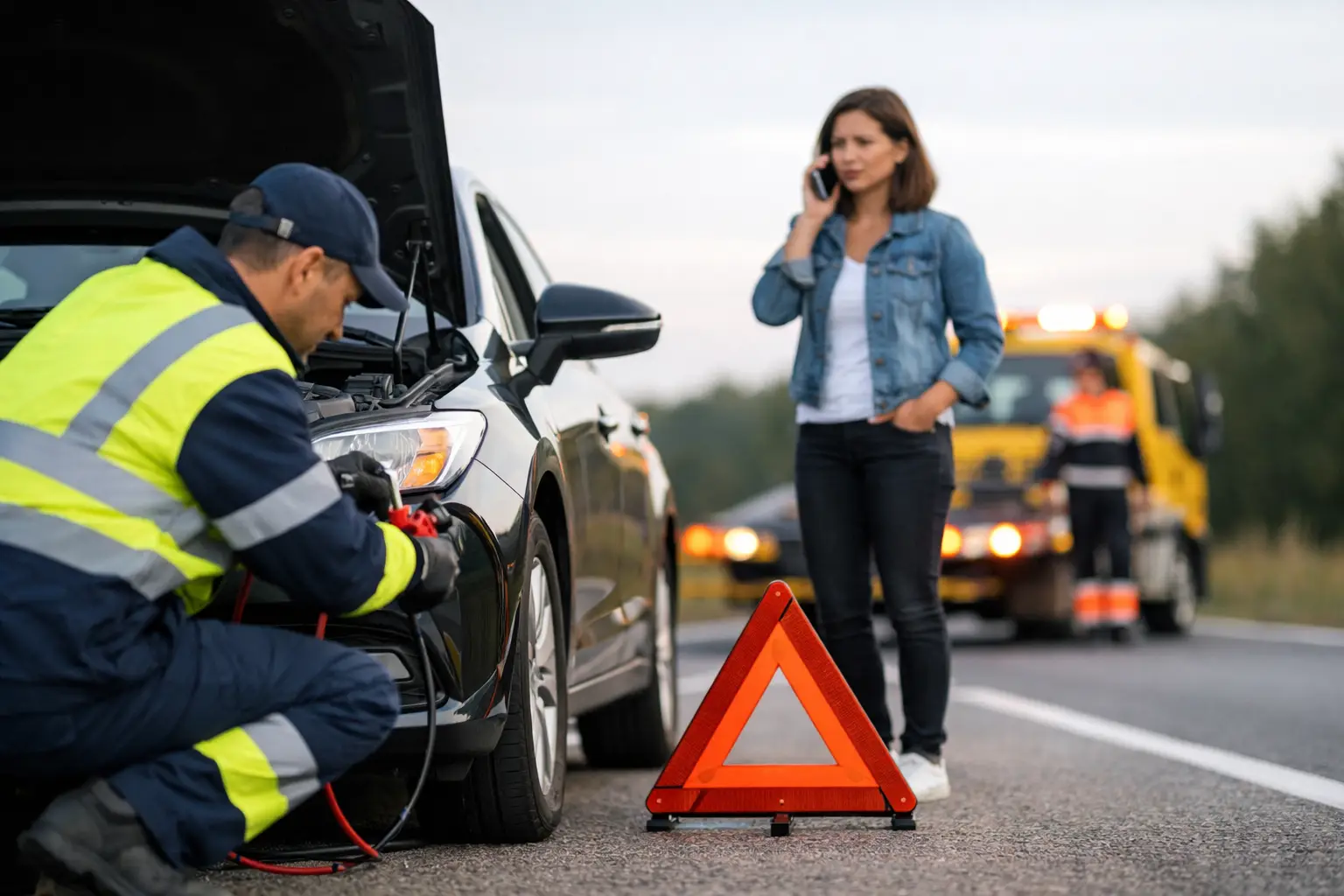
- Battery service and jump starts for a vehicle that will not start because the battery is discharged or the connections need attention.
- Flat tire help for a puncture, damaged tire, or a tire that needs to be changed using the vehicle's usable spare.
- Fuel delivery when a driver runs out of gas and needs enough fuel to reach a nearby station.
- Lockout and key-access service when keys are locked inside, lost, broken, or the vehicle cannot be accessed normally.
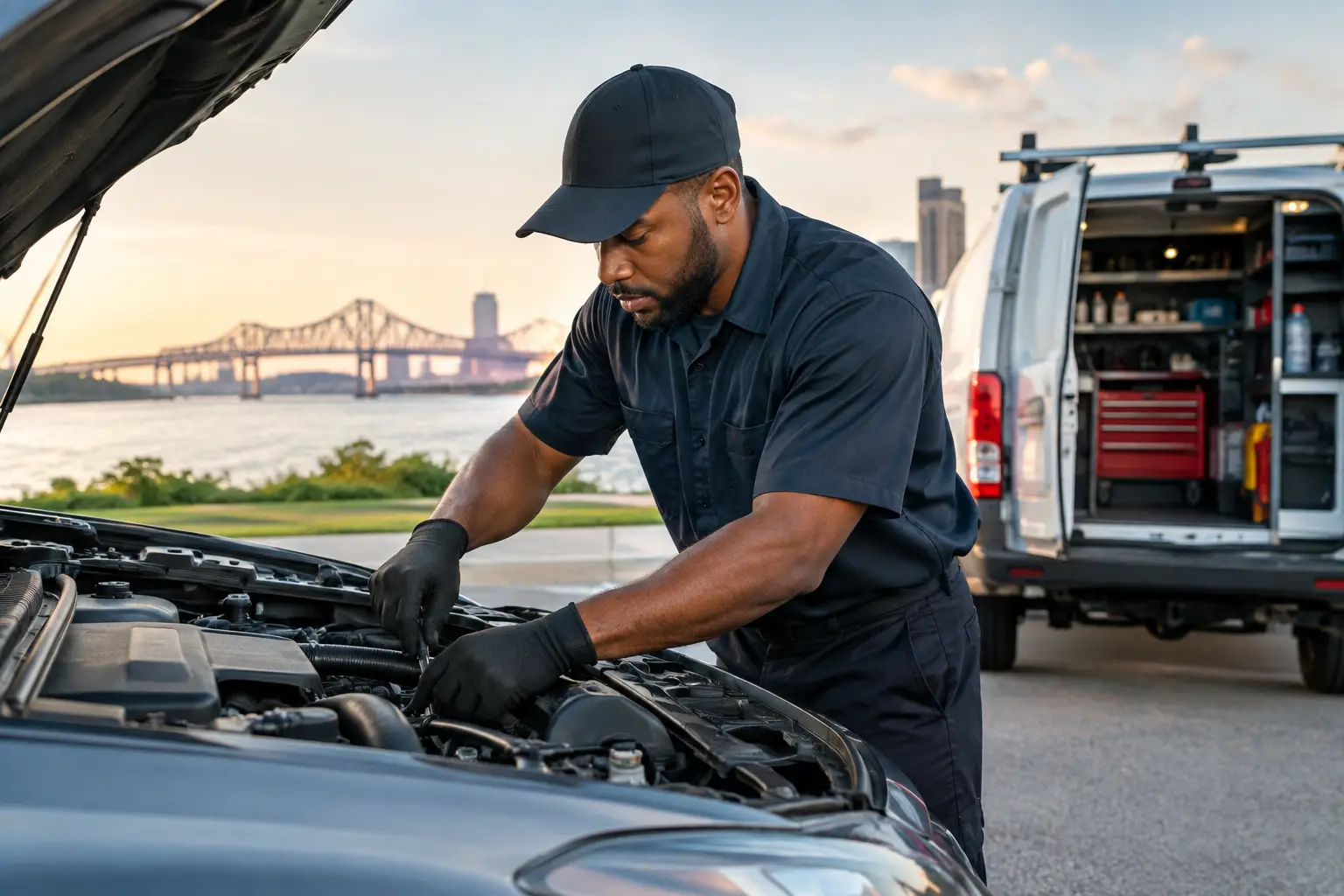
- Minor roadside mechanical help when a small issue can be checked or corrected at the vehicle's location.
These services are not all the same. A jump start may take only a few minutes, but it does not automatically mean the battery is healthy. A tire change can get a driver off the shoulder, but it will not repair a damaged wheel or replace a worn-out spare. Good roadside service solves the immediate mobility problem while being honest about what still needs repair.
Battery Problems: More Than a Simple Jump
A no-start situation is one of the most common roadside calls. Lights left on, extreme heat, an aging battery, loose terminals, and charging-system problems can all leave a vehicle unable to start. A jump start may be the right solution when the battery is simply drained.
But a vehicle that starts after a jump can still have an underlying problem. If it repeatedly needs a jump, stalls after running briefly, or shows warning lights, the battery, alternator, or connections may need testing and repair. Roadside help is designed to get you out of the immediate situation, not to guess at a major electrical fault from the side of the road.
For commercial vehicles, battery and starting issues carry a higher cost. One truck that cannot start can delay a route, a delivery, a driver, and the equipment scheduled behind it. A prompt assessment helps a fleet manager decide whether the truck can return to service or needs additional repair support.
Flat Tires and Tire Changes
Roadside tire service usually means replacing a flat with the vehicle's spare tire. Before that can happen, the spare must be present, properly inflated, and safe to use. Many newer vehicles have temporary spare tires, tire-inflation kits, or no spare at all. That distinction matters when you call for help.
A tire change is often appropriate for a simple puncture or a sudden flat. It is less useful when there is severe sidewall damage, multiple damaged tires, a bent wheel, missing lug nuts, or no usable spare. In those cases, the vehicle may require a tire shop, a tow arrangement, or another repair option.
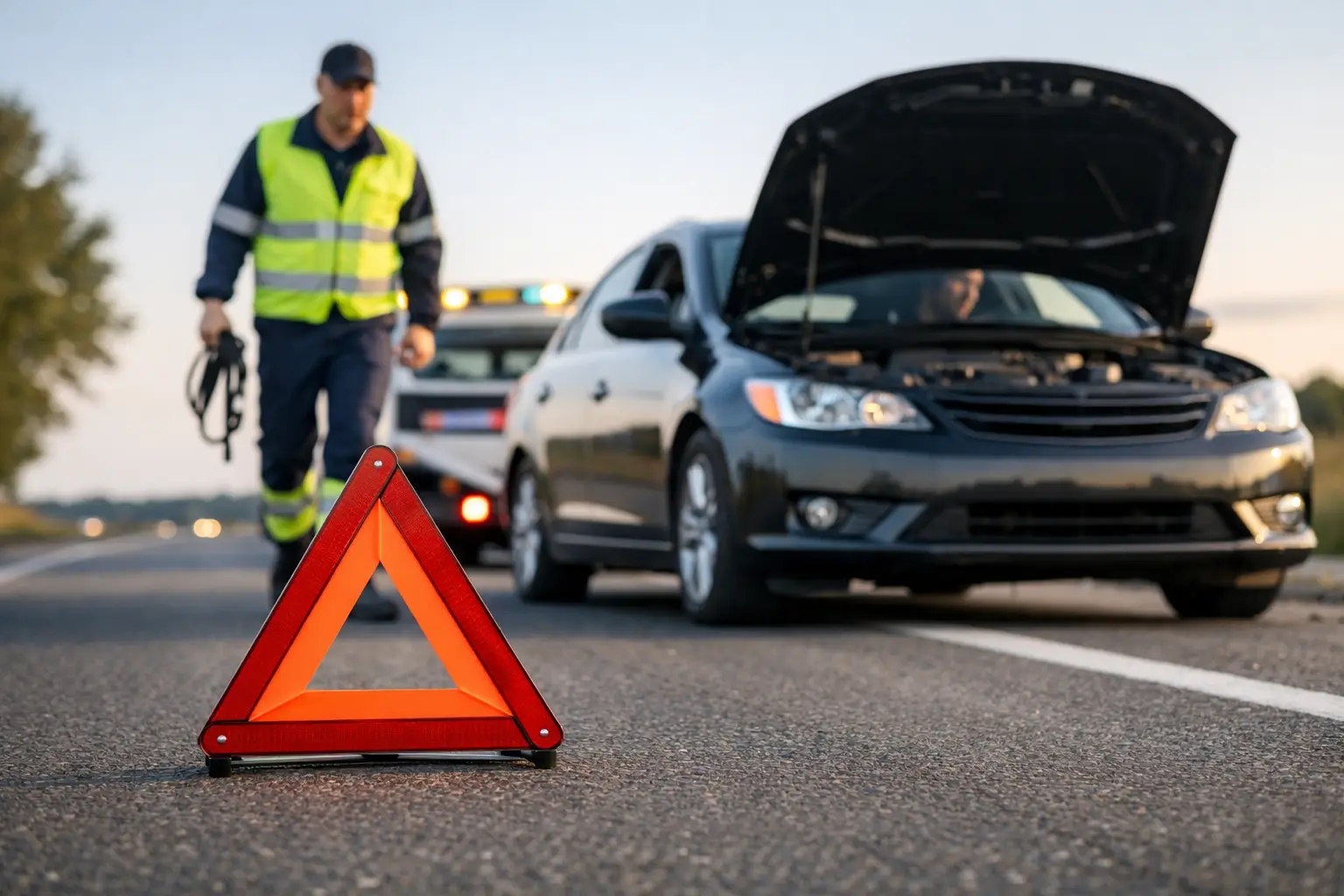
If a flat occurs on a busy road, safety comes first. Move as far from traffic as possible, turn on hazard lights, and avoid standing near moving vehicles. Do not attempt a tire change on an unstable shoulder or in a location where drivers cannot see you clearly.
Lockouts, Lost Keys, and Vehicle Access
Roadside assistance can also include automotive locksmith support. This is especially valuable when the issue is not mechanical at all - the driver simply cannot get inside the vehicle or use the key normally.
A lockout may happen when keys are left on the seat, locked in the trunk, or misplaced during a stop. Modern key fobs, transponder keys, damaged ignition keys, and electronic entry systems can make the situation more complicated than it was years ago. The best response depends on the vehicle and the type of access problem.
Professional lockout service should focus on gaining access without causing unnecessary damage to the door, weather stripping, locks, or glass. If keys are lost or damaged, the next step may involve key-related service beyond a basic unlock. When calling, have the vehicle's make, model, year, and location ready. Proof of ownership may also be needed before access is provided.
Fuel Delivery When the Tank Runs Dry
Running out of fuel is frustrating, but it is usually fixable without taking the vehicle to a shop. Fuel delivery provides enough fuel to get a driver to a nearby station. It is not meant to replace a full fill-up, and it may not address a fuel gauge that reads incorrectly or an engine that will not start for another reason.
Be precise about the fuel type when requesting help. Gasoline and diesel are not interchangeable, and using the wrong fuel can create a much larger repair problem. Commercial operators should also account for route conditions, idle time, and fuel planning, especially when a truck is operating on a tight schedule.
When the Vehicle Needs More Than Roadside Help
Not every roadside call can end with the vehicle driving away. Serious overheating, brake trouble, collision damage, engine problems, transmission issues, or a truck mechanical failure may require repair work that cannot be completed safely where the vehicle stopped.
That is where the scope of the provider matters. A driver may need roadside assistance, a locksmith, or commercial truck repair, depending on the failure. Using one local response partner can reduce the time spent figuring out who handles what, particularly when a truck is down and each hour off the road affects revenue and customer commitments.
Hopper Roadside serves Hammond-area drivers and commercial operators with roadside assistance, automotive locksmith support, and commercial truck repair. That service mix is useful because a locked-out passenger vehicle and a disabled work truck demand different tools and different levels of repair experience.
What to Tell the Dispatcher
Clear information helps roadside service reach you prepared. Start with your exact location, including the road name, nearby cross street, mile marker, business, or visible landmark. Explain whether you are in a parking lot, driveway, shoulder, loading area, or another location that may affect access.
Then describe the vehicle and the problem plainly. Share the make, model, year, color, and whether it is a passenger vehicle, pickup, van, or commercial truck. Say whether the issue is a flat tire, dead battery, empty fuel tank, lockout, key problem, or mechanical concern. For a truck, provide the unit type and any symptoms that could affect repair planning.
If the vehicle is in an unsafe location, tell the dispatcher immediately. Stay out of traffic when possible, use hazard lights, and remain in a safe spot until help arrives. Do not keep attempting to start a vehicle that smells like fuel, is smoking, or has a serious warning indication.
Roadside assistance is most useful when it matches the actual problem. Know what you are seeing, give the location clearly, and choose a provider equipped for the vehicle in front of you. That turns an unexpected stop into a practical next step instead of a longer delay.