

Best Truck Diagnostic Services for Faster Repairs
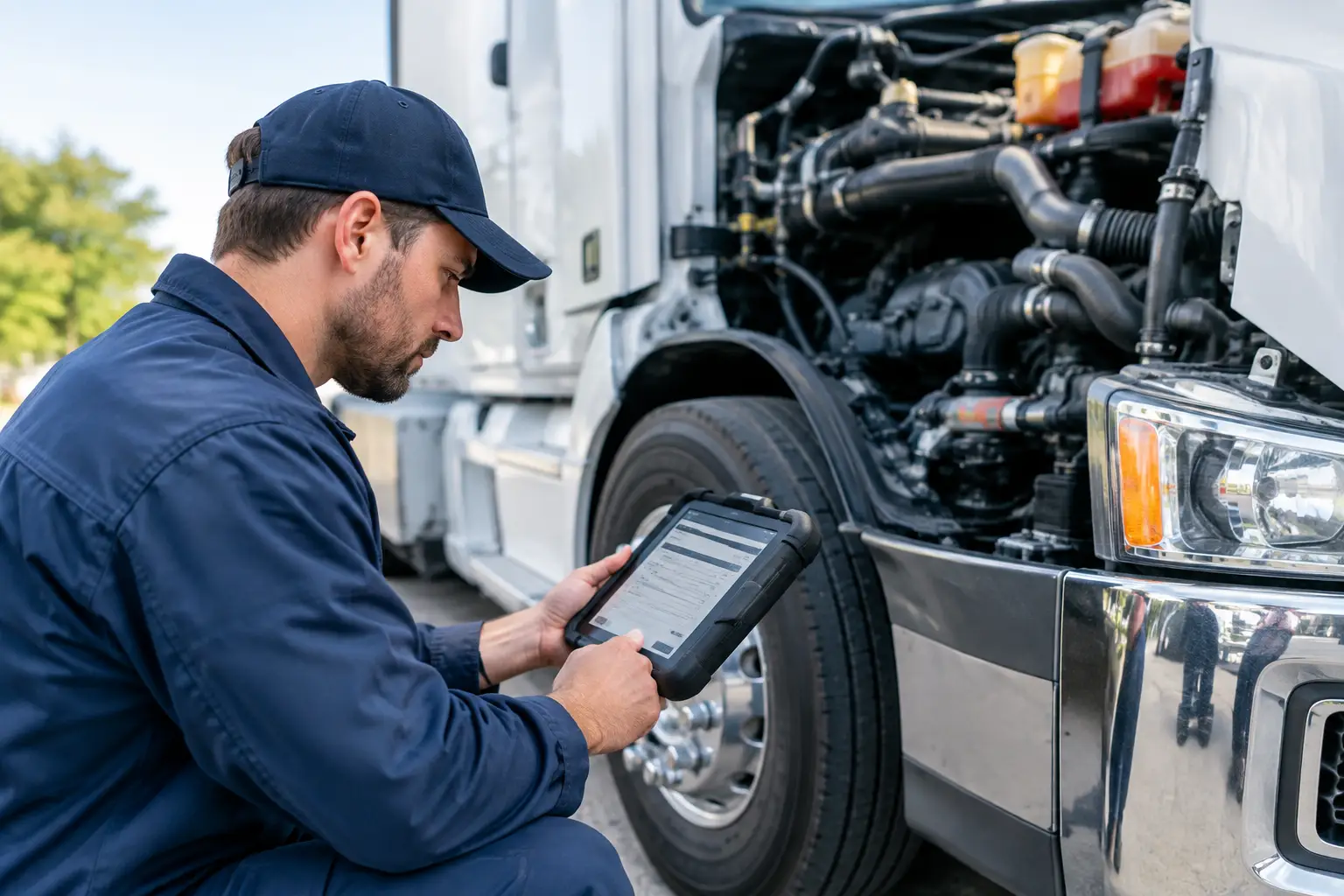
A warning light on a commercial truck is not just a dashboard problem. It can mean missed delivery windows, a driver stuck on the shoulder, a forced derate, or damage that gets more expensive with every mile. The best truck diagnostic services do more than read a fault code. They identify what caused it, determine whether the truck can safely move, and give the operator a practical repair path.
For owner-operators and fleet managers, speed matters. So does getting the diagnosis right the first time. Replacing parts based on a generic code description can waste hours and money while leaving the real issue untouched.
What truck diagnostics should actually provide
Modern commercial trucks rely on electronic control modules to manage engine performance, emissions equipment, transmissions, braking systems, and more. When a system detects a condition outside its normal range, it stores a diagnostic trouble code. That code is a starting point, not a final answer.
A proper diagnostic service connects compatible equipment to the truck, retrieves active and stored codes, reviews live operating data, and checks the related components or circuits. The technician should consider the truck's symptoms along with the code. For example, a code related to low boost could involve a leaking charge-air hose, a failing sensor, a turbo concern, restricted airflow, or wiring damage. The code points to the affected system, but testing narrows down the cause.
Good diagnostics also answer the question that matters on the roadside: can the truck continue operating without creating a safety issue or causing further damage? Some faults may allow limited movement to a repair location. Others require an immediate repair, a tow, or a controlled shutdown.
Best truck diagnostic services start with the right questions
The repair process is faster when the technician understands what happened before the light came on. A driver should be ready to describe whether the truck lost power, entered derate, smoked, overheated, had trouble shifting, would not crank, or shut down. Details such as recent repairs, fuel stops, weather conditions, and whether the issue began under a load can be useful.
A capable service provider will also ask for the truck's make, model, engine, and location. Heavy-duty diagnostic systems are not one-size-fits-all. The equipment and repair approach may differ between a diesel pickup, a medium-duty box truck, and a Class 8 tractor.
For fleets, clear records help even more. Repeated fault codes, recent maintenance history, and driver vehicle inspection reports can show whether the truck has an intermittent problem or a developing pattern. That context keeps a technician from treating the same symptom as a new issue every time.
A code scan is not the same as a diagnosis
Many operators have seen a scan tool pull a code in minutes. That is useful, but it is only the first step. A reliable diagnostic service should verify the fault rather than assume the code names the failed part.
Consider a no-start condition. Low voltage, corroded battery terminals, damaged cables, a starter problem, a failed sensor, fuel delivery trouble, or an electronic communication issue can all produce similar symptoms. Installing a new battery without checking the charging and starting system may get the truck moving temporarily, but it may not solve the breakdown.
The same is true for emissions-related faults. A diesel particulate filter, DEF system, NOx sensor, exhaust temperature sensor, wiring issue, or an engine condition affecting soot production may trigger related warnings. The correct repair depends on testing, not guessing.
Problems a mobile truck diagnostic service can address
Mobile diagnostics are especially valuable when a truck is stranded, in derate, or unable to leave a jobsite. A field technician can inspect the equipment where it stopped, which may avoid an unnecessary tow and get minor repairs completed sooner.
Common service calls include engine warning lights, check engine codes, loss of power, no-start conditions, charging-system problems, electrical faults, air-system concerns, sensor issues, and aftertreatment warnings. A mobile provider can also help identify whether a mechanical repair is possible on site or whether the truck needs to be moved to a shop with specialized equipment.
There are limits to roadside work. Internal engine failures, major transmission damage, extensive wiring faults, and repairs that require lifts or shop-only tools may need a facility. The value of an accurate mobile diagnosis is that it prevents wasted time. Instead of towing a truck without direction, the operator knows what repair capability is needed next.
What to look for before calling for service
When downtime is already costing money, it is tempting to call the first number that appears in a search. Availability is important, but the right service should be able to handle the type of truck and the type of problem you have.
Look for a provider that works on commercial trucks, not only passenger vehicles. Ask whether the technician can scan the truck's systems, diagnose fault codes, and perform repairs on site when appropriate. It is also reasonable to ask what information they need before dispatching. A provider that asks focused questions is more likely to arrive prepared.
For urgent calls, confirm the response area and give a precise location. Include mile markers, exit numbers, nearby landmarks, parking-lot names, or gate instructions. Tell dispatch if the truck is blocking traffic, carrying a load, parked on soft ground, or in an area with limited access. Those details affect both safety and the equipment needed for the call.
In Hammond and nearby Louisiana service areas, Hopper Roadside provides commercial truck repair alongside roadside assistance and automotive locksmith support. That combination matters when a breakdown involves more than a mechanical fault, such as a driver who also needs access to a locked vehicle or immediate roadside help while the truck issue is being assessed.
Protect uptime after the immediate repair
The best time to prevent a repeat breakdown is after the truck is running again. Keep the diagnostic findings with the vehicle's maintenance records, including the codes found, parts repaired, and any recommended follow-up. If a technician identifies a concern that is safe to monitor but not fully repair roadside, schedule that work before the truck returns to a demanding route.
Drivers should not ignore recurring warning lights simply because the truck still moves. Intermittent electrical faults, charging problems, and aftertreatment warnings often become more severe under heat, heavy loads, stop-and-go driving, or long idling periods. A small issue handled during planned downtime is usually less disruptive than an emergency call at night or on a delivery deadline.
Fleet managers can use repeat diagnostic data to spot patterns across equipment. If several trucks show similar battery, sensor, DEF, or wiring problems, the answer may be a maintenance process change rather than another isolated repair.
When a truck should stop instead of continue
Not every warning requires an immediate shutdown, but certain symptoms should be treated seriously. Stop and request assistance if the truck has dangerously low oil pressure, severe overheating, active smoke or burning odors, major air loss, brake concerns, a fuel leak, steering problems, or significant loss of control.
A truck in derate also deserves prompt attention. Continuing to push equipment that has lost power can leave the driver in an unsafe position, especially on busy roads or while hauling a load. Pull over safely when possible, document the warning messages, and call for diagnosis.
A fault code should not decide the next move by itself. The truck's behavior, the load, the location, and the safety risk all matter. The right diagnostic service brings those factors together, identifies the real problem, and helps put the truck on the fastest responsible path back to work.