

Truck Brake Repair Guide for Safer Roadside Decisions
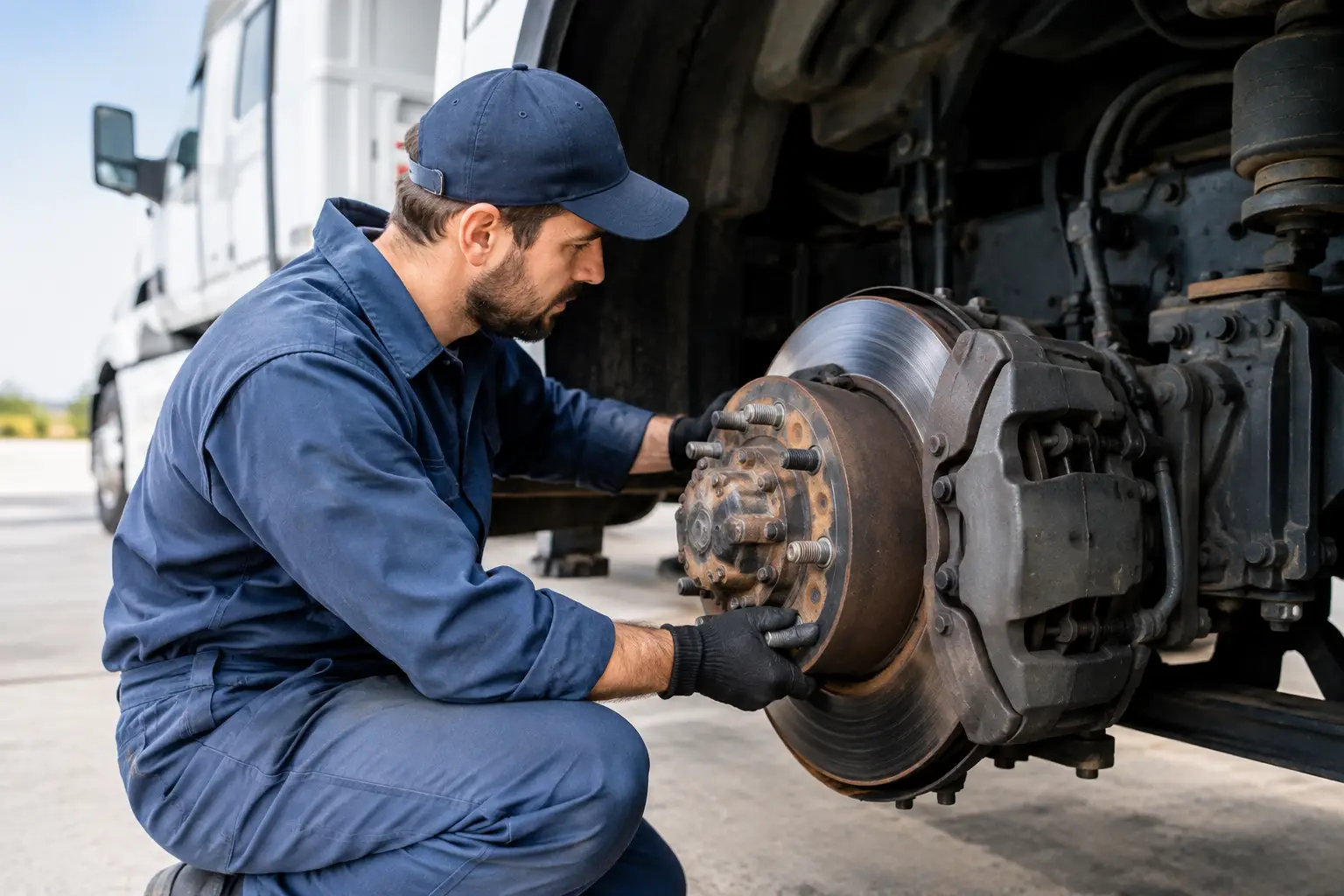
A loaded truck that will not stop straight, builds air slowly, or pulls hard under braking is not a “finish the route and deal with it later” problem. This truck brake repair guide helps drivers, owner-operators, and fleet managers recognize what can wait, what needs a repair location, and what requires immediate mobile truck service.
Commercial brakes work as a system. A warning light, low-pressure alarm, damaged hose, or overheating wheel can point to a single failed component, but it can also signal a larger safety issue. The first job is to protect the driver and everyone sharing the road. The second is to prevent a small brake defect from becoming a much longer downtime event.
When a Truck Brake Problem Is an Emergency
Take a brake concern seriously any time braking performance changes. If the truck pulls sharply to one side, the pedal feels unusually soft, stopping distance increases, or the steering wheel shakes during braking, get the truck out of traffic safely and do not continue as normal.
For air-brake trucks, low air pressure is an immediate concern. The warning device is there for a reason. Air brakes need enough pressure to apply and release correctly, and continuing to drive with a suspected air leak or pressure problem can leave the truck unable to operate safely. Park in a safe location, set the brakes, and report the condition.
A hot wheel is another situation that should not be ignored. A dragging brake, seized caliper, failed chamber, contaminated component, or bearing issue can create extreme heat. Smoke, a burning smell, or visible heat around a wheel end means the truck should stay parked until a qualified technician can inspect it. Do not pour water on hot brake components. Rapid cooling can damage parts and creates its own safety risk.
Truck Brake Repair Guide: Signs to Report Clearly
The more specific the driver’s report, the faster a technician can narrow down the issue. A vague report such as “the brakes feel off” is a start, but details matter when the truck is on the shoulder or parked at a customer site.
Tell the service provider whether the concern involves air pressure, stopping power, a warning light, a pull, noise, vibration, or overheating. Also note when it started: during a hard stop, after rain, after a long downhill grade, after a trailer hookup, or after the truck had been parked. These conditions can help identify whether the problem is related to the tractor, trailer, wheel end, air system, or electrical system.
Useful details include the truck and trailer location, unit number, axle affected if known, brake warning messages, whether the vehicle can move, and whether there is smoke or a strong burning odor. For fleets, giving the technician the equipment type and any recent brake work can reduce diagnostic time.
Common Brake Problems on Commercial Trucks
Brake trouble does not always look the same. Some failures arrive suddenly. Others give warning signs for days or weeks before the truck is forced out of service.
Air Leaks and Slow Pressure Build-Up
Air leaks may come from lines, fittings, valves, chambers, tanks, or connections between the tractor and trailer. A constant hissing sound, slow air build-up, or pressure that drops faster than expected needs inspection. The source is not always easy to see from the ground, and a temporary guess is not a dependable repair.
A technician may need to inspect the complete air system, identify the leak under pressure, replace damaged components, and confirm proper operation before the truck returns to service. If the parking brakes will not release or apply correctly, the problem may involve more than an external hose.
Worn Friction Material, Drums, or Rotors
Brake shoes, pads, drums, and rotors wear over time. Heavy loads, stop-and-go work, steep grades, and poor adjustment can accelerate that wear. Squealing, grinding, reduced braking response, or uneven braking can indicate worn or damaged friction components.
The trade-off is simple: catching wear early may mean replacing service parts before they damage more expensive components. Waiting until metal contacts metal can turn a planned repair into a larger wheel-end job and an unexpected delay.
Out-of-Adjustment Brakes
On systems that require adjustment, excessive pushrod travel can reduce braking effectiveness. Automatic slack adjusters are designed to maintain adjustment, but they do not make the system maintenance-free. A failed adjuster, worn linkage, or underlying brake problem can still leave a brake out of adjustment.
Adjustment should be checked and corrected by someone who understands the brake system and the reason it moved out of range. Repeatedly adjusting a brake without finding the cause can hide a developing mechanical failure.
Pulling, Vibration, or Uneven Braking
A truck that pulls during braking may have unequal braking force from side to side. Possible causes include a contaminated brake surface, seized caliper, damaged hose, uneven wear, a failed chamber, or a suspension and wheel-end issue that feels like a brake problem.
Vibration can also come from brake components, but it may be related to tires, drums, rotors, hubs, or steering parts. That is why diagnosis matters. Replacing one visible part without checking the surrounding system can leave the truck with the same complaint and more downtime.
What Drivers Should Do Before Help Arrives
First, get the truck as far from moving traffic as conditions safely allow. Use hazard lights and warning devices as required. If there is smoke, fire risk, or an unsafe roadside position, move people away from the vehicle and contact emergency services when needed.
Then avoid actions that can make the repair harder or less safe. Do not crawl under a truck supported only by air suspension or a jack. Do not disconnect air lines or back off brake adjustments unless you are trained and authorized to do so. Do not drive the unit simply to see whether the problem “clears up.”
Before dispatching mobile service, have these details ready:
- Exact location, direction of travel, and a safe access point for the service vehicle
- Truck, trailer, and axle information when available
- The warning signs observed, including alarms, lights, noises, heat, or air loss
- Whether the truck is loaded and whether it can be moved safely
- Any recent brake, wheel-end, suspension, or trailer work
This information helps the responding technician arrive prepared and helps a fleet decide whether the repair can be completed roadside or needs a shop environment.
Roadside Repair or Shop Repair?
Many brake issues can be diagnosed and repaired where the truck is parked, provided the location is safe and the repair does not require equipment better suited to a shop. Air-line repairs, certain chamber and valve issues, and some accessible brake-component replacements may be handled by a mobile commercial truck technician.
Other conditions call for a controlled repair location. Severe wheel-end damage, extensive heat damage, repeated brake failures, damaged hubs, major air-system problems, or repairs requiring deeper disassembly may need shop service. A responsible technician will not force a roadside fix when inspection shows the truck needs more work.
For operators around Hammond and across Louisiana, the goal is not merely getting the truck rolling. It is getting it repaired to a condition that supports safe operation and reduces the chance of another stop a few miles later.
Preventing Brake Downtime Between Service Calls
Pre-trip inspections remain one of the best ways to catch brake trouble before a load is on the road. Drivers should watch for air leaks, warning lights, unusual pressure behavior, loose or damaged lines, and visible signs of component damage. During the walk-around, look and listen instead of treating the inspection as a routine box to check.
Maintenance schedules also need to match the truck’s actual workload. A local delivery truck, a long-haul tractor, and a heavily loaded vocational truck can have very different brake wear patterns. Fleet records should track inspections, component replacements, recurring complaints, and wheel-end temperature concerns. Patterns often reveal a problem before it becomes an out-of-service event.
If brakes change how the truck stops, holds, releases, or builds air, treat that change as useful information. Park safely, report the symptoms accurately, and get qualified help before the next mile turns a repairable issue into a dangerous one.