
Car Lockout Solutions When You Need Access Fast
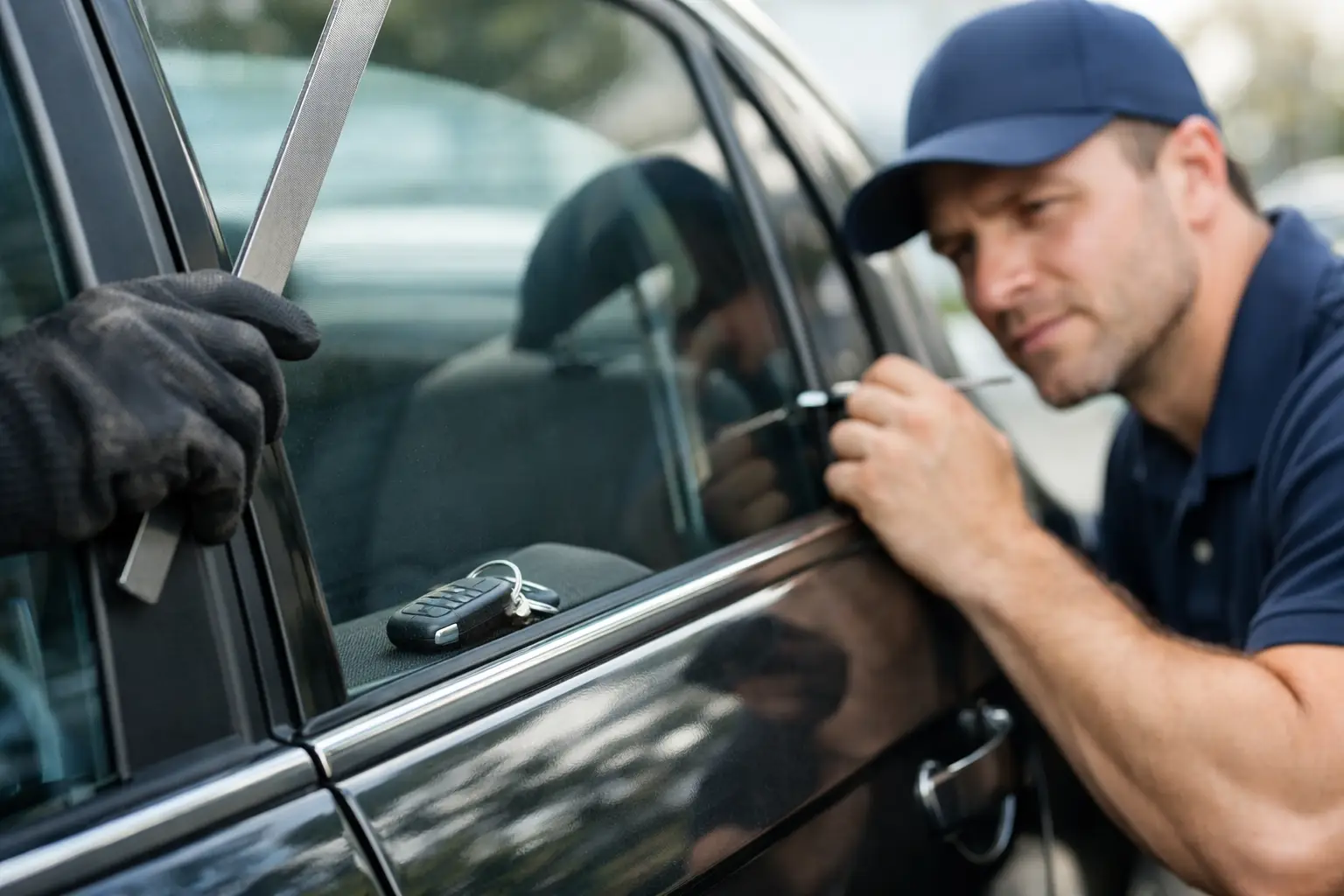
The keys are sitting on the driver’s seat, the doors are shut, and the vehicle is still running. Or the key fob stopped responding in a parking lot after work. Car lockout solutions need to be practical in that moment: protect the vehicle, keep people safe, and restore access without creating a more expensive repair.
For drivers in Louisiana, heat, rain, traffic, and unfamiliar roadside locations can turn a locked car into an urgent problem quickly. The right response depends on where you are, who is with you, the type of vehicle, and whether there is an immediate safety concern.
Start With Safety, Not the Door
Before trying to get back into the vehicle, look at the situation around you. If a child, older adult, pet, or anyone medically vulnerable is locked inside, call 911 right away. High temperatures can become dangerous fast, even when the vehicle is parked in shade or the windows appear slightly open.
If the vehicle is running in an enclosed or poorly ventilated area, move away from exhaust exposure and call for emergency help. Do not spend time searching for spare keys or trying to force a window when someone inside may be at risk.
For a standard lockout with no one trapped inside, move to a safe, visible spot if possible. Stand away from moving traffic, especially on a shoulder, at a fuel station entrance, or in a busy parking lot. Turn on hazard lights if the vehicle is running and you can do so safely. A lockout is frustrating, but getting struck by traffic or damaged by an improvised entry attempt is the bigger problem.
Car Lockout Solutions That Avoid Vehicle Damage
Modern vehicles are not built for improvised entry. Door frames, weather seals, electronic locks, side airbags, window regulators, and wiring can all be damaged by the wrong tool or technique. What looks like a simple gap at the top of a door may be close to wiring or components that cost far more to repair than a professional lockout service.
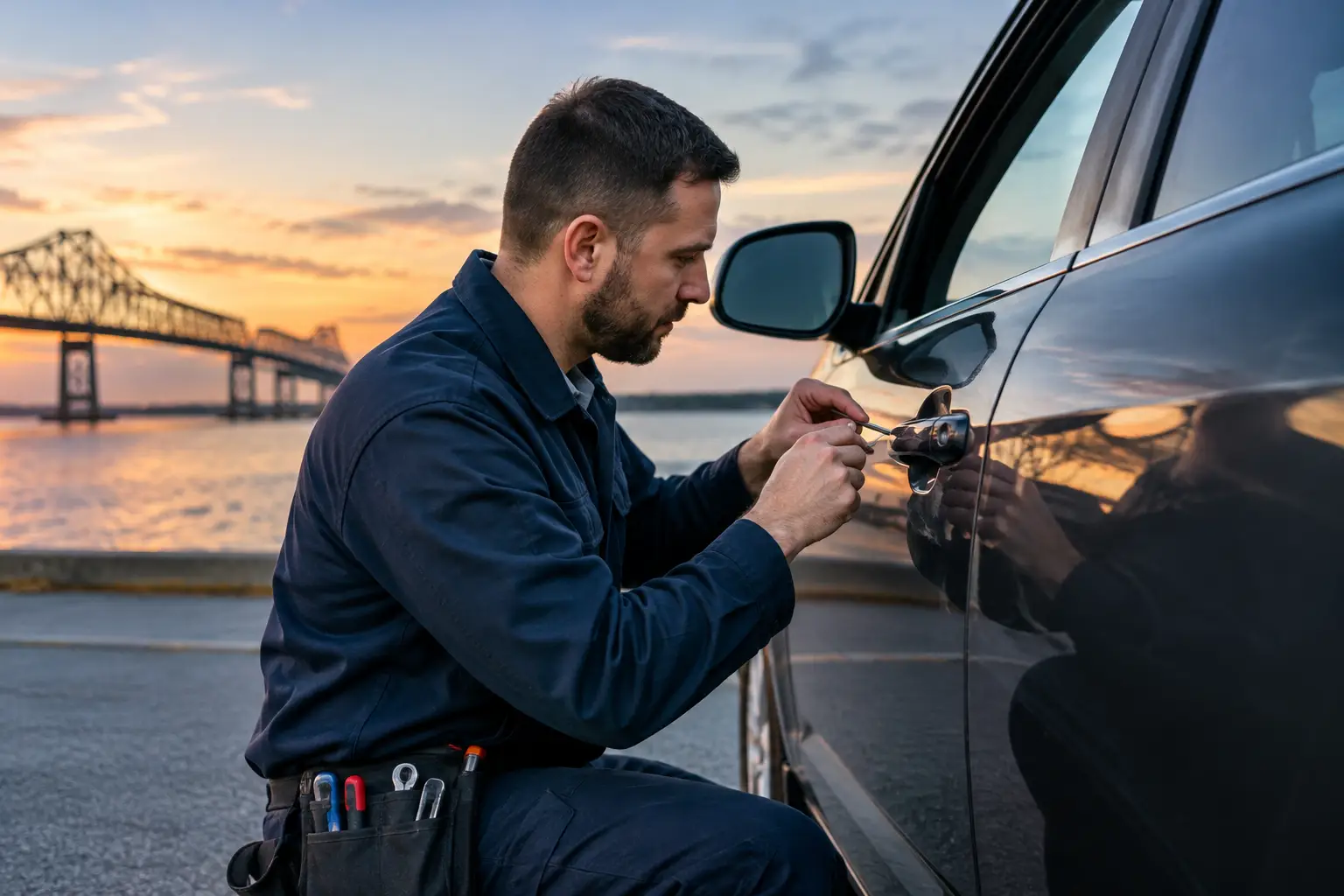
A mobile automotive locksmith can assess the vehicle and use methods designed for the make, model, and lock system. The goal is controlled entry, not forcing a door open. This matters even more with newer vehicles that use proximity keys, electronic latches, high-security lock cylinders, or alarm systems.
Trying a coat hanger, screwdriver, wedge, or metal rod may bend the door frame, tear the weather stripping, scratch paint, damage the lock linkage, or trigger an airbag-related issue. Breaking a window should never be a standard answer to being locked out. Glass cleanup, replacement costs, weather exposure, and injury risks create a much larger problem.
Check Simple Options First
There are a few low-risk checks worth making before requesting help. Look for a safely accessible spare key, confirm whether another licensed driver has one, and check whether the trunk or another door is actually open. If your vehicle has a manufacturer app or remote-access service, it may provide an entry option if your phone is charged, your account is active, and the vehicle has signal.
These options do not work for every vehicle. Remote access can fail because of a dead vehicle battery, poor cellular coverage, expired subscriptions, app login problems, or an older system without remote features. If they do not work within a few minutes, it is usually better to stop troubleshooting and get professional assistance.
Know When It Is More Than a Lockout
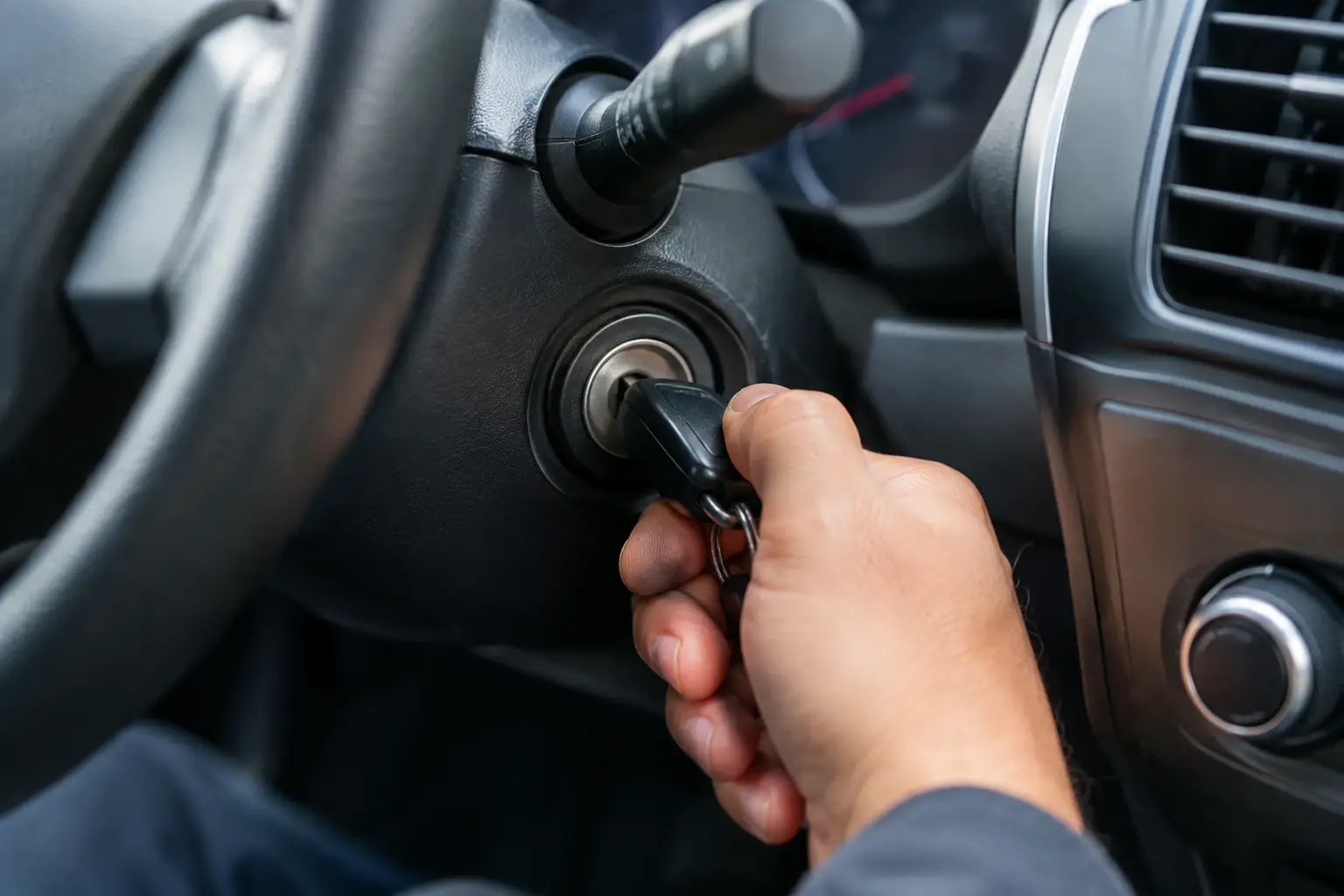
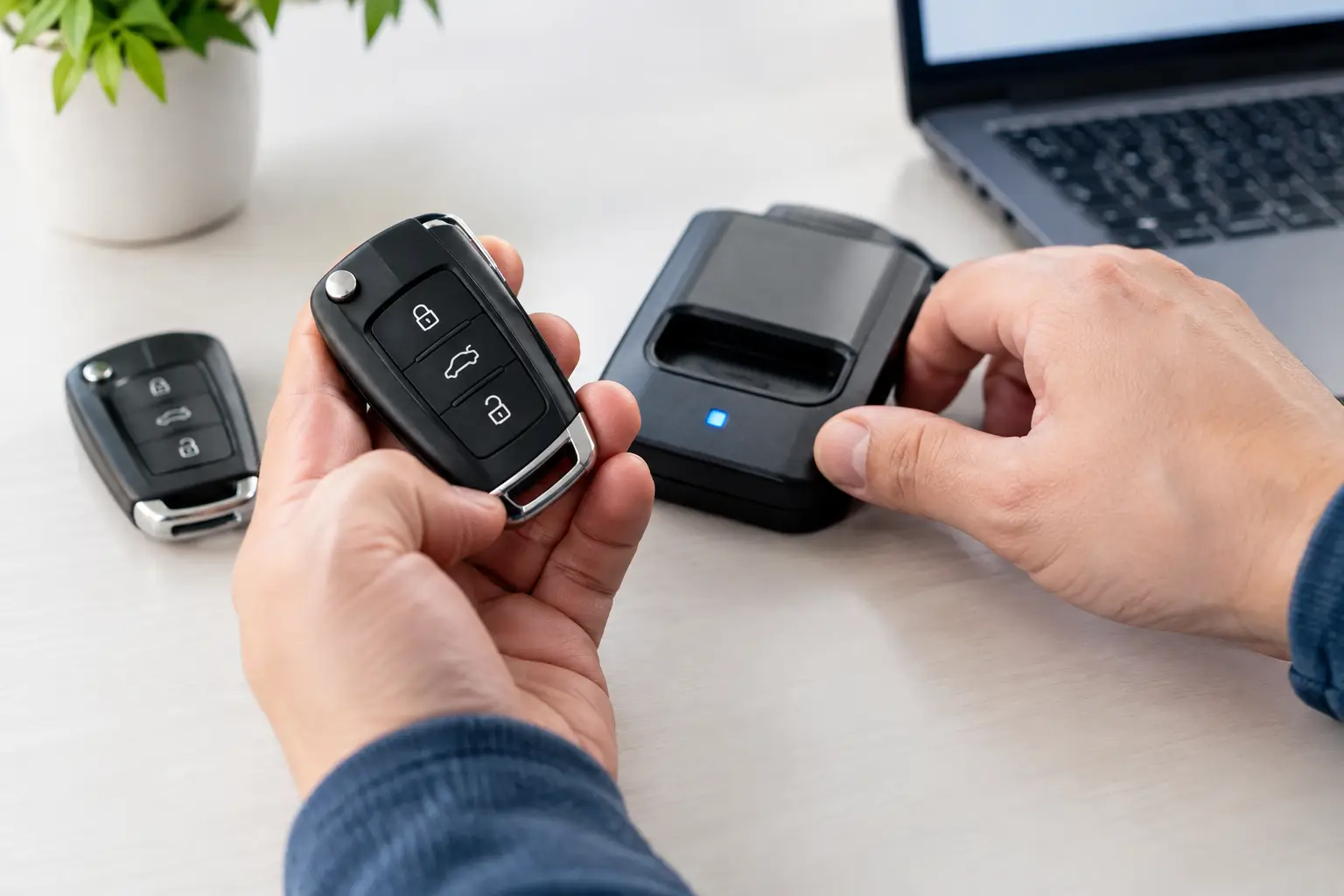
Sometimes the locked door is only the visible problem. A key may be broken in the ignition or door lock. The fob may have a dead battery. The vehicle battery may be too weak to respond to electronic entry commands. A damaged ignition, lost key, or malfunctioning transponder can require locksmith work beyond getting inside the vehicle.
Describe the situation clearly when requesting service. Let the dispatcher know whether the keys are visible inside, whether the car is running, whether the fob is missing or damaged, and whether the door locks stopped responding. Accurate details help send the right equipment and reduce delays.
What to Do While Waiting for Help
Once professional assistance is on the way, keep the vehicle in sight from a safe location. If you are parked at a business, let an employee or security staff member know what happened, particularly if the vehicle is blocking a lane, pump, entrance, or loading area.
Have your identification and proof of vehicle ownership available if you can access them. A reputable provider may need to verify that you are authorized to enter the vehicle. If those documents are locked inside, explain that when you call. The provider can tell you what information may be needed after entry.
Avoid accepting help from strangers who want to pry open the door or use unknown tools. Good intentions can still lead to broken glass, damaged trim, or a compromised lock. Stay alert in isolated areas, and if you feel unsafe, move toward a staffed, well-lit business or call law enforcement.
Lockouts Involving Commercial Trucks
For a commercial driver, a cab lockout can affect more than one person’s schedule. It can delay a load, interrupt a route, expose cargo to security concerns, and leave a driver stranded during required rest time. The situation may also involve specialized equipment, air systems, electronic access components, or a vehicle that needs mechanical attention once the driver regains access.
Commercial truck operators should avoid forcing cab doors or damaging lock hardware. A damaged door seal, latch, or window can put the truck out of service or create a safety issue on the road. Fleet managers should have the truck number, location, driver contact information, unit type, and any related mechanical symptoms ready when requesting support.
This is where a local provider with roadside, automotive locksmith, and commercial truck repair capabilities can save time. Instead of treating the lockout as a separate issue from a no-start condition, electrical concern, or minor truck repair, the response can account for the full situation. Hopper Roadside serves drivers and operators in the Hammond area with that practical, on-location approach.
Prevent the Next Lockout
Most lockouts happen during rushed moments: unloading groceries, switching drivers, stopping for fuel, handling a phone call, or stepping out while the engine is running. Prevention is not perfect, but a few habits reduce the odds.
Keep a spare key with a trusted person or in a secure location away from the vehicle. Replace a weak fob battery before it fails completely. If you use keyless entry, make a habit of checking for the fob before closing the door. For work vehicles, establish a clear key-control process so drivers, supervisors, and after-hours staff know who has access to spares.
Do not hide a key in an obvious spot on the vehicle. Thieves know to check common locations, and an accessible spare can turn a simple lockout precaution into a theft risk. A professionally managed spare key plan is safer than relying on a magnetic box under the frame.
Choose Help Based on the Actual Problem
Not every roadside provider offers automotive locksmith service, and not every locksmith is equipped to handle roadside conditions or commercial vehicles. When you need help, ask whether the provider can perform non-destructive vehicle entry, address key or fob concerns, and respond where the vehicle is located.
Price matters, but the lowest quote is not always the lowest cost. A damaged door frame, broken glass, or failed electronic lock can quickly exceed the cost of proper lockout service. The best car lockout solutions are the ones that get you safely back into the vehicle while preserving the condition and security of the vehicle.
If you are locked out, pause before reaching for a tool. Get to a safe location, confirm there is no immediate emergency, and call for qualified mobile assistance. A calm, damage-free response gets you moving again with fewer problems waiting at the next stop.