
How to Change a Flat Tire Roadside Safely
A tire can fail at the worst possible time: on a narrow shoulder, after dark, in heavy rain, or with traffic moving faster than it should. Knowing how to change a flat tire roadside can get you out of a difficult spot, but only if the location and conditions are safe enough to do the work.
The goal is not to rush. The goal is to protect yourself, secure the vehicle, install the spare correctly, and drive only as far as the spare tire allows. If any part of the situation feels unsafe, roadside assistance is the better call.
Before You Change a Flat Tire Roadside
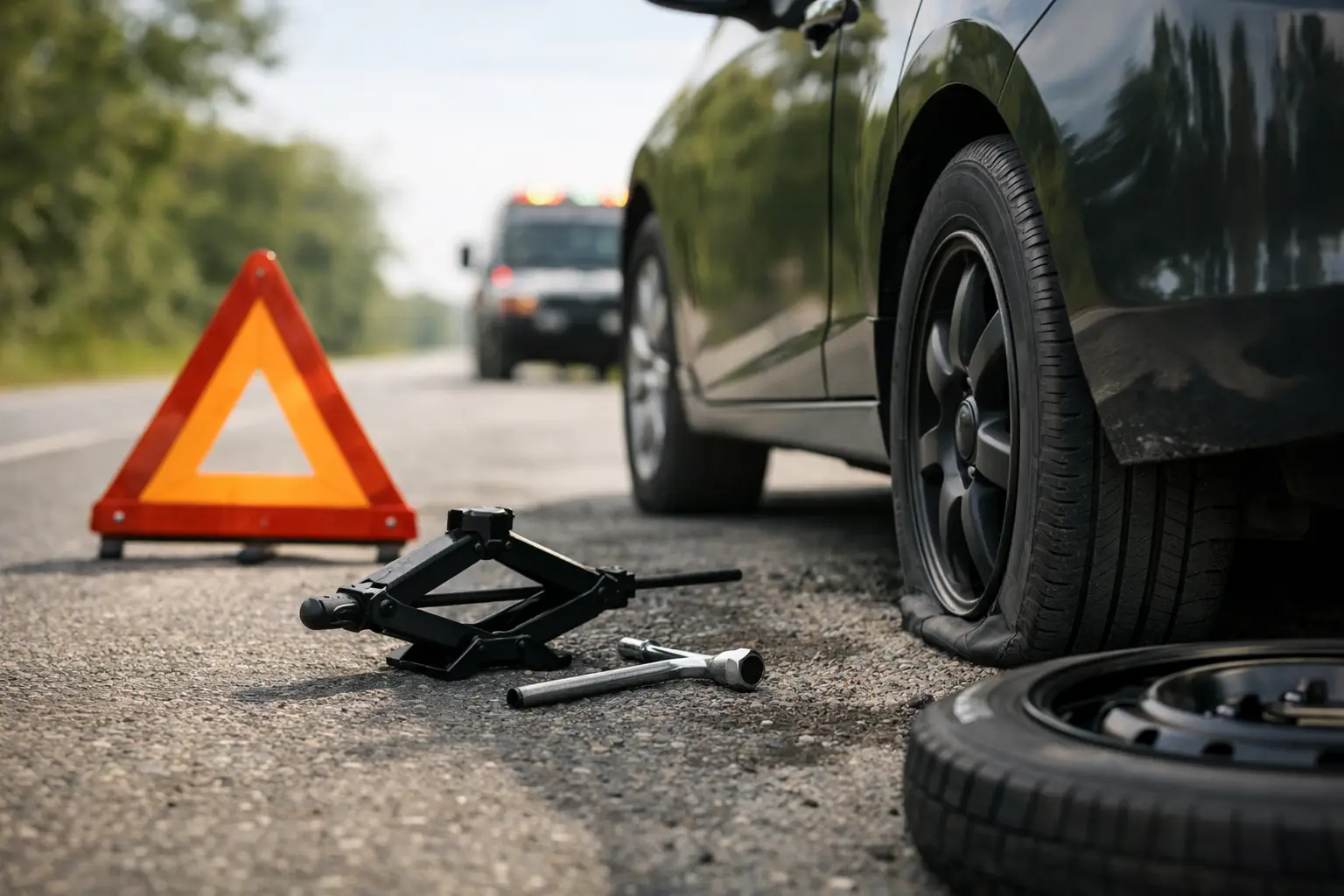
Start by getting completely out of the travel lane. Turn on your hazard lights as soon as you recognize a flat or feel the vehicle pulling, vibrating, or handling poorly. Reduce speed gradually. A sudden turn or hard braking can make a damaged tire harder to control.
Choose a firm, level surface whenever possible. A parking lot, wide paved shoulder, or nearby side street is much safer than a soft ditch, sloped shoulder, bridge, curve, or interstate lane. Do not stop where passing drivers will have little time to see you.
Once parked, put the transmission in Park or, for a manual vehicle, in first gear or Reverse. Set the parking brake. If you have wheel chocks, place them against the tires opposite the flat. If not, a solid block or heavy object may help, but do not rely on it in place of proper parking and brake engagement.
Before opening the trunk or reaching for tools, look at the traffic pattern. If you would need to work inches from moving vehicles, especially at night or during bad weather, do not attempt the repair. Stay in the vehicle with the doors locked if it is safe to do so, and call for help.
Find the Right Tools and Spare
Most passenger vehicles store the spare tire, jack, and lug wrench under the trunk floor, inside a rear compartment, or beneath the cargo area. Check the owner's manual if you are unsure where the vehicle's factory jack points are located. Lifting from the wrong location can bend a rocker panel, damage the underbody, or allow the vehicle to slip.
Your vehicle should have a spare tire, jack, lug wrench, and usually a small tool for removing a hubcap or wheel cover. A flashlight, reflective triangles, work gloves, and a tire pressure gauge make the job safer and easier. These are worth keeping in the vehicle rather than assuming they will be there when you need them.
Check the spare before lifting the vehicle. A flat or badly weathered spare will not solve the problem. Many cars have a compact temporary spare, often called a donut. It is designed for short-distance, lower-speed use only. The speed and distance limits are printed on the tire sidewall or listed in the owner's manual.
A full-size spare may be driven more normally, but it still needs the correct tire pressure and tread condition. If your vehicle has no spare, or uses run-flat tires, the next step depends on the tire damage and your vehicle manufacturer's guidance. Do not assume every tire can safely travel after a puncture.
Steps to Change a Flat Tire at the Roadside
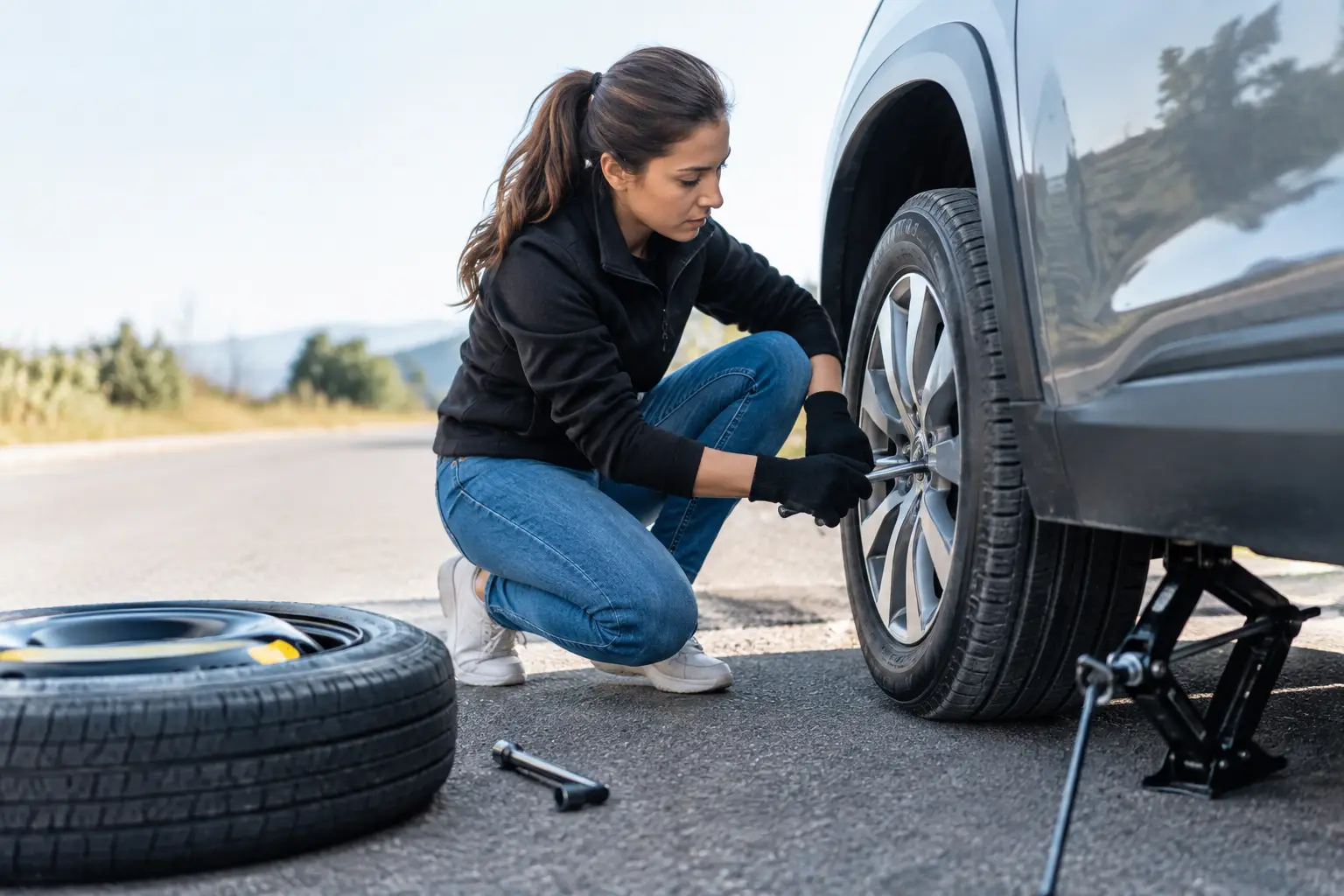
With the vehicle parked securely, loosen the lug nuts before lifting the wheel. Lug nuts are much easier to turn while the tire is still on the ground. Remove any hubcap or wheel cover if it blocks access, then turn each lug nut counterclockwise. Loosen them about a quarter to a half turn. Do not remove them yet.
Position the jack at the vehicle's designated lifting point closest to the flat tire. The owner's manual normally shows the correct spot. Raise the vehicle only until the flat tire is just clear of the ground. There is no need to lift it higher than necessary.
Use this order to complete the wheel change:
- Remove the loosened lug nuts and place them where they will not roll into traffic or dirt.
- Pull the flat tire straight toward you. If it is stuck, avoid kicking it hard while the vehicle is raised.
- Line up the spare tire with the wheel studs and push it fully onto the hub.
- Install the lug nuts by hand first, turning them clockwise until snug.
- Lower the vehicle until the tire touches the ground, then tighten the lug nuts in a star pattern.
The star pattern matters. Tightening one nut fully before the others can seat the wheel unevenly. Work across the wheel, rather than around it in a circle, until every lug nut is firmly tightened. Then lower the vehicle completely, remove the jack, and check the lug nuts one more time.
Do not place any part of your body underneath a vehicle supported only by a roadside jack. A factory jack is intended to lift the vehicle long enough to change a tire, not to support repair work underneath it.
What to Do After the Spare Is Installed
Put the flat tire, jack, and tools back in the vehicle before leaving. Walk around the vehicle and make sure nothing is in the roadway. Confirm that the spare looks properly seated and that the tire has adequate air pressure if you have a gauge.
Drive cautiously at first. Listen for scraping, thumping, or a steering wheel vibration. If the vehicle pulls sharply, the wheel feels loose, or the tire pressure warning light flashes, stop in a safe location and call for service. A spare tire is not a permanent repair, and a warning light may remain on until the damaged tire is repaired or replaced.
Temporary spares commonly carry a maximum speed limit of 50 mph, but follow the number printed on your tire. Avoid long highway trips, hard braking, sharp turns, and carrying heavy loads. Get the damaged tire inspected as soon as possible. A puncture in the tread area may be repairable; sidewall damage, a separated tire, or a tire driven while flat usually requires replacement.
When You Should Call for Roadside Help Instead
Changing a tire is not always the right move. Call for roadside assistance when traffic is too close, the shoulder is narrow, the ground is soft or uneven, weather is limiting visibility, or you do not have a usable spare. The same applies if lug nuts are seized, a locking lug key is missing, or the wheel will not come off.
Drivers of trucks, vans carrying loads, and commercial vehicles should be especially careful. A commercial truck tire issue may involve heavier equipment, dual-wheel assemblies, air systems, or service requirements that do not belong on the roadside shoulder. Trying to force a repair can increase downtime and create a serious safety risk.
In Hammond and surrounding Louisiana routes, Hopper Roadside can provide practical help when a tire problem, lockout, mechanical issue, or commercial truck breakdown leaves you stranded. Having one local response partner matters when the situation is bigger than a quick spare-tire change.
A Flat Tire Is a Reminder to Check Your Vehicle
The easiest roadside tire change is the one you have prepared for. Check your spare tire pressure during routine maintenance, make sure the jack and lug wrench are present, and learn where the factory jack points are before an emergency. If your vehicle uses wheel locks, keep the key where you can find it.
Tires also give warning signs before they fail. Low pressure, cracked sidewalls, visible cords, repeated air loss, bulges, and uneven tread wear deserve attention before they turn into a roadside stop. A few minutes in a safe place beats an hour on a shoulder with traffic passing close by.
If the road is unsafe or the repair is beyond a basic spare-tire change, protect yourself first. The right decision is often to step back, stay visible, and get qualified help to the vehicle.