
Flat Tire Change Hammond LA: What to Do First
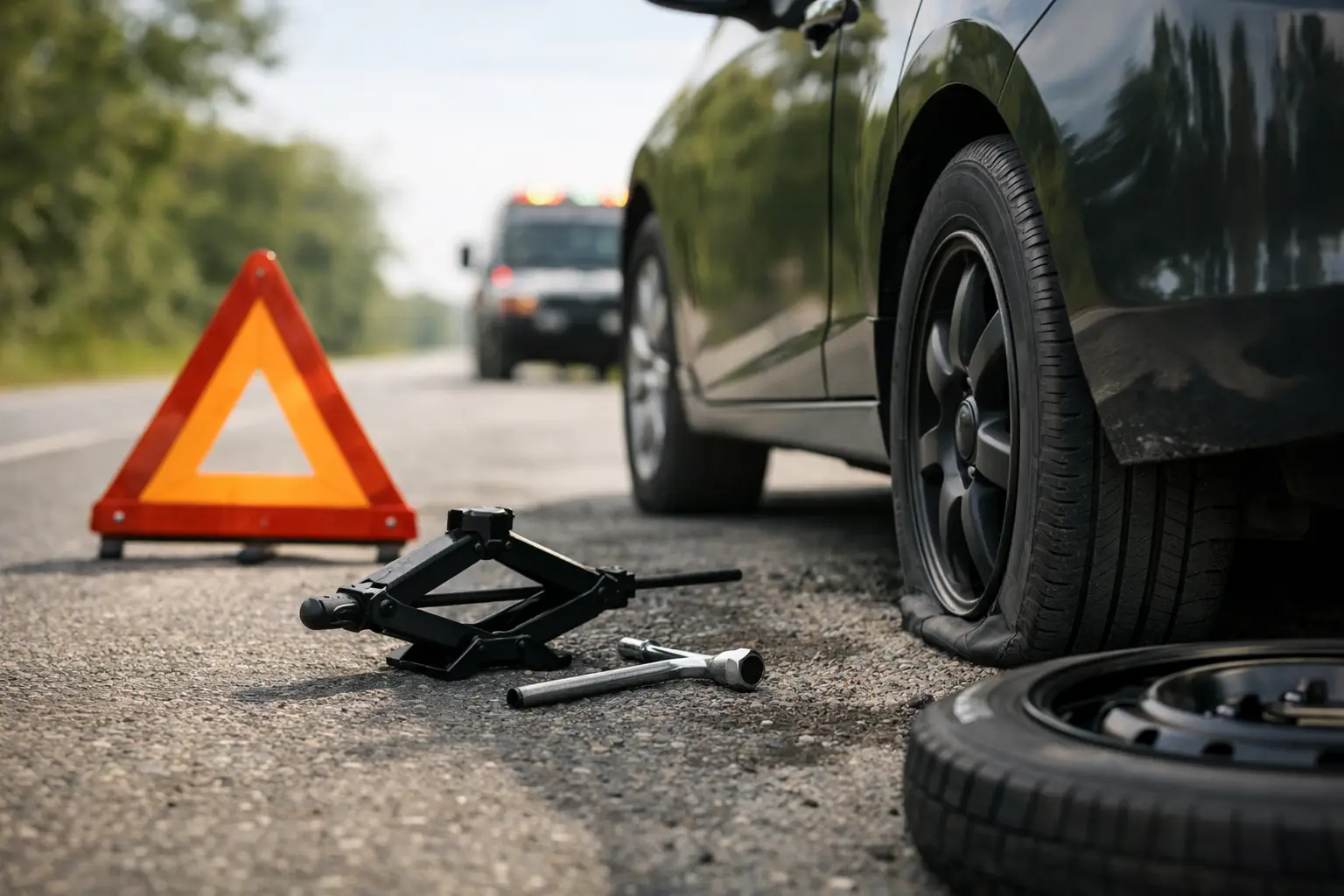
A tire can fail without much warning. One minute you are headed to work, moving freight, or passing through town. The next, the vehicle pulls to one side, the steering feels heavy, or a tire pressure warning appears. If you need a flat tire change Hammond LA, the first job is not removing lug nuts. It is getting yourself, your passengers, and your vehicle out of immediate danger.
A roadside tire change is straightforward only when the vehicle is in a safe position, the spare is usable, and the wheel has not suffered damage. If any of those conditions are uncertain, calling for roadside assistance is usually the safer move.
Get to a Safe Place Before You Stop
Do not slam on the brakes when you realize a tire is losing air. Ease off the accelerator, hold the wheel firmly, and slow down gradually. Turn on your hazard lights as soon as you can do so safely.
If the vehicle remains controllable, move toward a parking lot, a wide shoulder, or another location away from moving traffic. Avoid stopping on a curve, near the crest of a hill, or in a narrow lane where drivers may not see you in time. Continuing a short distance on a completely flat tire can damage the tire, wheel, and suspension components, so balance the need to get clear of traffic with the need to avoid driving farther than necessary.
Once stopped, set the parking brake and keep passengers away from traffic. On a busy roadway, it is often safer to stay in the vehicle with seat belts fastened than to stand near the shoulder. Use your judgment based on traffic, weather, and the amount of safe space around the vehicle.
When a Flat Tire Change in Hammond, LA Makes Sense
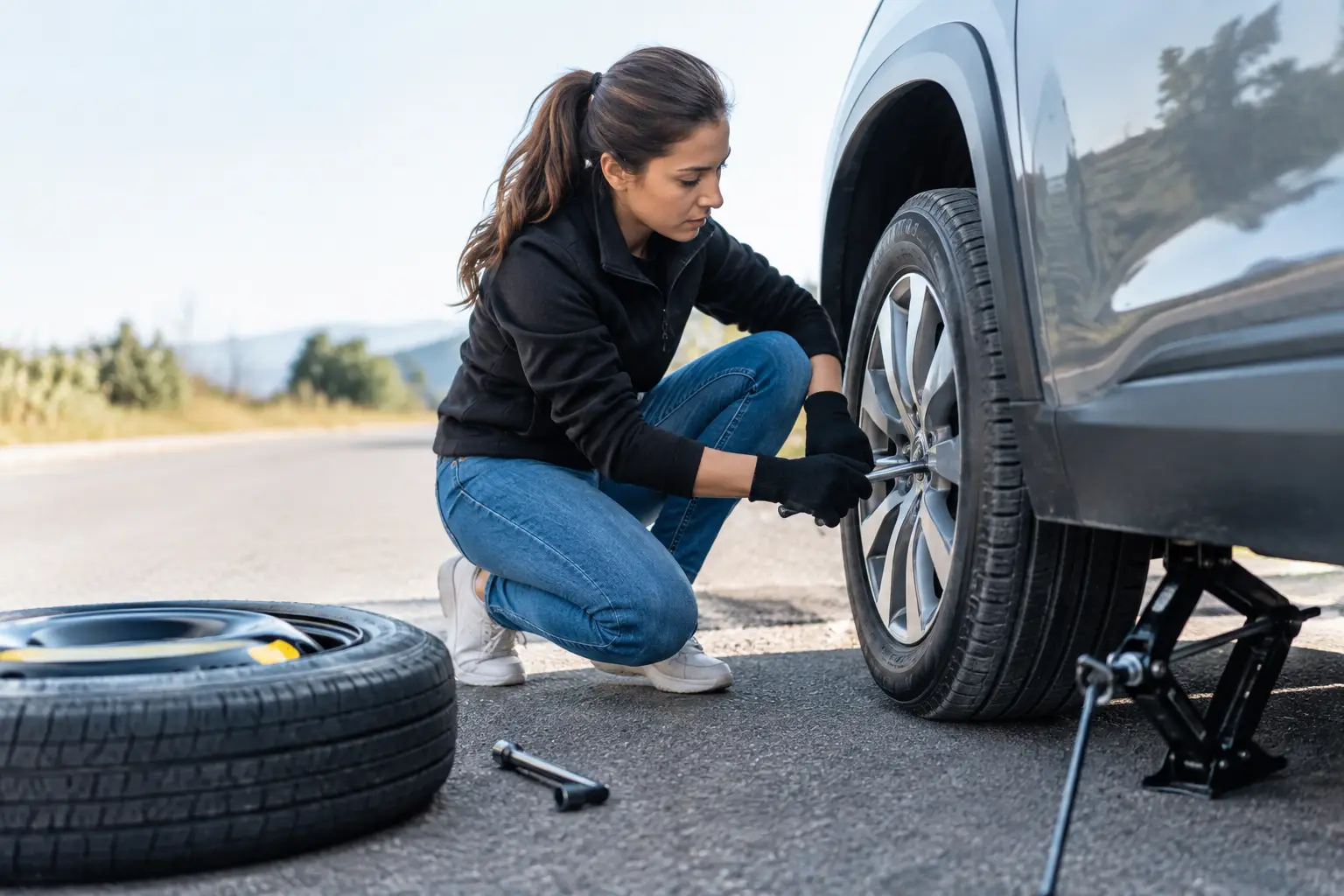
A tire change is the right solution when the vehicle has a properly inflated spare, the wheel is intact, and the tire is the only issue. A roadside technician can remove the flat, install the spare, check the lug nuts, and help get you moving again. The spare is generally meant to get you to a tire shop, not to support normal long-distance driving.
There are cases where changing the tire is not enough. A sidewall tear, bent wheel, stripped lug nut, broken wheel stud, or damaged jack point can turn a simple stop into a more involved repair. A tire that has come apart at highway speed may also damage the wheel well, brake line area, or body panels. In those situations, forcing a spare onto the vehicle is not a practical fix.
Many newer vehicles add another complication: some do not include a spare tire. They may have a tire inflator kit, run-flat tires, or no roadside equipment at all. An inflator kit may help with a small tread puncture, but it will not repair a blown-out tire, a cut sidewall, or a tire that has separated from the wheel.
Check the Spare Before Relying on It
A spare tire that has been sitting under a trunk floor or mounted beneath a truck for years may not be road-ready. Before a roadside emergency happens, check its air pressure and inspect it for dry rot, cracking, or visible damage. Also make sure the jack, lug wrench, wheel lock key, and any special adapter are in the vehicle.
Compact temporary spares have speed and distance limits printed on the sidewall. They are not designed for heavy loads, aggressive braking, or long highway runs. If you drive a pickup, SUV, or work vehicle, confirm that the spare is rated for your vehicle and not damaged by road debris or corrosion.
If you are already stranded, do not crawl under a vehicle beside moving traffic to inspect an underbody spare. Roadside help can assess what equipment is available and determine whether a tire change can be completed safely where you are.
What Roadside Tire Service Can Address
The immediate goal of roadside assistance is to restore safe mobility or identify the next appropriate step. For a passenger vehicle, that often means installing a usable spare and making sure the wheel is secured correctly. It can also mean identifying why the spare cannot be installed before time is lost attempting an unsafe repair.
When requesting help, provide the vehicle make, model, and location as accurately as possible. Tell the dispatcher whether you are on a highway shoulder, in a parking lot, at home, or at a commercial property. Mention if the tire is shredded, if the wheel looks bent, or if you have a spare but are unsure about its condition. Those details help prepare the right response.
Hopper Roadside provides practical local assistance for drivers dealing with roadside problems in the Hammond area, including tire-related stops that need an on-site assessment. A clear description of the situation helps get the response moving without confusion.
Do Not Put Yourself at Risk to Save a Service Call
Changing a tire on level pavement in a driveway is one thing. Changing one inches from high-speed traffic, in heavy rain, after dark, or on soft ground is another. The jack can shift, another driver can drift onto the shoulder, or poor visibility can turn a manageable problem into an injury risk.
Avoid placing any part of your body under a vehicle supported only by a jack. Do not loosen lug nuts while the vehicle is unstable. If the wheel uses locking lug nuts and the key is missing, do not attempt to force them off. Damaging the wheel or studs can create a much larger repair.
It also makes sense to call for help if you are physically unable to lift or position the spare, lack the necessary tools, or are unsure where the vehicle's approved lifting points are located. There is no advantage in finishing the job yourself if it leaves the vehicle unsafe to drive.
Commercial Trucks Need a Different Decision
A tire issue on a commercial truck is not handled like a passenger-car flat. Truck wheels, tire pressures, axle loads, and roadside work requirements create a different level of risk. A damaged steer tire, dual tire, trailer tire, or wheel-end component may affect handling, braking, load security, and delivery schedules.
Drivers and fleet managers should document the tire position, visible damage, load condition, and exact truck location before requesting service. If there is a vibration, smoke, damaged wheel hardware, or evidence of a wheel-end problem, the truck should remain parked until it can be inspected. Continuing to operate can turn a tire issue into a wheel, brake, or axle repair.
For owner-operators and fleets, the fastest answer is not always simply installing another tire. It depends on the tire position, the condition of the wheel, the load, and whether the truck can safely return to service. Commercial truck repair support helps reduce guesswork when downtime is already costing time and money.
After the Spare Is Installed
Treat the spare as a temporary solution unless it is a full-size tire in verified good condition. Drive conservatively, avoid sharp maneuvers, and head to a tire professional as soon as practical. If your vehicle has a tire pressure monitoring system, remember that the warning may remain active until the original wheel is repaired, replaced, and relearned by the vehicle system.
A tire can sometimes be repaired when the puncture is in the repairable tread area and the tire has not been driven flat. Sidewall punctures, shoulder damage, exposed cords, and severe internal damage usually require replacement. A tire shop can inspect the inside of the tire, which matters because exterior damage does not always tell the full story.
Before getting back on the road, take a moment to confirm that your spare, jack, lug wrench, and wheel lock key are all back in the vehicle. The next flat rarely arrives at a convenient time, but a prepared vehicle and a safe response can keep a roadside interruption from becoming a larger problem.