
How to Check Truck Brake Problems Safely
A brake concern is not a problem to work around until the next stop. When you check truck brake problems, the goal is simple: identify whether the truck can be safely parked, moved a short distance for service, or must stay out of service immediately. For commercial drivers and fleet operators, that decision protects people, equipment, cargo, and delivery schedules.
Truck brake systems are designed with safety margins, but those margins disappear quickly when warning signs are ignored. A soft pedal, low air pressure, pulling during a stop, or a burning smell can all point to a condition that needs prompt attention. If braking performance has changed, reduce speed, increase following distance, and find a safe place to stop as soon as possible.
When a Truck Brake Issue Requires an Immediate Stop
Some symptoms mean the truck should not continue down the road. If the service brakes are weak, the brake pedal travels abnormally far, the vehicle pulls sharply, or a brake warning light remains on, stop operating the truck when it is safe to do so. The same applies if you hear continuous air loss, cannot build normal air pressure, or see an air-pressure gauge dropping while the system is at rest.
For air-brake-equipped trucks, low air pressure is especially serious. The system relies on sufficient pressure to release spring brakes and apply service brakes correctly. Do not attempt to defeat a warning system, cage a brake chamber as a shortcut, or drive with known air leaks. Those actions can turn a repair issue into a loss-of-control event.
Smoke from a wheel end, a strong burning odor, or a wheel that is unusually hot after stopping can indicate a dragging brake, seized caliper, failed chamber, or bearing-related issue. Keep clear of the wheel area if heat is severe. A hot brake can lead to a fire, and adding water to an overheated component can create additional damage.
How to Check Truck Brake Problems Before Calling for Repair
A roadside check is not a substitute for a qualified brake inspection. It does, however, help a driver give a repair technician useful information and make a sound decision about whether the vehicle can move. Perform checks only after parking on stable ground, setting the brakes, and following your company’s safety procedures.
Start with the driver’s report
Think about when the problem began and what changed. Did the truck start pulling only under hard braking? Did the brake pedal feel different after a long grade? Did an ABS light appear after heavy rain? Was there recent brake work, tire service, trailer interchange, or a hard curb strike?
These details matter. A pull to one side may come from a brake problem, but it can also be tied to a tire issue, suspension damage, uneven loading, or a problem on the trailer. A technician needs the full picture before replacing parts.
Check the warning lights and gauges
With the truck parked, review the dash for brake, ABS, and low-air warnings. On an air-brake system, confirm that pressure builds normally and reaches the operating range specified for the truck. Watch whether the gauge holds pressure after the engine is shut down and the brakes are not being applied.
A warning light does not always mean the truck has lost all braking ability. For example, an ABS warning can indicate that anti-lock function is disabled while base braking remains available. Still, it should not be ignored. ABS is particularly valuable on wet Louisiana roads, loose shoulders, and emergency stops where wheel lockup can make a heavy truck harder to control.
Listen for air leaks
On air-brake trucks, listen around the tractor and trailer for a steady hiss that continues after the system is charged. Common leak points include air lines, fittings, valves, brake chambers, and connections at the trailer. A brief release of air can be normal during certain operations. A continuous leak, a gauge that falls rapidly, or an inability to maintain operating pressure is not.
Do not crawl under a truck that is not properly secured. Never rely on air suspension or a jack alone to support a vehicle. If you see a damaged hose, loose line, or broken component, keep the truck parked and arrange repair.
Look at the wheels and visible brake components
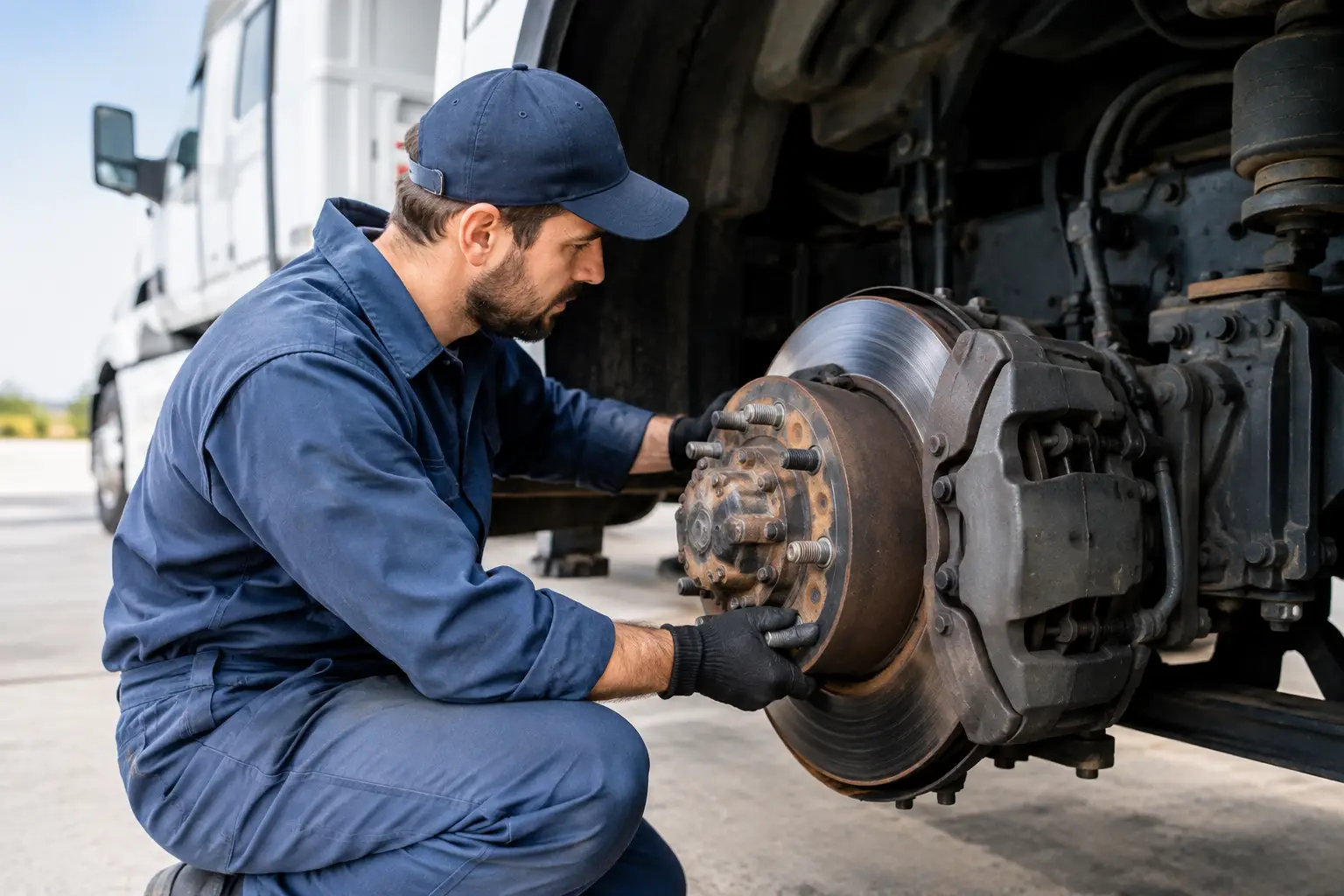
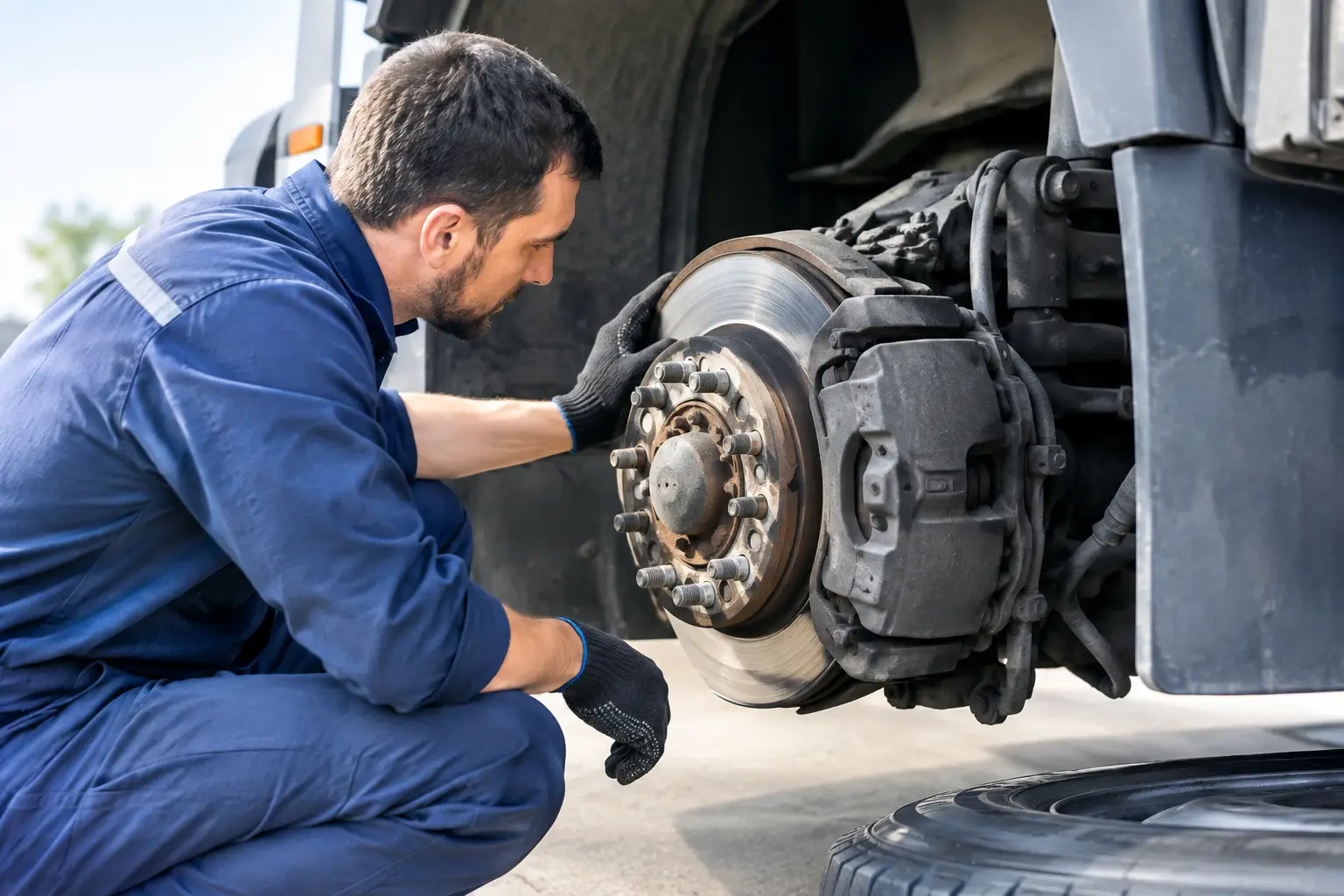
Walk around the truck and trailer. Compare tires, wheel ends, and brake areas from side to side. Look for loose hardware, damaged air lines, fluid leaks, cracked hoses, grease around the hub, smoke residue, or signs that one wheel has been running hotter than the others.
A wheel that looks normal can still have an internal problem, so visual checks have limits. Do not touch drums, rotors, hubs, or wheels immediately after driving. They can cause serious burns. If you suspect one wheel is overheating, report its location clearly, such as the left rear tractor axle or right-side trailer axle.
Pay attention to pedal feel and stopping behavior
For hydraulic brake systems, a pedal that feels spongy, sinks toward the floor, or requires pumping may indicate fluid loss, air in the system, a failing master cylinder, or another serious issue. Check for visible brake-fluid leaks, but do not assume topping off fluid solves the cause. Brake fluid does not normally disappear without a leak or worn components that need inspection.
During a controlled, low-speed check in a safe area, note whether the truck stops straight and whether the brakes engage smoothly. Do not perform high-speed testing or repeated hard stops to “see if it clears up.” Repeated braking can overheat a dragging brake or worsen an already compromised system.
Common Causes Behind Truck Brake Symptoms
Brake problems rarely have one universal cause. The symptom matters, as does the truck’s brake system, load, trailer condition, recent maintenance, and operating environment.
A truck that pulls during braking may have uneven brake adjustment, a seized caliper, contaminated friction material, a damaged hose, or unequal tire traction. A long stopping distance can result from worn pads or shoes, low air pressure, brake fade from heat, poor adjustment, or a loaded trailer that is not braking as it should.
Air loss may come from a cracked line, worn fitting, faulty valve, damaged brake chamber, or a connection issue between tractor and trailer. An ABS warning may involve a wheel-speed sensor, damaged wiring, a tone ring issue, or a control-system fault. The warning is useful information, but it does not identify the failed part by itself.
Brake fade deserves special attention. It often develops after repeated braking, heavy loads, stop-and-go traffic, or long downhill runs. The brakes may feel less effective because friction components have overheated. Downshift early, use engine braking where appropriate, and never continue a route with brakes that are fading or smoking.
What to Tell a Mobile Truck Repair Technician
Clear information helps reduce diagnosis time when a mobile repair service arrives. Provide the truck’s make, model, year, axle configuration, and whether the issue involves the tractor, trailer, or both. Explain the exact symptom, when it occurs, and whether warning lights or air-pressure alarms are active.
Also report the truck’s location, whether it is loaded, whether it is safely parked, and whether there is smoke, a hot wheel, or an active air leak. If the truck is blocking traffic or sitting on a narrow shoulder, say so immediately. The repair plan may need to account for traffic exposure and safe work space before any mechanical work begins.
Hopper Roadside provides commercial truck repair for drivers and operators facing urgent mechanical issues in the Hammond area. Brake concerns should be described as accurately as possible during dispatch so the responding technician can prepare for the condition at hand.
Do Not Turn a Brake Warning Into a Roadside Emergency
The safest brake check is the one performed before a failure becomes obvious. Daily pre-trip inspections, attention to dashboard warnings, and prompt repairs after a change in braking behavior can prevent expensive downtime. Fleet managers should also track repeat complaints, because recurring air leaks, uneven wear, or ABS faults may point to a maintenance pattern rather than a one-time failure.
If the truck does not brake normally, do not let schedule pressure make the decision. Park it safely, document the symptoms, and get qualified help. Freight can be rescheduled. A preventable brake failure cannot be taken back.