
How to Diagnose Truck Air Leaks on the Road

A steady hiss under a commercial truck is not a noise to ignore. Knowing how to diagnose truck air leaks can help a driver protect braking performance, avoid a roadside shutdown, and give a repair technician useful information before they arrive. Air leaks can come from a simple loose fitting, but they can also point to a failed brake chamber, damaged hose, leaking valve, or problem in the trailer air system.
For drivers and fleet operators, the goal is not to make a risky roadside repair. The goal is to identify whether the truck can safely remain parked, narrow down the likely source, and get the right commercial truck repair support moving.
Start With Air Brake Safety
Truck air systems operate under pressure, and a loss of pressure can affect both service brakes and spring brakes. Park on level ground when possible, set the parking brakes, chock the wheels, and keep clear of traffic. Do not crawl under a truck that is not properly secured, and never rely on air suspension or air pressure to hold a vehicle up.
If the low-air warning comes on, pressure will not build normally, or the truck starts applying its spring brakes, treat the issue as a no-drive condition. A truck that cannot maintain safe air pressure should not be moved simply to finish a load or reach the next exit.
Before inspecting anything, listen. A major air leak is often easy to hear around the tractor, trailer, axle area, or connection points. A smaller leak may only become noticeable once the system is fully charged and the engine is shut off.
Know the Signs of a Truck Air Leak
A hissing sound is the obvious sign, but it is not the only one. Air pressure that builds slowly, drops quickly after shutdown, or falls when the brake pedal is applied deserves attention. So does an air compressor that seems to run constantly without bringing the system up to normal operating pressure.
Watch the dash gauges while the truck is parked. Many air systems build to a governor cut-out pressure around 120 to 135 psi, although the correct range depends on the truck and should be verified in its service information. If pressure will not reach the normal range, a significant leak or compressor-related issue may be present.
Pay attention to where and when the problem occurs. A leak heard only with the brake pedal pressed may involve a service brake circuit, brake chamber, relay valve, or line supplying a brake component. A leak that begins when the parking brakes are released can point toward spring brake chambers, parking brake plumbing, or a valve controlling that circuit.
A brief release of air at the air dryer during a normal purge cycle can be normal. Continuous hissing from the dryer, however, is not the same thing. Constant air loss at that location may indicate a faulty purge valve or another issue that requires repair.
How to Diagnose Truck Air Leaks Step by Step
Begin with a parked, secured truck and a fully charged air system. Let the gauges reach their normal pressure range, then shut off the engine. Walk around the truck in a quiet area if possible. Listen near the air tanks, compressor lines, air dryer, brake chambers, valves, suspension components, and trailer connections.
Next, check the areas most likely to be exposed to vibration, road debris, heat, and repeated coupling. On a tractor-trailer, inspect the red and blue air lines, gladhand seals, fittings, and hose connections between the tractor and trailer. A cracked seal or loose connection at the gladhand can cause a noticeable leak and may be easier to identify than a leak further down the system.
Use a spray bottle with soapy water on suspected fittings, hose ends, valves, and accessible connections. Escaping air will create growing bubbles. Do not use an open flame to locate an air leak. Avoid spraying electrical connectors or hot components, and wipe away excess solution after testing.
Then test how quickly pressure falls. With the parking brakes released and the truck secured, observe the air gauge for one minute without pressing the service brake. For many commercial vehicles, the allowable loss is no more than 2 psi per minute for a single vehicle and 3 psi per minute for a combination vehicle. With the service brake fully applied, typical limits rise to 3 psi per minute for a single vehicle and 4 psi per minute for a combination vehicle.
These are common air-brake inspection standards, not a substitute for the truck manufacturer's procedures. If the pressure drop exceeds those limits, the system needs attention before the truck goes back into service.
Check the Tractor and Trailer Separately
A trailer can make diagnosis more complicated because it adds lines, reservoirs, chambers, valves, and connection points. If the leak is not obvious, determine whether it changes when the trailer is connected or disconnected. A leak that disappears when the trailer supply is isolated may be on the trailer side rather than the tractor.
Inspect the gladhand seals closely. They can flatten, crack, collect dirt, or fail to seal after repeated hookups. Also look for damaged coiled air lines, chafing where lines contact the frame, and fittings that have been pulled or twisted.
Do not assume the trailer is the problem just because the sound is near the rear of the tractor. Air can travel through lines and echo around the frame. The same applies to a leak heard near an axle. The source may be a fitting, relay valve, or brake chamber above or beside the area where the sound is strongest.
Common Leak Locations
Air leaks usually develop where parts move, vibrate, age, or face road contamination. The most common sources include damaged nylon air lines, rubber hoses, push-to-connect fittings, threaded fittings, air tanks, drain valves, brake chambers, relay valves, quick-release valves, and air dryer components.
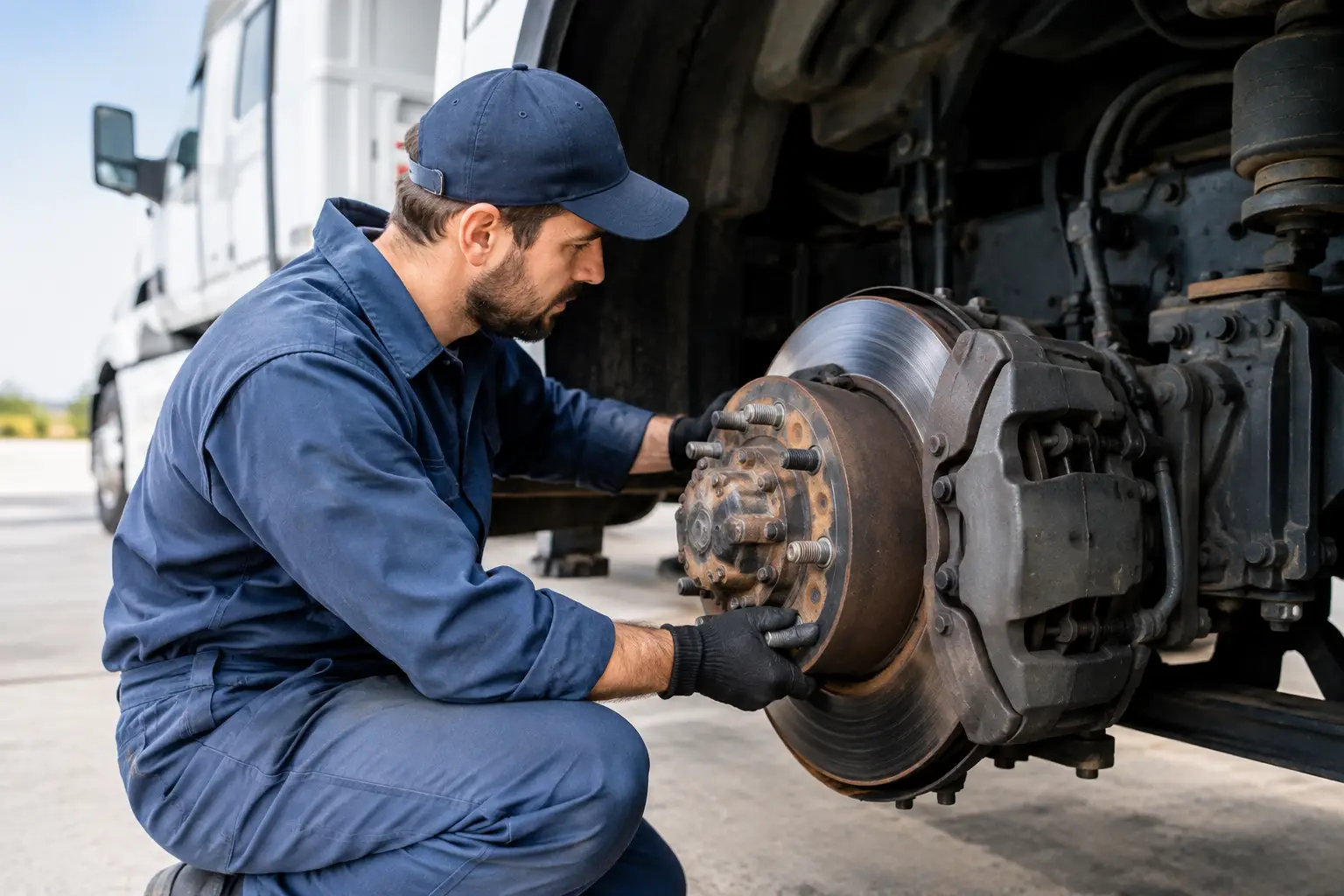
Brake chambers deserve special attention. A leak from the chamber housing, clamp area, or diaphragm section is a brake-system concern, not a roadside patch job. A compromised chamber can affect brake application and should be handled by a qualified commercial truck repair technician.
Air suspension leaks can also create a hissing sound, but they are different from an air brake leak. A leaking air bag, leveling valve, or suspension line may cause the truck to sit low or lean after parking. That still needs repair, but a driver should confirm whether brake-system pressure is also falling. The two systems may share the truck's air supply while having different components and operating symptoms.
When a Leak Means Stop Driving
Stop and arrange repair if the truck cannot build or hold normal air pressure, fails its air-loss check, has a low-air warning, or shows a leak at a brake chamber or critical brake valve. The same applies if spring brakes begin applying unexpectedly, the brake pedal response changes, or the leak becomes loud enough to be heard clearly from outside the cab.
A minor leak may not strand a truck immediately, but it can turn into a major delay quickly. The compressor has to work harder to replace lost air, moisture control can suffer, and a fitting or hose that is barely leaking now may fail under load or vibration later in the trip.
For a truck stopped in Hammond or elsewhere in Louisiana, mobile commercial truck repair can save time when the problem is accessible and the truck is safely parked. Hopper Roadside can help assess common air-system leaks, identify damaged lines or fittings, and determine whether the truck needs a more extensive repair before returning to service.
Give the Repair Technician Useful Details
When calling for help, report whether the truck is a tractor only or connected to a trailer, where the sound seems to be coming from, and whether the leak occurs with the brakes released, applied, or both. Share the current air pressure, whether the low-air warning is active, and whether the truck can build pressure at all.
Those details help a technician arrive prepared and reduce time spent tracking down the issue after arrival. A clear description such as "air drops from 125 to 90 psi in a minute with the pedal applied" is far more useful than simply reporting a hiss.
A truck air leak is often repairable, but safe diagnosis starts with respecting the air brake system. Secure the vehicle, listen carefully, test pressure loss, and stop driving when the system cannot hold pressure. That decision protects the driver, the load, and everyone sharing the road.