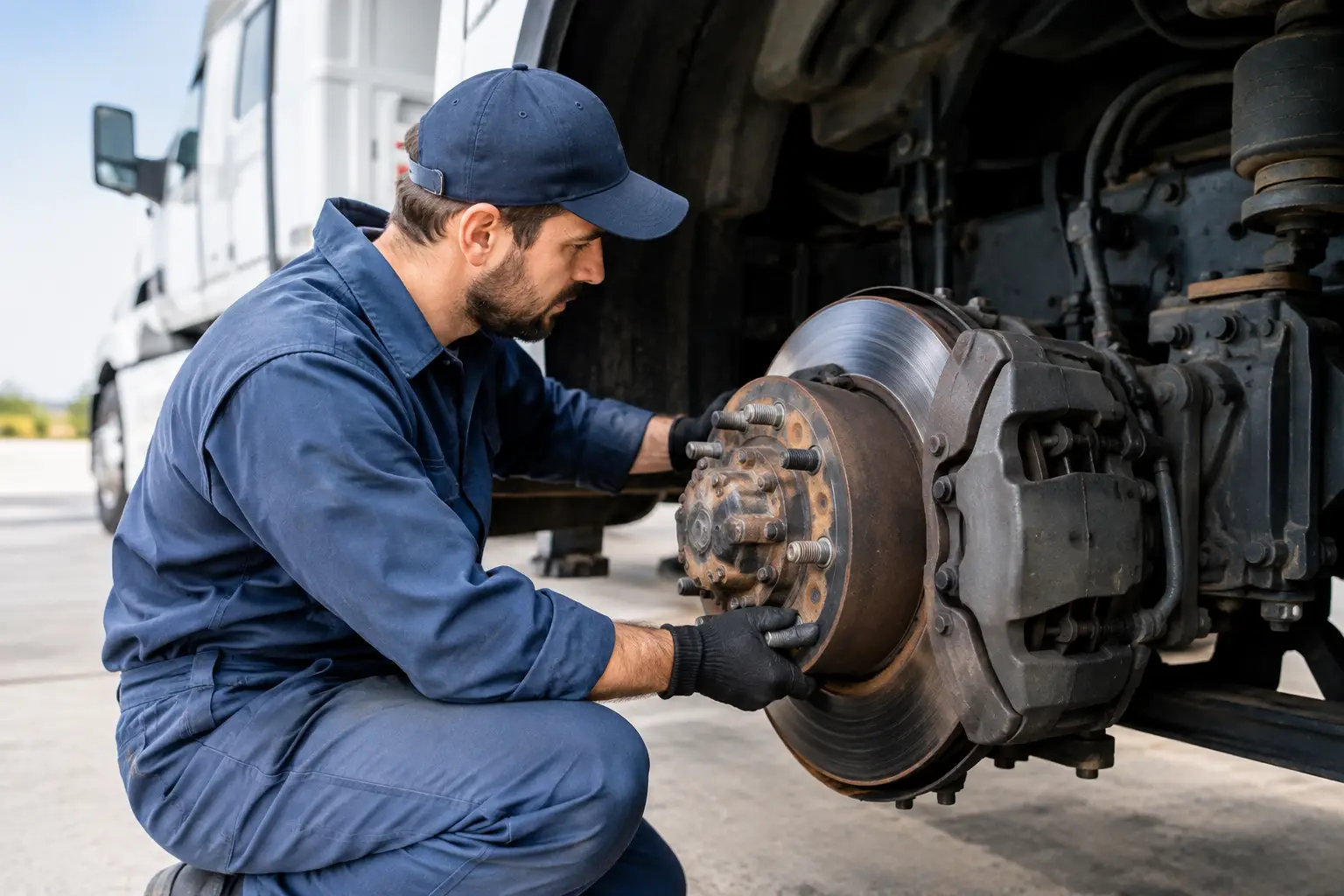

Emergency Repair for Delivery Trucks on Route
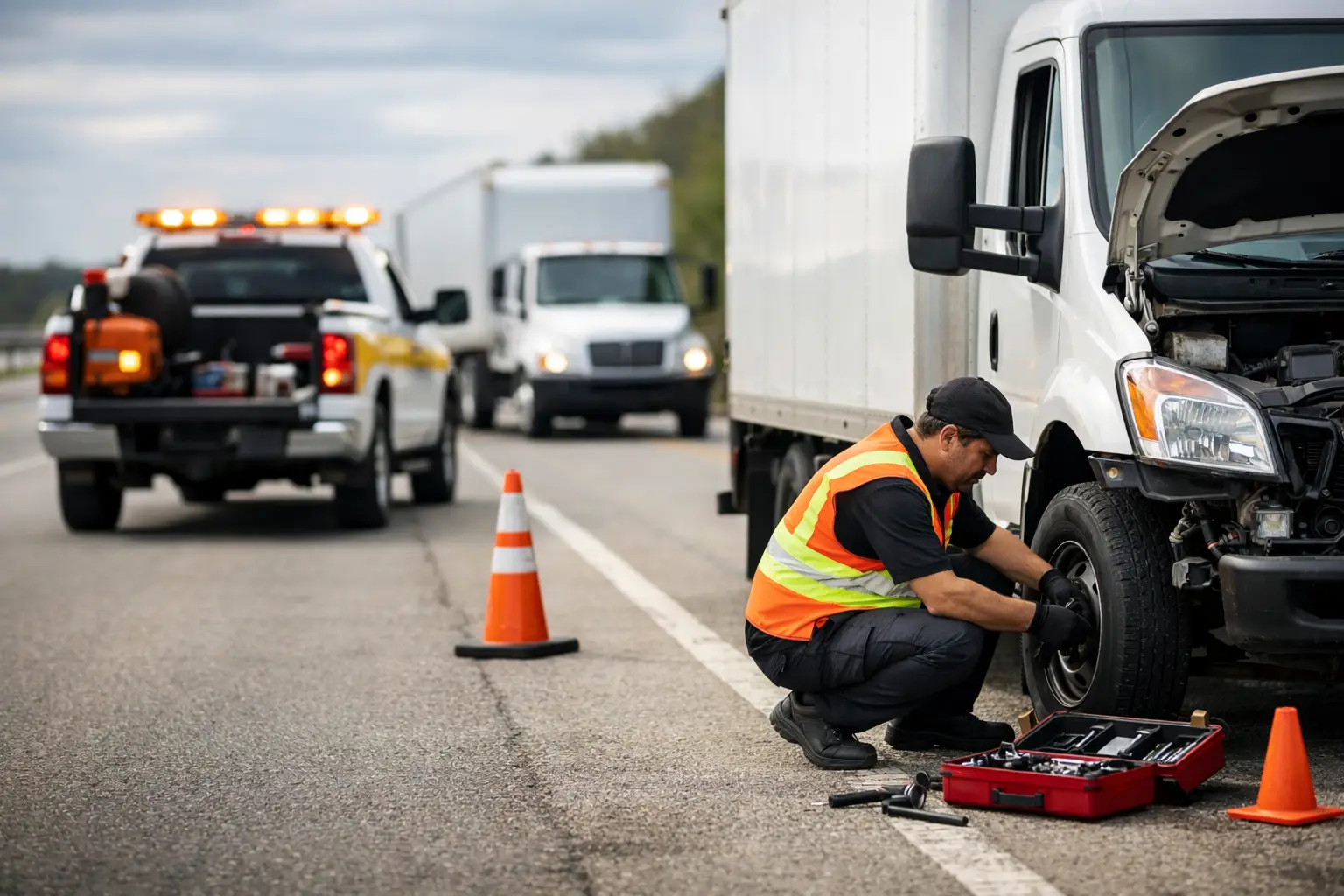
A delivery truck stopped on the shoulder is more than a late stop. It can put a driver at risk, compromise temperature-sensitive cargo, disrupt customer commitments, and create hours of costly downtime. Emergency repair for delivery trucks is about making the right call quickly: secure the scene, identify the issue, and get qualified mobile help to the truck when a safe repair is possible.
Emergency Repair for Delivery Trucks: First Actions
The first priority is the driver and everyone around the vehicle. Pull as far from traffic as conditions allow, turn on hazard lights, and set out warning devices when it is safe to do so. A truck that loses power, develops a brake issue, overheats, or has a tire failure should not be pushed farther down the road just to reach the next exit.
Dispatch or the fleet manager should get a clear status report early. The driver needs to share the exact location, truck number, direction of travel, load type, visible damage, dashboard warnings, and whether the vehicle is blocking traffic. Details such as smoke, leaking fluid, a locked wheel, or an inability to restart affect the response needed.
If the truck carries food, medical products, chemicals, or any temperature-controlled load, report that immediately. The repair decision may need to account for cargo condition and transfer options, not just the mechanical problem.
Do not let a driver diagnose a dangerous fault roadside
Drivers can check obvious conditions, such as a loose battery connection, a low tire, or a visible coolant leak, if they can do so without entering traffic or working near moving components. They should not crawl under a truck on an active roadside, disconnect brake lines, open pressurized cooling systems, or continue operating with critical warnings active.
A quick inspection can help a mobile technician arrive prepared. It should never replace a proper diagnosis. Fault codes, unusual sounds, warning lights, and the sequence of events before the breakdown all matter.
Problems That Often Need Mobile Truck Repair
Not every breakdown requires a tow or a shop visit. Many delivery truck issues can be assessed and repaired on site, especially when the truck is safely parked and the needed parts are available. The trade-off is simple: a roadside repair saves time when it is safe and reliable, but a truck with a serious safety or drivetrain problem belongs in a repair facility.
Common service calls include no-start conditions, battery and charging problems, flat tires, damaged hoses, minor air system issues, overheating, electrical faults, lighting problems, fuel delivery concerns, and lockout situations. A driver may describe the issue as “the truck will not move,” but the cause could range from a battery problem to an air brake issue or a transmission fault.
For box trucks and local delivery vehicles, access issues can also stop the route. Lost keys, keys locked in the cab, broken ignition components, or damaged door locks may require automotive locksmith support alongside roadside assistance. That is especially useful when the truck itself is mechanically sound but the driver cannot enter or start it.
When the truck should not continue
Some failures demand a more cautious decision. Do not place a delivery schedule ahead of a driver’s safety or the condition of the equipment. A truck should generally be taken out of service when there is a brake concern, steering problem, major fluid leak, tire damage beyond a simple serviceable flat, heavy smoke, an overheating condition that returns after coolant is added, or visible frame and suspension damage.
The same applies when warning lights indicate a condition that limits power or threatens the engine. Restarting a truck repeatedly after a no-start condition can cause more damage and may make diagnosis harder. A technician can determine whether the issue is a repairable roadside fault or whether the vehicle needs transport.
What to Tell the Repair Dispatcher
Accurate information helps get the right truck, tools, and parts to the location. A vague call for “truck repair” can delay service if the technician arrives without knowing the vehicle type or the nature of the breakdown.
Have the driver or dispatcher provide the truck’s make, model, year, unit number, and whether it is a cargo van, box truck, straight truck, or another commercial vehicle. Include the engine type if it is known. State whether the vehicle is loaded, whether it can be moved, and whether it is in a safe parking area or on the roadside.
Describe the symptoms in plain language. For example: the truck cranks but will not start; the battery light came on before it shut down; the temperature gauge climbed and coolant is on the ground; the air pressure will not build; or the driver is locked out with the engine off. Photos of warning lights, tires, leaks, and visible damage can also help when they can be sent safely.
Location matters in rural stretches and busy corridors across Louisiana. A pin drop is useful, but it should be supported with the nearest highway, exit, mile marker, intersection, business name, or direction of travel. A technician cannot help quickly if the truck cannot be found.
Protecting the Route While Repairs Are Underway
A repair call should trigger an operations decision, not just a maintenance decision. Fleet managers need to determine whether deliveries can be reassigned, whether the cargo needs attention, and whether customers need an updated arrival time. Waiting for a repair result before making any plan can turn a one-hour delay into a missed day of service.
For local routes, another driver may be able to take part of the load or complete priority stops. For refrigerated or time-sensitive freight, monitor cargo conditions and document temperatures according to company procedures. If the truck is parked in an unsafe area, its location may affect whether the best next step is an on-site repair, a tow, or a load transfer.
Drivers also need a clear point of contact. They should not be left negotiating repairs, route changes, customer calls, and safety decisions from the shoulder. A good dispatch process lets the driver focus on staying safe and providing accurate information.
How to Reduce Repeat Delivery Truck Breakdowns
Emergency service is necessary when the unexpected happens, but recurring roadside failures usually point to a maintenance gap. Delivery trucks work hard in stop-and-go traffic, hot weather, rain, long idle periods, and frequent loading cycles. Those conditions are hard on batteries, tires, belts, hoses, brakes, cooling systems, and electrical connections.
A practical prevention plan starts with pre-trip inspections that drivers can actually complete. Drivers should report slow cranking, tire pressure loss, dim lights, repeated warning indicators, hard starts, brake changes, and temperature fluctuations before the truck leaves the yard. Small signs are often cheaper to address than a roadside failure.
Fleet teams should also track repeat repairs by unit. A truck that has needed multiple battery jumps, recurring coolant additions, or frequent tire service deserves a closer inspection. The immediate repair may get it back on route, but the pattern may reveal an underlying charging, cooling, alignment, or maintenance issue.
Keep service records accessible to the people making dispatch decisions. Knowing recent repairs, battery age, tire work, and open mechanical concerns helps determine whether a roadside repair is likely to hold or whether the truck should return to the shop.
A Local Response Makes a Difference
For commercial operators around Hammond and throughout the surrounding Louisiana service area, the best response is one that fits the actual problem. A lockout needs locksmith support. A disabled truck may need roadside assistance, diagnosis, and commercial truck repair. A vehicle with a major safety issue may need to be removed from service rather than patched up for one more stop.
Hopper Roadside brings those urgent service categories together, helping drivers and fleet operators avoid calling separate providers while a route is already behind. The goal is straightforward: assess the situation, address what can be repaired safely, and help the operator make the next sound decision.
When a delivery truck goes down, the fastest answer is not always “get it moving.” Get the driver safe, get the facts, and get the right repair response headed to the location. That is how a roadside emergency stays a manageable interruption instead of becoming a larger operational loss.