
How to Fix Stuck Ignition Problems Safely
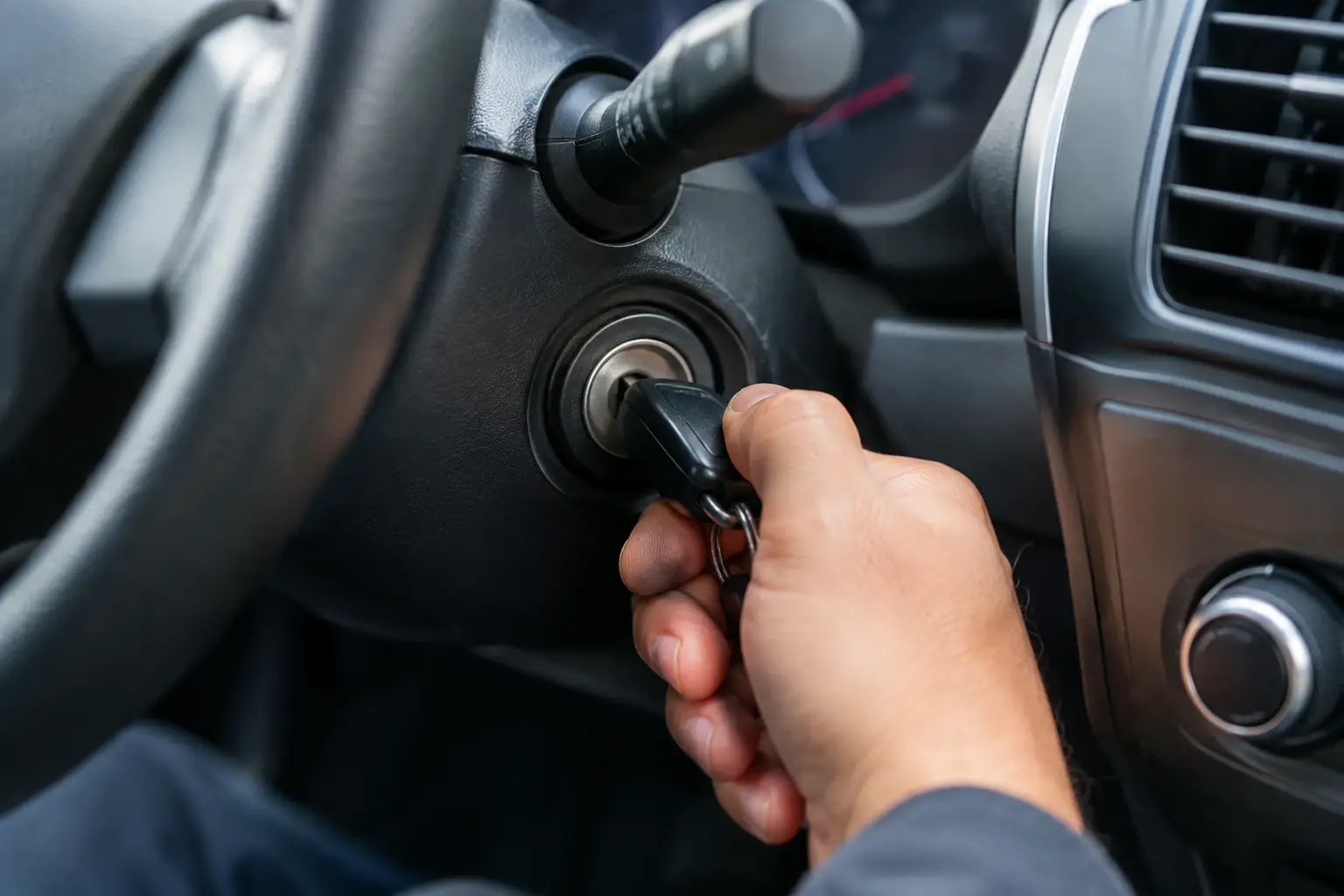
A key that will not turn can stop a normal day fast. Knowing how to fix stuck ignition issues starts with avoiding the one move that commonly makes the repair worse: forcing the key. A broken key, damaged ignition cylinder, or locked steering column can turn a small problem into a vehicle that needs more extensive service.
Take a breath, secure the vehicle, and work through the likely causes in order. Many stuck ignitions are caused by steering wheel pressure, an incorrect gear position, or a worn key. Others need a roadside locksmith because the ignition cylinder or vehicle security system has failed.
Start With Safety and the Basics
Put the vehicle in a safe location if possible, set the parking brake, and make sure the vehicle is fully stopped. If you are on a shoulder, in a parking lot after dark, or near traffic, prioritize your location before attempting any troubleshooting. Do not leave a child or pet in an unattended vehicle while you look for help.
For a traditional keyed ignition, remove anything heavy from the key ring. A large ring of keys, tools, or decorative items can place downward pressure on the key while you drive. Over time, that weight can wear the key and ignition cylinder.
Then confirm the transmission position. An automatic vehicle must generally be in Park before the key will rotate to the lock position or release. Hold the brake, move the shifter firmly into Park, and try the key again. If it still will not move, shift to Neutral with the brake applied and try once more. Do not force the shifter or key.
A manual-transmission vehicle can have a different setup, but the parking brake should be on and the transmission should be in neutral before you attempt to turn the key.
The Most Common Fix: Release Steering Wheel Pressure
A locked steering wheel is one of the most frequent reasons an ignition key feels stuck. This often happens when the wheels were turned as the vehicle was shut off, such as after parking against a curb or on a slope. The steering lock holds tension, and that tension prevents the ignition cylinder from turning.
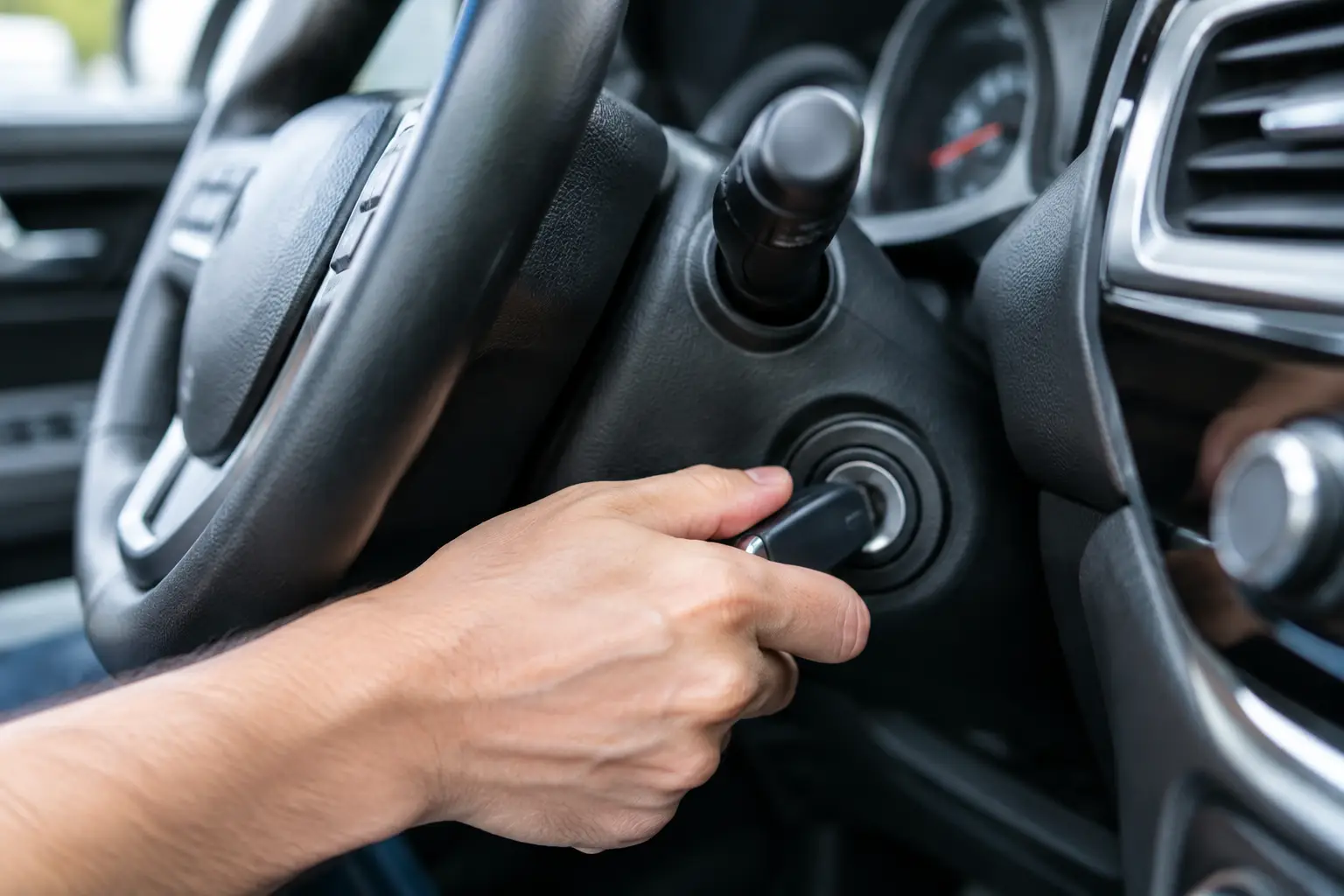
Insert the correct key fully. Hold the key with light turning pressure toward the ON position, but do not twist hard. At the same time, gently move the steering wheel left and right. Usually, the wheel will move slightly in one direction and feel completely blocked in the other. Use the direction with a little movement while maintaining light pressure on the key.
When the tension releases, the key should turn normally. The key point is coordinated, gentle movement. Jerking the wheel or cranking the key can snap the key blade or damage the cylinder pins.
If the Key Is Stuck After You Turned the Vehicle Off
A key that turns but will not come out is often a Park-position issue. Press the brake pedal, move the shifter completely into Park, then move it slightly toward Reverse and back to Park. Keep your foot on the brake and try removing the key.
If the vehicle will not recognize Park, the shifter linkage, brake-shift interlock, or ignition lock mechanism may be at fault. This is not a situation to solve by prying on the shifter or pulling hard on the key. A roadside professional can help determine whether the vehicle can be safely moved or needs further repair.
Check the Key Before Blaming the Ignition
Look closely at the key blade. A worn key may have rounded cuts, bent edges, cracks near the head, or teeth that no longer match the cylinder precisely. Keys wear gradually, so drivers often do not notice the problem until the ignition starts sticking.
If you have a spare key, try it. A spare that turns easily is a strong sign that the primary key is worn or damaged. Use the working spare temporarily and arrange a replacement key before the problem becomes a complete lockout.
Do not use a bent key, even if it still starts the vehicle. Straightening it can weaken the metal further, and a key broken inside the ignition is much harder to remove. Avoid gripping the key with pliers for extra leverage. That force transfers directly into the ignition cylinder.
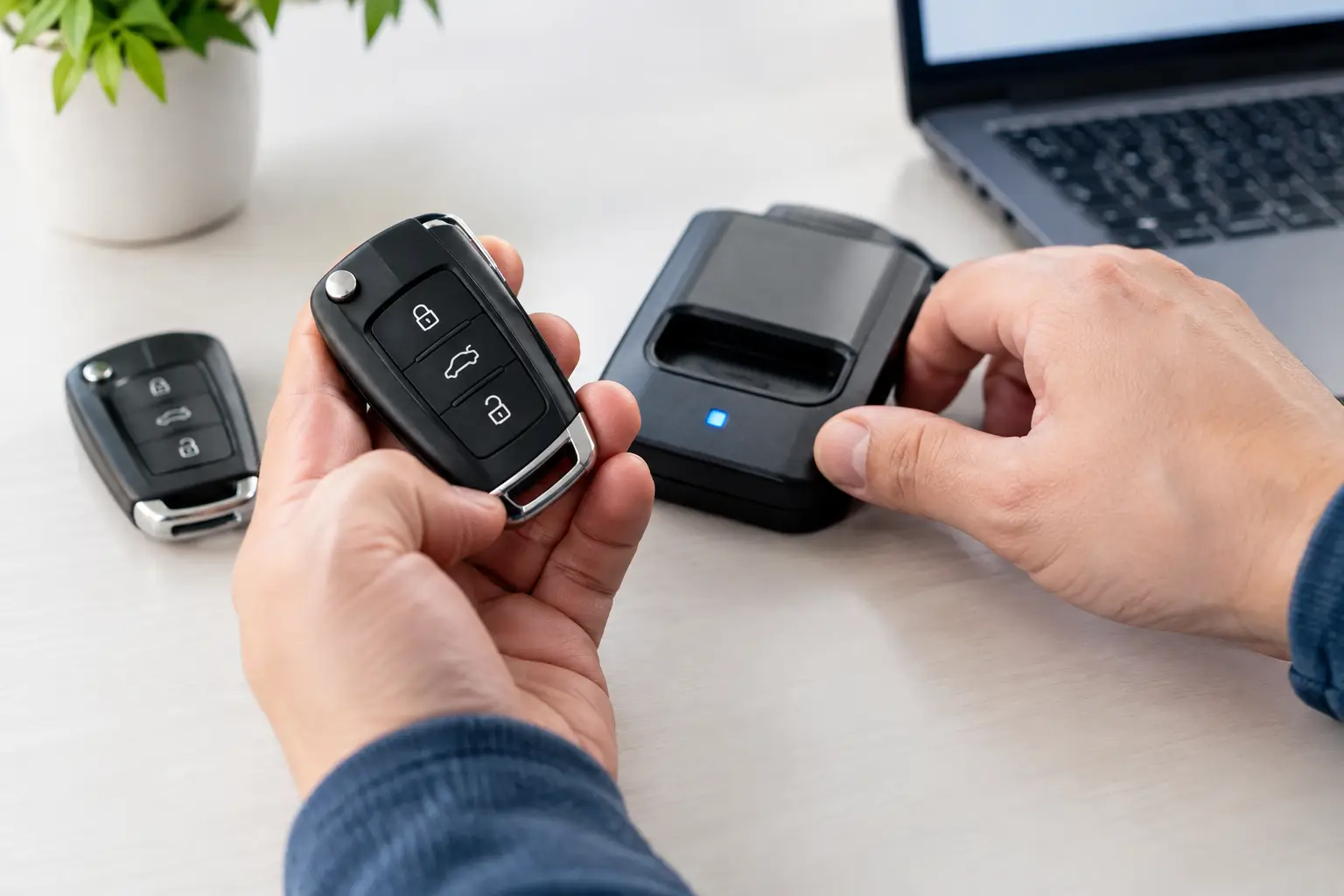
For vehicles with a transponder key or smart key, damage can also affect the chip or electronic communication with the vehicle. The key may turn, but the vehicle may not start or may display a security warning. In that case, a properly equipped automotive locksmith is usually the right call.
Push-Button Ignitions Need a Different Check
A push-button start system does not have a traditional key cylinder, but it can still seem like the ignition is stuck when the vehicle will not enter accessory mode or start. First, make sure the key fob is inside the vehicle and the brake pedal is pressed firmly. Confirm the transmission is in Park.
A weak fob battery can prevent the vehicle from recognizing the key. Many vehicles have an emergency starting procedure, often involving holding the fob against or near the start button. The exact location and method vary by make and model, so use the owner’s manual instructions if available.
If the dashboard remains dark, the issue may be the vehicle’s 12-volt battery rather than the fob. Interior lights, a slow crank, warning messages, or repeated clicking point toward a weak or dead battery. Roadside battery service can confirm the problem without guessing.
Should You Lubricate a Stuck Ignition?
This depends on the vehicle and the condition of the ignition. Dirt or a dry ignition cylinder can cause sticking, but spraying household oil, penetrating fluid, or thick lubricant into the keyway can trap debris and interfere with the internal pins. It can also create a short-term improvement while the real problem gets worse.
If your vehicle manufacturer allows it, use only a small amount of lock-specific dry lubricant. Do not insert objects, coat the key in oil, or flood the cylinder. If the key has to be wiggled every time, lubrication is not a dependable repair. The cylinder may be worn internally and should be inspected before the key becomes trapped.
When a Stuck Ignition Means You Need Help
Stop troubleshooting and call for roadside locksmith service if the key will not insert fully, the key is visibly cracked or bent, the key turns without engaging the ignition, or the steering wheel and key remain locked after gentle attempts. Those signs can point to a failed ignition cylinder, damaged key, or steering-column lock issue.
You should also get help if a key breaks in the ignition. Do not try to dig it out with tweezers, screwdrivers, hooks, or glue. Those attempts can push the broken piece deeper or damage the keyway, making removal more difficult.
Commercial drivers should treat a stuck ignition as a downtime issue, not a problem to work around. Truck keys and ignition systems deal with heavy use, and a disabled unit can affect delivery windows, driver safety, and fleet operations. If the truck is blocking traffic, loaded, or parked in an unsafe area, arrange qualified roadside and truck repair support rather than attempting a forceful repair.
Prevent the Problem From Returning
Once the ignition works again, use the least worn key you have and reduce weight on the key ring. Replace a key that sticks, especially if a spare works better. Make a copy before the only working key is too worn to duplicate accurately.
Pay attention to early warning signs: needing to jiggle the key, a steering wheel that locks unusually hard, a key that is difficult to remove, or a shifter that does not consistently register Park. Addressing those symptoms early is less disruptive than being stranded with a key that will not turn.
For drivers in Hammond and nearby Louisiana areas, Hopper Roadside can provide practical help when a stuck ignition leaves you unable to start, secure, or access your vehicle. The safest fix is the one that gets you moving again without turning a stuck key into a broken ignition.