
How to Jump Start a Car Safely and Know When to Stop
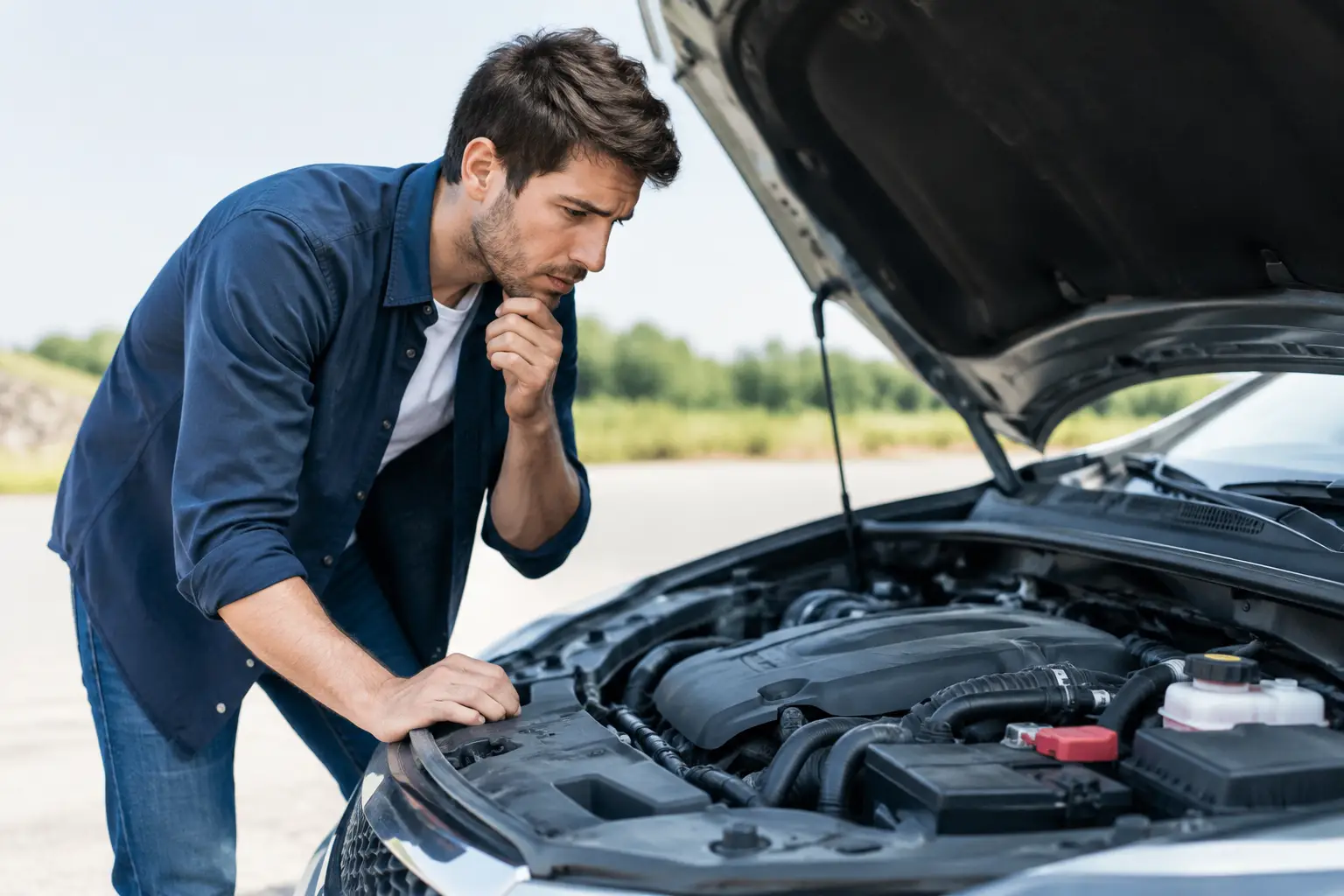
A dead battery has a way of showing up at the worst time: before work, at a gas station, or on the shoulder after dark. Knowing how to jump start a car can get you moving again, but only if the battery is the actual problem and the process is done safely. Incorrect cable connections can damage vehicle electronics, create sparks near battery gases, or leave you stranded with a car that still will not start.
Before opening the hood, take a minute to assess the situation. If the vehicle is in an unsafe location, smoke is coming from the engine area, the battery case is cracked or leaking, or you smell strong sulfur or rotten eggs, do not attempt a jump. Move away from traffic if you can do so safely and call for roadside assistance.
How to Jump Start a Car Safely
You need a set of working jumper cables or a compatible jump pack, plus a second vehicle with a charged battery if you are using cables. Park the vehicles close enough for the cables to reach, but make sure they are not touching. Put both vehicles in park or neutral, set the parking brakes, and turn off the ignitions, headlights, radios, climate controls, and other accessories.
Open both hoods and locate the batteries. Some newer vehicles place the battery in the trunk or under a seat but provide dedicated jump terminals under the hood. Use those terminals if the owner's manual identifies them. Do not guess at positive and negative connections. The positive terminal is typically marked with a plus sign or a red cover, while the negative terminal is marked with a minus sign and is usually connected to a black cable.
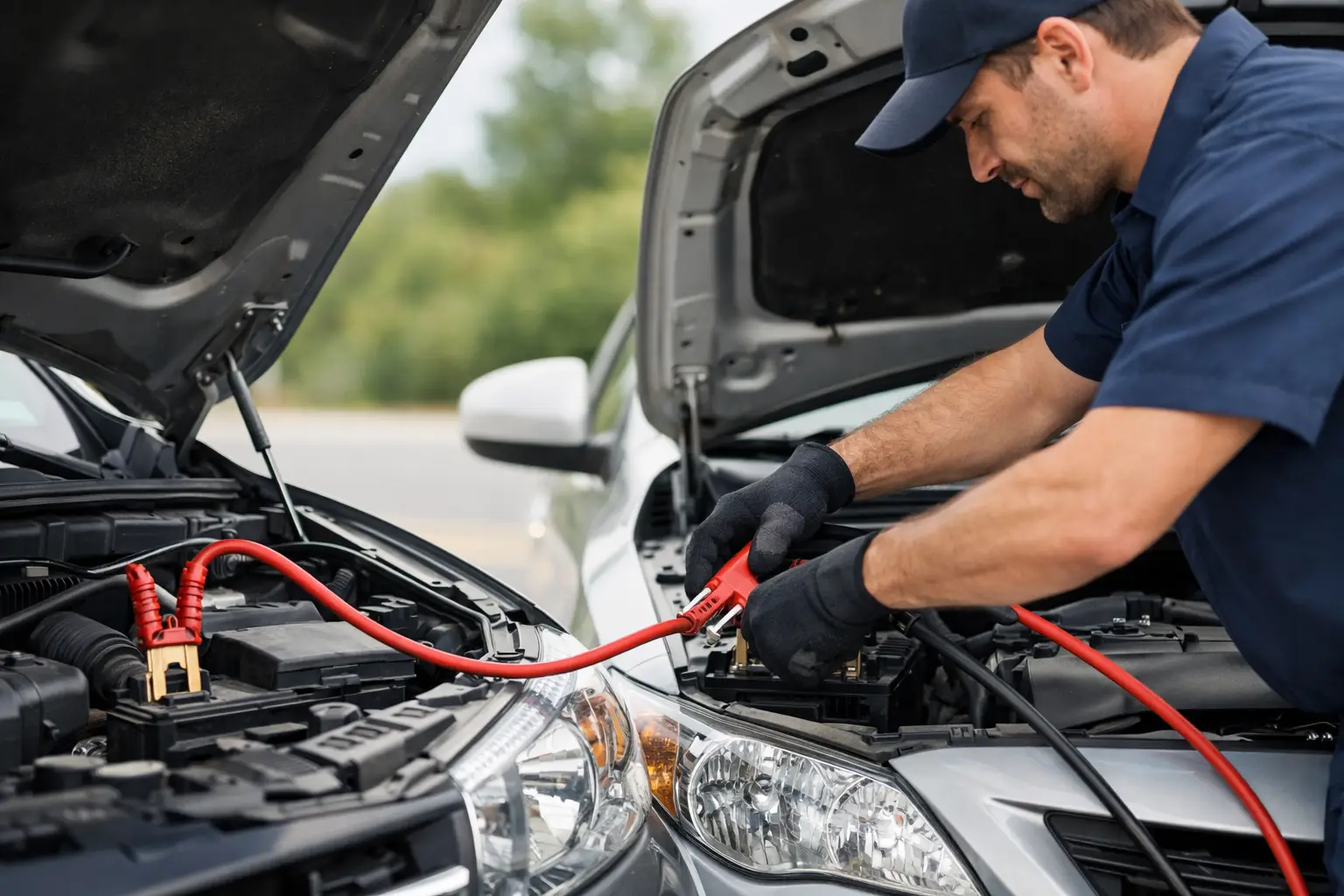
Connect the jumper cables in this order:
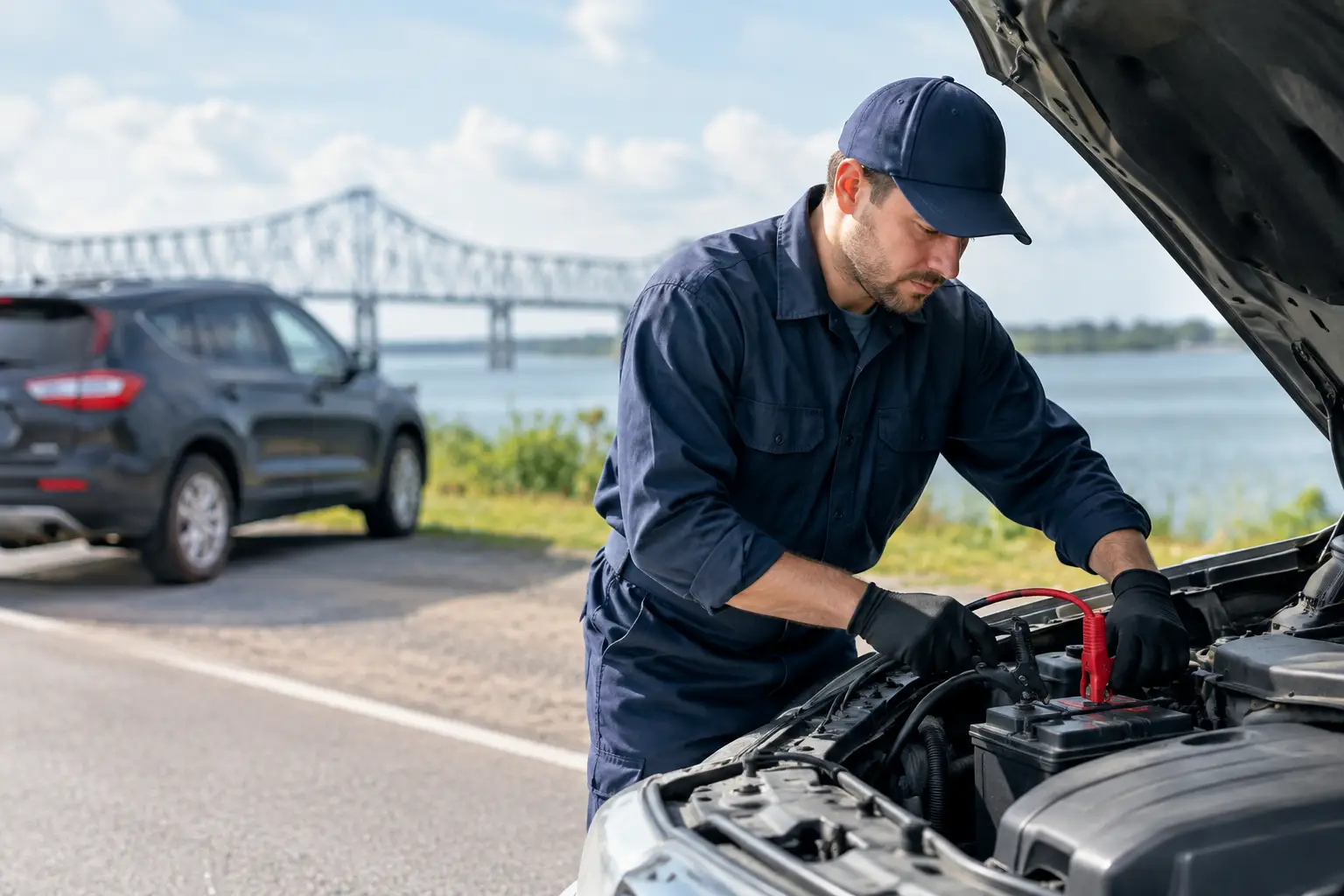
- Attach the red clamp to the positive terminal of the dead battery.
- Attach the other red clamp to the positive terminal of the charged battery.
- Attach the black clamp to the negative terminal of the charged battery.
- Attach the final black clamp to unpainted metal on the disabled vehicle, such as a solid engine block bracket or designated grounding point away from the battery.
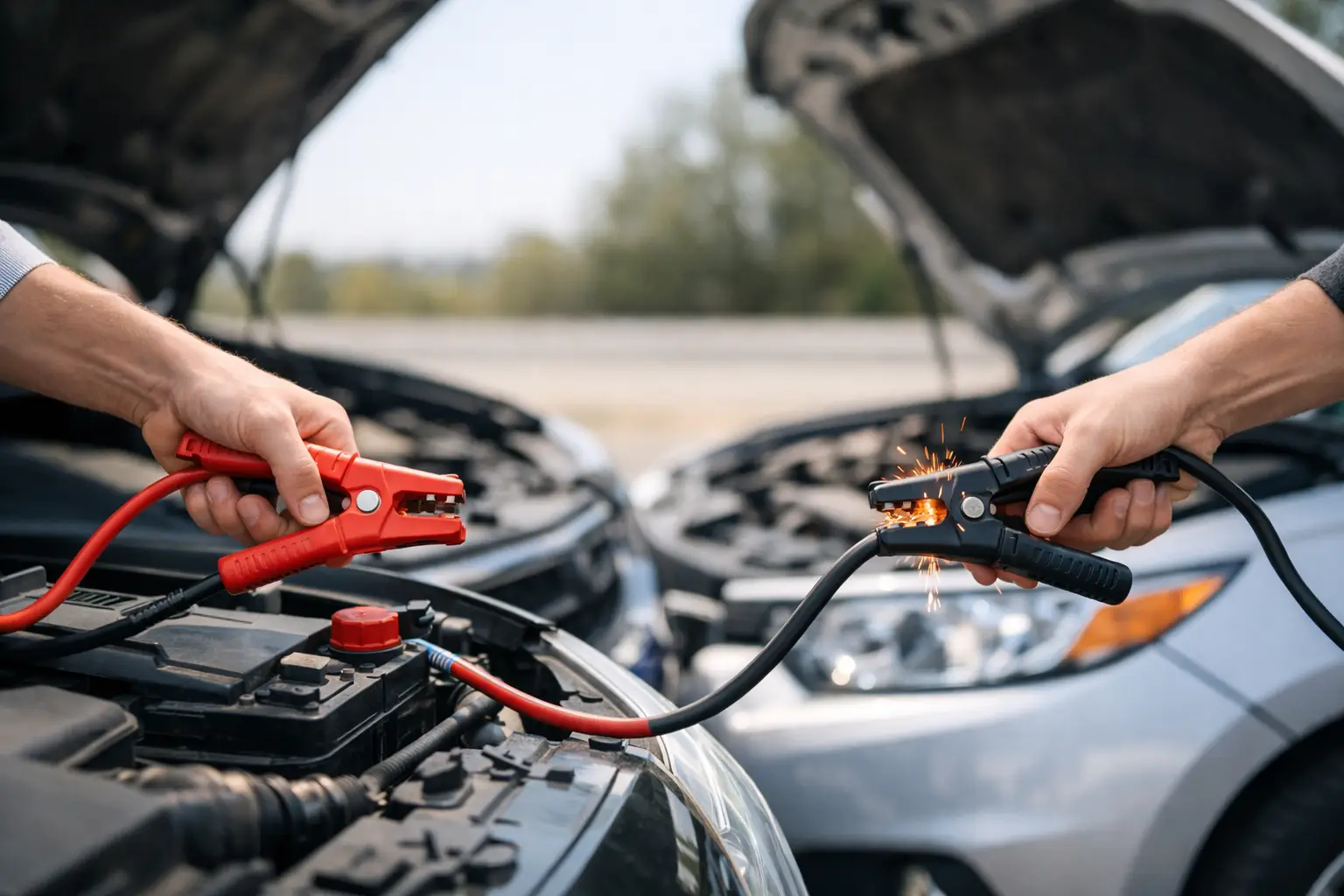
That last connection matters. Grounding the final clamp away from the dead battery helps reduce the chance of sparks near battery gases. Keep the cable clamps clear of belts, fans, and other moving engine parts. Make sure the clamps do not touch each other once they are connected.
Start the vehicle with the good battery and let it run for a few minutes. Then try starting the disabled vehicle. Do not crank the engine continuously for long stretches. A brief start attempt of a few seconds is enough. If it does not start, wait a minute before trying again.
Once the disabled vehicle starts, remove the cables in reverse order: black clamp from the previously dead vehicle, black clamp from the donor vehicle, red clamp from the donor vehicle, then red clamp from the revived vehicle. Keep the engine running and avoid shutting it off right away.
When a Jump Start Car Attempt Is Not the Answer
A jump start works when a battery has lost enough charge that it cannot crank the engine, but the rest of the starting and charging system is functioning. It cannot repair a failed alternator, a worn-out battery, loose battery terminals, a bad starter, or an electrical fault.
Pay attention to what happens when you turn the key or press the start button. Rapid clicking often points to a weak battery or poor battery connection. A single heavy click can indicate a starter problem. If the engine cranks normally but will not fire up, the issue may be fuel, ignition, or engine-related rather than the battery.
If the vehicle starts with a jump and dies again shortly afterward, the alternator may not be charging the battery. A battery warning light on the dash, dimming headlights, burning smells, or unusual electrical behavior also point to a charging-system issue. Continuing to drive can leave you stopped again, possibly in a worse location.
A battery that repeatedly needs help is also telling you something. Batteries commonly last several years, but Louisiana heat can shorten their life. High temperatures accelerate battery wear, and corrosion around the terminals can interfere with the connection. A jump may solve the immediate problem, but testing the battery and charging system is the next practical step.
What to Do After the Vehicle Starts
Let the vehicle run long enough to stabilize, then drive directly to a safe place or a repair facility if possible. A short idle in a parking lot may not fully restore a deeply discharged battery. Driving allows the alternator to recharge it more effectively, assuming the alternator is working properly.
Avoid unnecessary stops until you know the vehicle will restart. Turn off nonessential accessories, especially if the battery light is on or the electrical system seems weak. If you are headed to work, home, or an appointment, it may be tempting to take the chance. But if the car needed a jump without an obvious cause, plan for a battery test soon.
Check the battery terminals once the engine is off and cool. White, blue, or green buildup around the terminals can restrict current flow. Loose clamps can cause the same symptoms as a failing battery. Do not touch corrosion with bare hands, and do not attempt a repair beside moving traffic. A roadside technician can assess whether the immediate issue is a connection, a discharged battery, or something requiring further repair.
Common Jump-Starting Mistakes to Avoid
Do not connect negative to negative on both batteries unless the vehicle manufacturer specifically directs you to do so. The final negative clamp should usually go to a ground point on the disabled vehicle. Do not lean over a battery while making connections, and never smoke or use an open flame nearby.
Do not use damaged jumper cables. Frayed insulation, loose clamps, or exposed wire can create a serious hazard. It is also a mistake to assume every vehicle should be jumped the same way. Hybrid vehicles, electric vehicles, and newer vehicles with complex electrical systems may have specific jump points and procedures. Consult the owner's manual or call for professional help when you are unsure.
Commercial trucks require even more caution. Heavy-duty trucks can use multiple batteries and higher-capacity electrical systems. A passenger-car jump setup may not be suitable, and connecting batteries incorrectly can cause expensive damage or create safety risks. For a truck that will not start, a commercial truck repair or roadside service provider is the better call.
When to Call Roadside Assistance
Call for help if you do not have reliable cables, cannot identify the battery terminals, are parked in traffic, or are dealing with a swollen, leaking, or damaged battery. The same applies when a jump attempt fails, the vehicle stalls after starting, or warning lights indicate a larger problem.
Hopper Roadside provides roadside assistance in the Hammond area for drivers facing a dead battery, lockout, flat tire, or other immediate vehicle problem. A trained response can save time when conditions are unsafe or when the issue is more than a discharged battery.
A jump start is useful when it gets you out of a safe parking spot and on the way to a real diagnosis. If the car will not start, the cables heat up, or the battery shows signs of damage, stop the attempt and get help before a simple dead-battery problem becomes a bigger roadside emergency.