
Jump Start Service Hammond LA When Your Car Won't Start
A dead battery has a way of showing up at the worst possible time: outside work, at a gas station, in a parking lot after dark, or when you need to get a truck moving. If you need a jump start service in Hammond, LA, the immediate goal is simple: get help safely, determine whether the battery is the actual problem, and avoid turning a no-start situation into a larger electrical issue.
A jump start can get many vehicles running again. It is not a guaranteed repair, though. A battery may be discharged from an interior light, an aging battery, corrosion at the terminals, extreme heat, or a charging-system problem. Knowing the difference helps you decide whether you can drive away, need roadside assistance, or should arrange further repair.
What a Dead Battery Usually Looks Like
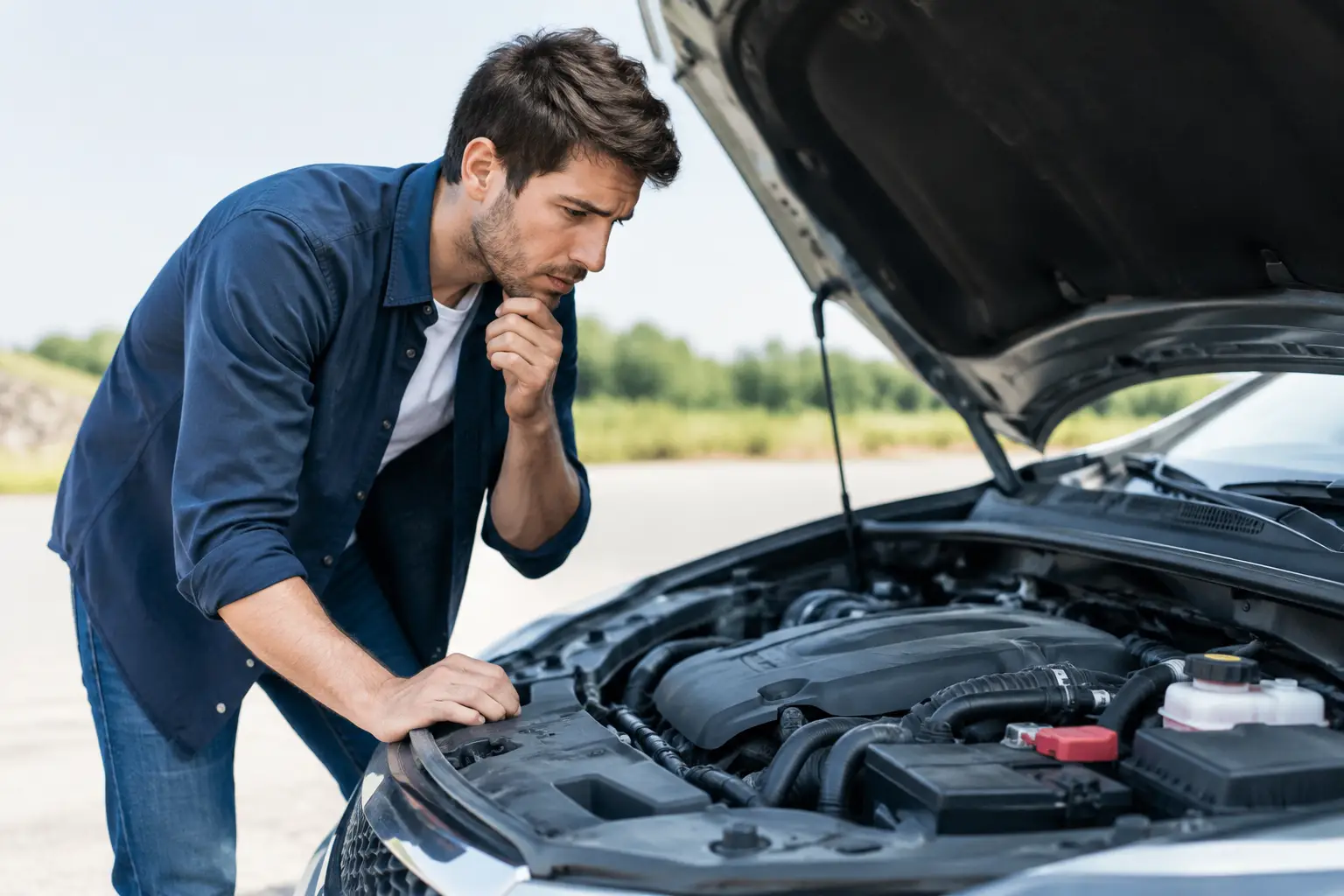
A battery issue often gives clear warning signs. You may turn the key or press the start button and hear rapid clicking. The dashboard may light up weakly, the headlights may dim, or the vehicle may be completely unresponsive. In some cases, the engine cranks slowly before it stops trying altogether.
Those signs point toward low battery power, but they are not proof. A loose battery terminal can create similar symptoms. So can a failed starter, a bad ignition connection, a blown fuse, or an alternator that is no longer charging the battery while you drive. That is why a proper roadside response starts with the basics rather than assuming every no-start call needs jumper cables.
If your vehicle starts after a jump but dies shortly afterward, the battery may not be holding a charge or the alternator may not be doing its job. Do not assume a successful jump means the problem is over.
When to Call for Jump Start Service in Hammond LA
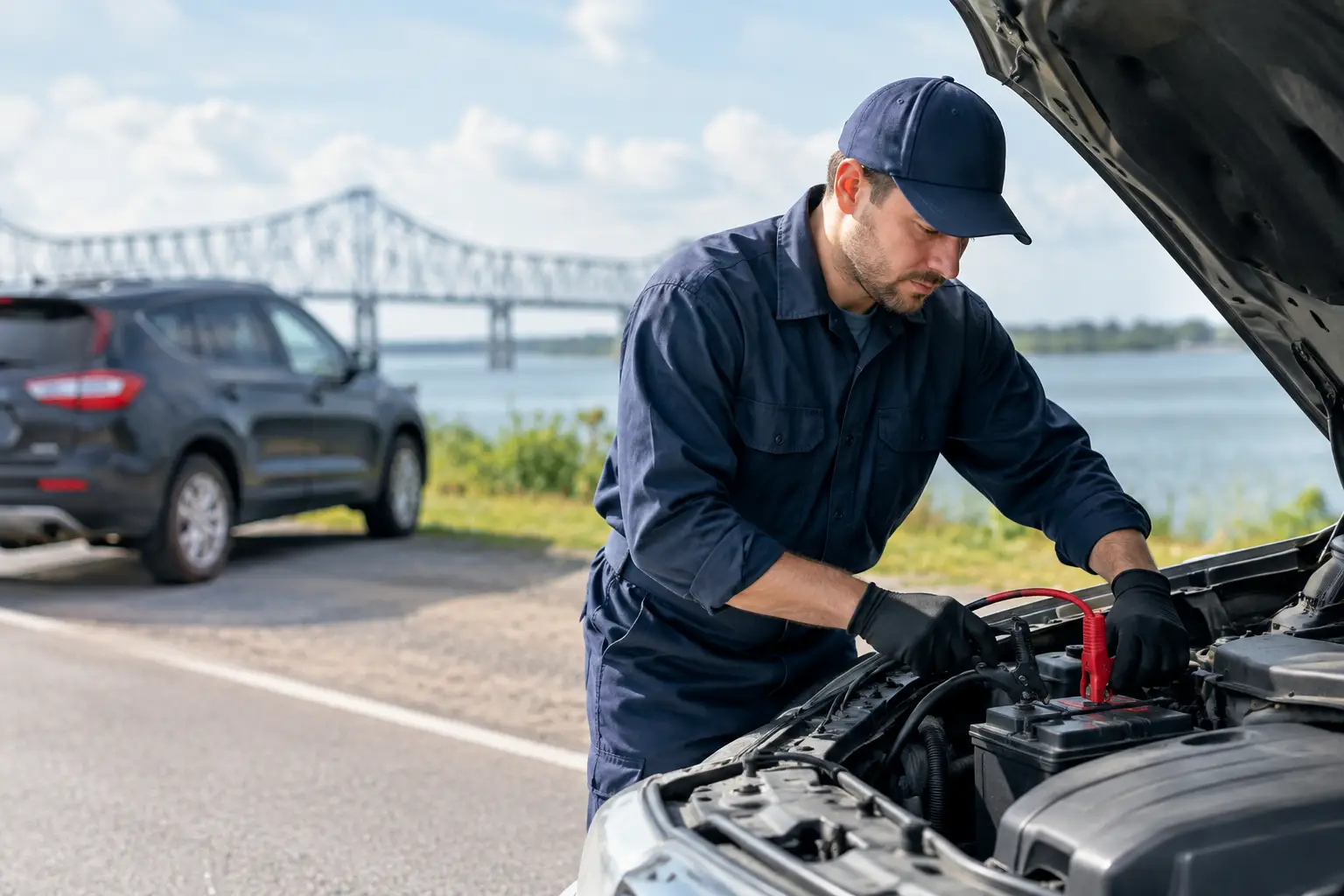
Calling for help makes sense when you do not have cables, do not have another vehicle available, or are stranded somewhere that does not feel safe. It is also the right move when you are unsure where the battery is located, your vehicle has a complicated battery setup, or you do not want to risk connecting cables incorrectly.
A professional jump start service is especially useful in busy traffic areas, unfamiliar locations, apartment complexes, work lots, and late-night situations. You should stay with the vehicle when it is safe to do so, keep doors locked if you are waiting in an isolated area, and move away from moving traffic whenever possible.
When you request roadside help, be ready to provide your exact location, the vehicle make and model, whether the engine cranks or only clicks, and any warning lights or smoke you have noticed. Those details help the responding technician arrive prepared and help rule out problems that a jump start alone will not solve.
Hopper Roadside provides practical mobile support for drivers dealing with battery trouble, lockouts, and other vehicle disruptions in the Hammond area.
Do Not Jump Start Every Vehicle Problem
There are situations where jumper cables should stay in the bag. If the battery case is swollen, cracked, leaking fluid, smoking, or giving off a strong sulfur or rotten-egg odor, do not attempt a jump. Step back from the vehicle and call for assistance. A damaged battery can be dangerous.
The same caution applies if the vehicle has been in a collision and there is visible damage near the battery, wiring, or engine compartment. If you see exposed wires, smell burning insulation, or notice fuel leaking, a jump start is not the next step.
Modern vehicles also have more sensitive electronics than older cars. Many can still be safely jump started when the correct procedure is followed, but battery locations, remote terminals, and manufacturer instructions vary. Some hybrid and electric vehicles have separate low-voltage batteries, and their procedures can be different. If you are not certain, roadside help is the safer choice.
If You Use Jumper Cables, Safety Comes First
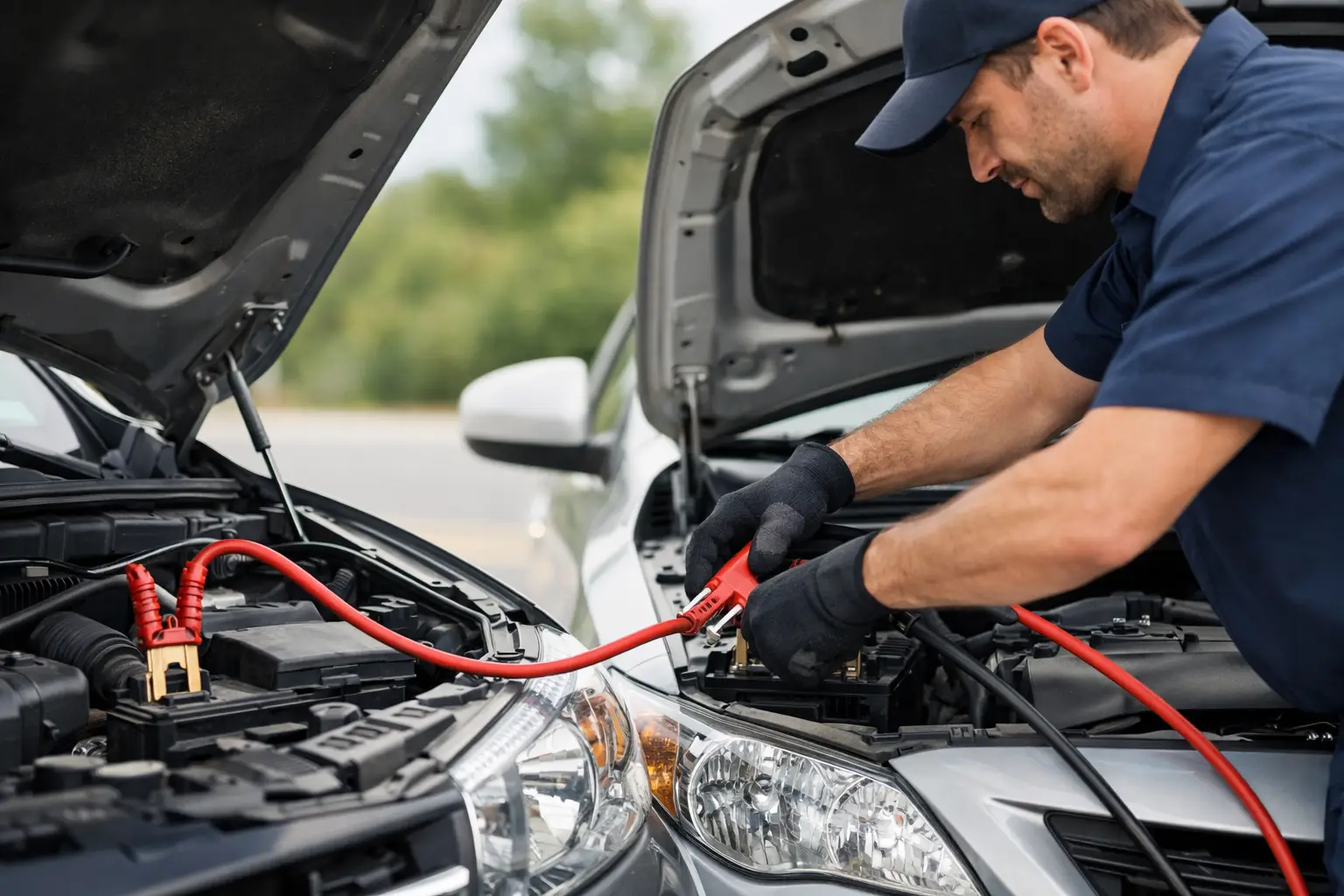
Only attempt a jump start if both vehicles are in a safe position, the batteries appear undamaged, and you know the connection points. Put both vehicles in park or neutral, set the parking brakes, and turn off lights, radios, and other accessories before connecting anything.
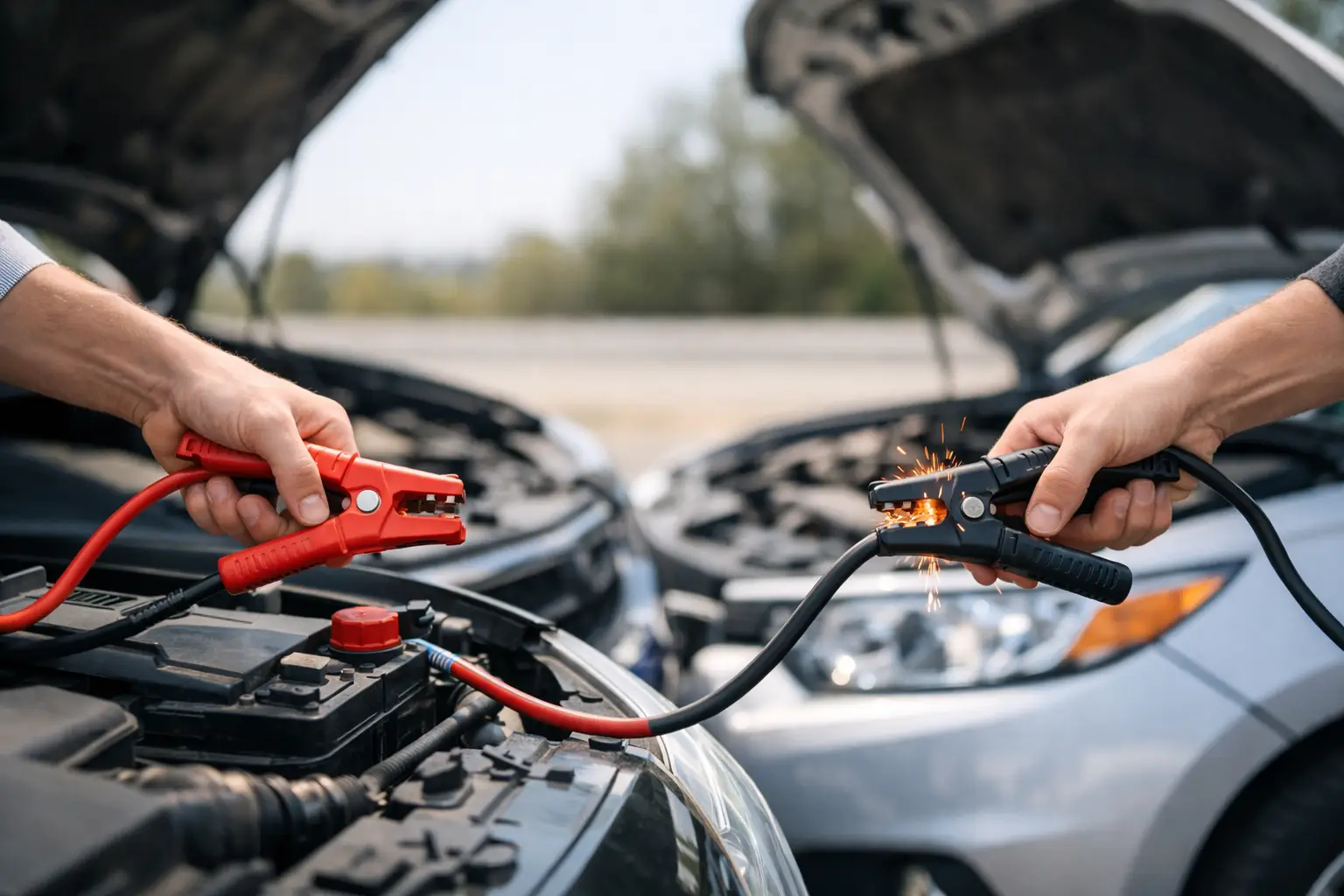
Use the positive and negative markings on the battery or designated jump points. Avoid letting clamps touch each other or metal surfaces while connected. A poor connection can create sparks, damage electrical components, or fail to transfer enough power to start the vehicle.
After the disabled vehicle starts, remove the cables in the reverse order of connection and keep the engine running. If it will not start after a reasonable attempt, repeatedly trying can strain the starter and drain the assisting vehicle's battery. At that point, the issue may be more than a low battery.
If the vehicle starts, drive directly to a safe place where the battery and charging system can be checked. Letting it idle for a few minutes may not restore enough charge, especially if the battery is old or deeply discharged. A short drive can help, but it does not fix a weak battery or failing alternator.
Why Batteries Fail in Louisiana
Louisiana heat is hard on vehicle batteries. High temperatures can speed up internal battery wear and cause fluid loss over time. A battery that seemed fine during cooler weather can suddenly fail after months of heat exposure.
Short trips can add to the problem. Starting a vehicle takes a significant amount of power, and repeated short drives may not give the alternator enough time to fully recharge the battery. Corroded terminals, loose connections, and accessories left plugged in can make the issue worse.
For many drivers, the first warning is a slower crank in the morning or lights that look dimmer than usual. Do not wait for a complete failure if you notice those changes. Having the battery and charging system tested before a long commute, road trip, or work shift can prevent an inconvenient roadside stop.
Commercial Trucks Need a Different Assessment
For commercial drivers and fleet operators, a no-start condition can affect deliveries, appointments, driver hours, and customer commitments. A jump start may get a truck moving, but it is only one part of diagnosing the problem. Heavy-duty equipment can have larger battery banks, different voltage systems, corroded connections, parasitic draws, starter issues, or charging-system faults that need closer attention.
A truck that repeatedly needs a jump should not be treated as a routine inconvenience. Repeated battery failure can leave a driver stranded again at the next stop, and it can signal a problem that affects safe operation. Owner-operators and fleet managers should document recurring symptoms, including slow cranking, battery warning lights, or a loss of power after startup.
When downtime is costing money, calling one local provider that can address roadside needs and commercial truck repair can simplify the response. The right next step depends on the equipment, the location, and whether the truck can safely return to service after it starts.
What to Do After Your Vehicle Starts
Once the engine is running, pay attention to what happens next. If a battery warning light stays on, the headlights remain weak, the engine runs rough, or the vehicle shuts off, stop driving when it is safe. Those symptoms can point to a charging or electrical issue that needs repair.
If everything appears normal, avoid shutting the vehicle off until you reach a place where you can have the battery checked. Keep unnecessary electrical loads low, especially if the battery was completely drained. Then schedule a battery and alternator inspection as soon as possible.
A jump start is useful because it gets you out of an immediate problem. The smart follow-up is making sure the same problem does not leave you stranded tomorrow. When your car or truck will not start, focus on safety first, get qualified roadside help when needed, and treat repeated battery trouble as a repair issue rather than a temporary inconvenience.