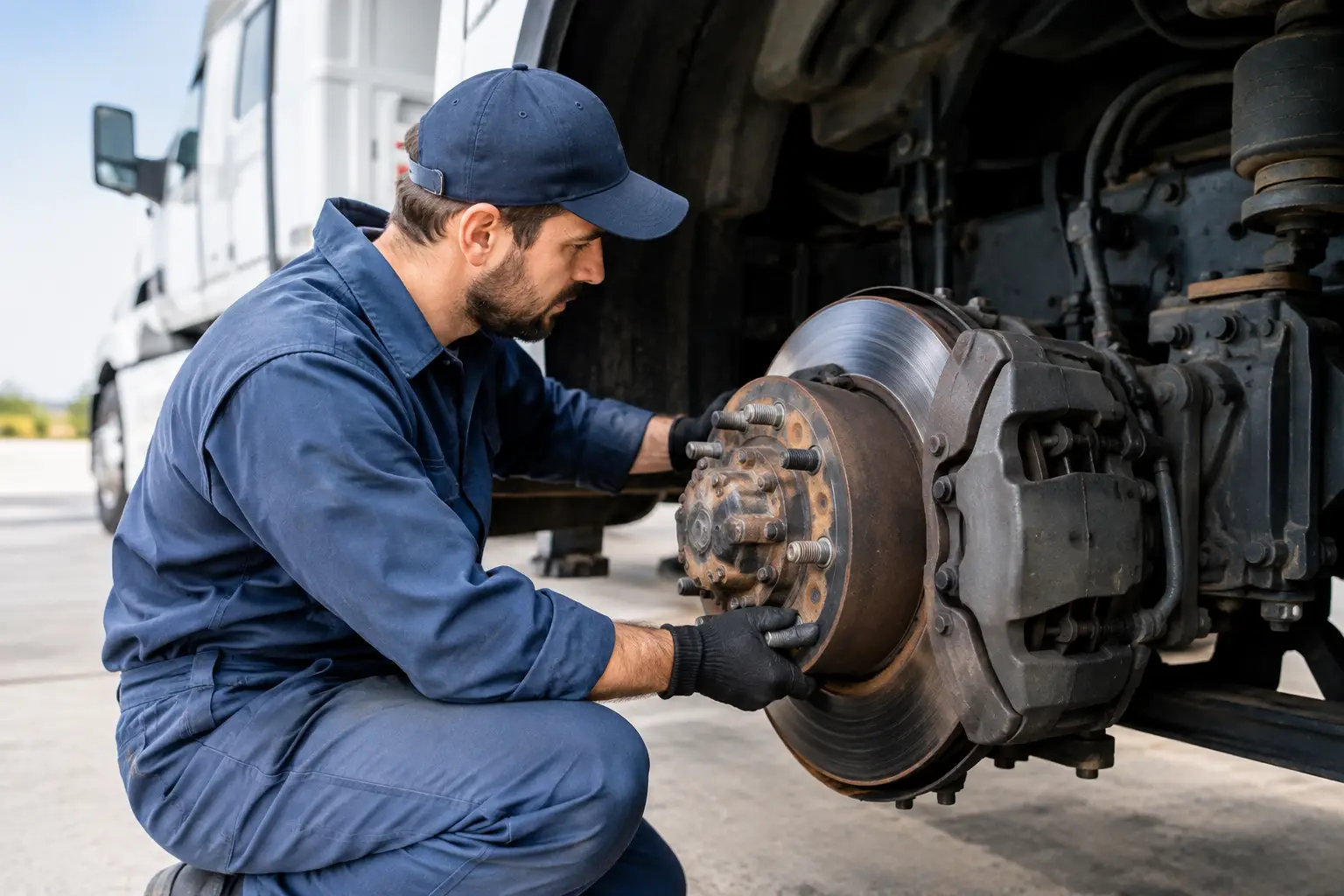

How to Prevent Truck Breakdowns Before They Stop You

A truck rarely breaks down without giving some warning first. A slow crank, an air leak, a rising temperature gauge, uneven tire wear, or a new vibration can become a roadside failure if it is ignored for another load. Knowing how to prevent truck breakdowns starts with treating those small signs as operating issues, not inconveniences to deal with later.
For owner-operators, a disabled truck means lost revenue and missed appointments. For fleets, it can affect customers, drivers, dispatch, and the next several deliveries. Preventive work takes time, but unplanned downtime usually takes more.
How to Prevent Truck Breakdowns With Daily Checks
The most useful inspection is the one completed before the truck leaves. A proper pre-trip is not paperwork to rush through. It is the driver’s first chance to catch a problem while the truck is still parked somewhere safe and service can be planned.
Start with the basics: tires, wheels, lights, fluid levels, air lines, belts, hoses, battery connections, and visible leaks. Look underneath the truck as well as around it. Fresh oil, coolant, fuel, or air-system moisture on the ground deserves attention. A leak may be minor, but it can also point to a failed seal, loose fitting, damaged hose, or issue that will worsen under load.
Tires need more than a quick glance. Check inflation with a gauge, look for cuts and sidewall damage, and watch for irregular tread wear. Low pressure creates heat, shortens tire life, hurts fuel economy, and increases the risk of a blowout. Uneven wear may point to an alignment, suspension, or wheel-end issue that should not wait until the next tire change.
Inside the cab, check warning lights, gauges, mirrors, wipers, horn, and the condition of the steering and brakes. Pay attention when the truck feels different during the first few miles. A change in shifting, brake response, steering pull, or engine performance is often easier and less expensive to diagnose before it turns into a no-start or derate situation.
Follow the Maintenance Schedule, Not Just the Mileage
Oil changes matter, but they are only one part of preventive maintenance. Trucks operate under different loads, routes, temperatures, idle time, and stop-and-go conditions. A truck pulling heavy loads through Louisiana heat may need closer attention than one running lighter highway miles. Manufacturer recommendations are the starting point. Your actual operating conditions should shape the service schedule.
Keep clear records for oil and filter changes, fuel filters, coolant service, transmission and differential service, brake work, tire rotations, battery replacement, and inspections. Records help identify patterns. If the same truck repeatedly needs coolant, loses air pressure, or wears one tire faster than the others, there is likely a root cause beyond the immediate repair.
Do not delay fluid service because the truck still runs. Dirty oil, degraded coolant, contaminated fuel, and worn lubricants can damage expensive components slowly. By the time a driver notices the result, the repair may involve more than a routine service visit.
Maintenance intervals also need to account for idle hours. An engine that spends long periods idling can accumulate wear even when the odometer does not move much. Fleets and owner-operators who track both mileage and engine hours have a more accurate picture of when service is due.
Protect the Cooling System
Overheating can take a truck out of service quickly, especially during hot weather, heavy hauling, or long idle periods. Check coolant level only when the engine is cool and inspect hoses, clamps, and the radiator area for leaks or damage. Keep the radiator, charge air cooler, and condenser clear of packed dirt, insects, and debris so air can move through the system.
A temperature gauge that rises above its normal range is not something to watch until the next stop. Pulling over safely and addressing an overheating issue early can prevent severe engine damage. The same rule applies to repeated coolant loss. Topping it off may get the truck moving, but it does not fix the reason it is disappearing.
Keep the Electrical System Reliable
Batteries, terminals, cables, alternators, and starter connections cause many no-start calls. Corrosion at a battery terminal can create enough resistance to leave a driver stranded, even when the battery itself is still usable. Inspect terminals for buildup, make sure connections are secure, and test batteries before extreme heat or cold exposes a weak unit.
Electrical problems can be intermittent. Flickering lights, slow cranking, repeated battery drain, or dash warnings should be documented and checked. Waiting for a complete electrical failure can leave the truck unable to start in a loading yard, on a route, or at a fuel stop.
Give Drivers a Clear Reporting Process
Drivers are the first line of defense, but only if they have a simple way to report defects and know the company will act on them. A vague instruction to “let maintenance know” is not enough. Use a consistent process for documenting the truck number, symptoms, warning lights, location of a leak or noise, and when the problem occurs.
A report should also distinguish between issues that require the truck to come out of service and concerns that can be scheduled for repair. That decision depends on the defect. Brake concerns, steering problems, active overheating, major air loss, visible tire damage, and serious fluid leaks require immediate attention. A minor interior issue may not. The goal is not to park trucks unnecessarily. It is to avoid asking drivers to operate equipment that is likely to fail or become unsafe.
Fleet managers should review recurring reports instead of treating each one as an isolated event. Repeated complaints about hard starts, weak air pressure, or trailer-light failures may identify a maintenance gap, a training issue, or a problem with a specific component.
Avoid the Habits That Create Roadside Failures
Some breakdowns result from maintenance gaps. Others come from operating habits that increase wear every day. Aggressive acceleration, hard braking, overloading, prolonged idling, and ignoring dash warnings all put more strain on the truck.
Loading matters. Weight should be within legal limits and distributed correctly. An overloaded or poorly balanced trailer affects braking, tire wear, suspension components, and handling. It also makes it harder for the driver to notice a developing mechanical issue because the truck is already working beyond normal conditions.
Fuel quality and fuel management deserve attention as well. Running low too often can pull debris and moisture through the system, while skipped fuel-filter service can restrict flow and hurt performance. In cold or wet conditions, water contamination can create problems that look like a larger engine issue. Use clean fuel sources and keep up with filter intervals.
Drivers should avoid improvising repairs on safety-critical systems. A temporary measure may help secure a loose noncritical item until service is available, but brakes, tires, steering, electrical wiring, fuel systems, and air systems need a proper repair. A shortcut at the side of the road can create a larger failure a few miles later.
Plan for Service Before the Truck Is Down
Preventive maintenance does not eliminate every breakdown. Road debris, sudden component failures, accident damage, and unexpected electrical problems still happen. The difference is whether the driver and fleet have a response plan before the truck is disabled.
Keep current vehicle information available: unit number, make, model, engine details, VIN, insurance information, and a record of recent repairs. Drivers should know who to call, what details to provide, and how to describe the problem accurately. “Truck will not move” is less useful than “air pressure will not build above 60 PSI” or “engine shut down after a high-temperature warning.”
For commercial operators in and around Hammond, Louisiana, having one local contact for roadside assistance and commercial truck repair can shorten the time spent searching for help during an emergency. Hopper Roadside can assist when a preventable issue becomes an immediate roadside problem, but the best service call is still the one your inspection process helped you avoid.
Build prevention into the daily routine, not just the maintenance calendar. A driver who checks the truck carefully, reports changes early, and stops when a serious warning appears protects the equipment, the load, and everyone sharing the road.