
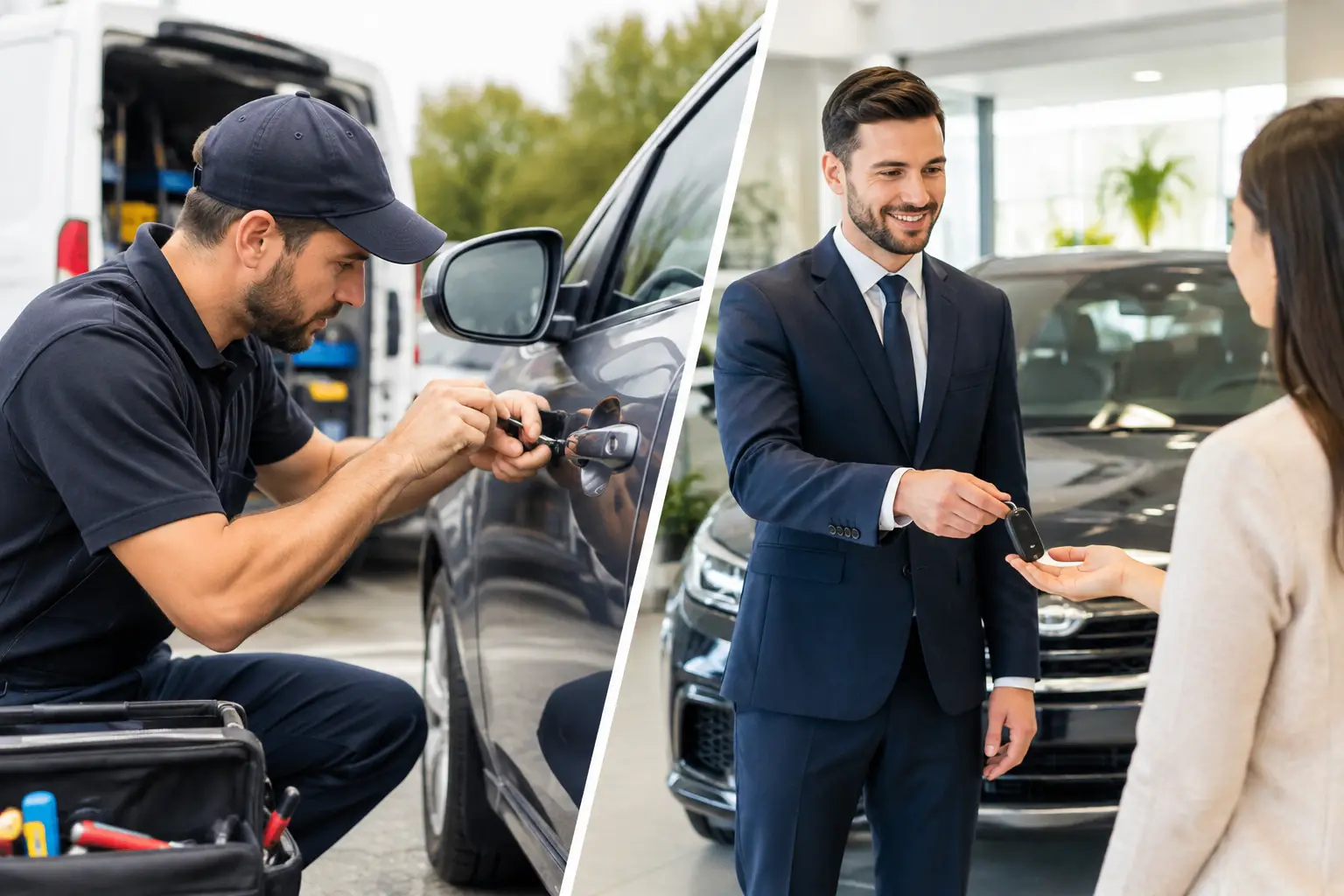
Mobile Locksmith Versus Dealership: Which One?
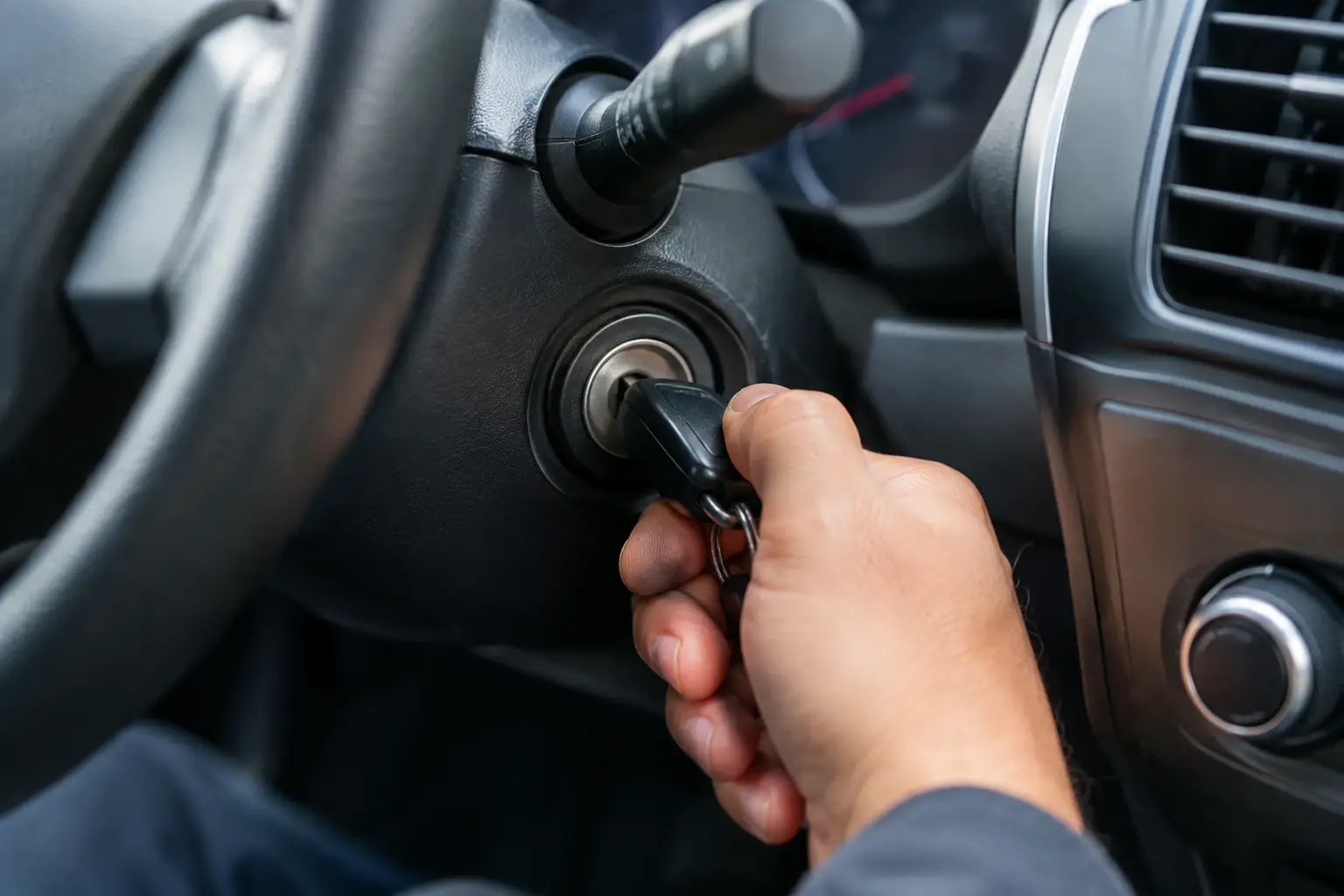
A lost key in a grocery store parking lot, a fob that stops working at a job site, or a key broken in the ignition creates one immediate question: who can get the vehicle moving again? In the mobile locksmith versus dealership decision, the better choice usually comes down to urgency, the vehicle’s key system, and whether the repair can be completed where the vehicle sits.
For many drivers, a dealership feels like the default because it represents the vehicle manufacturer. That can be the right route for certain warranty, recall, or highly specialized programming issues. But a qualified mobile automotive locksmith can often provide faster on-site help for lockouts, replacement keys, key fobs, transponder programming, and ignition problems.
Mobile Locksmith Versus Dealership: The Main Difference
The dealership model is location-based. In most cases, you bring the vehicle to the service department, prove ownership, order or purchase the key, and wait for programming or repair. If the car cannot be driven because every key is missing or the ignition will not turn, that may also mean arranging a tow.
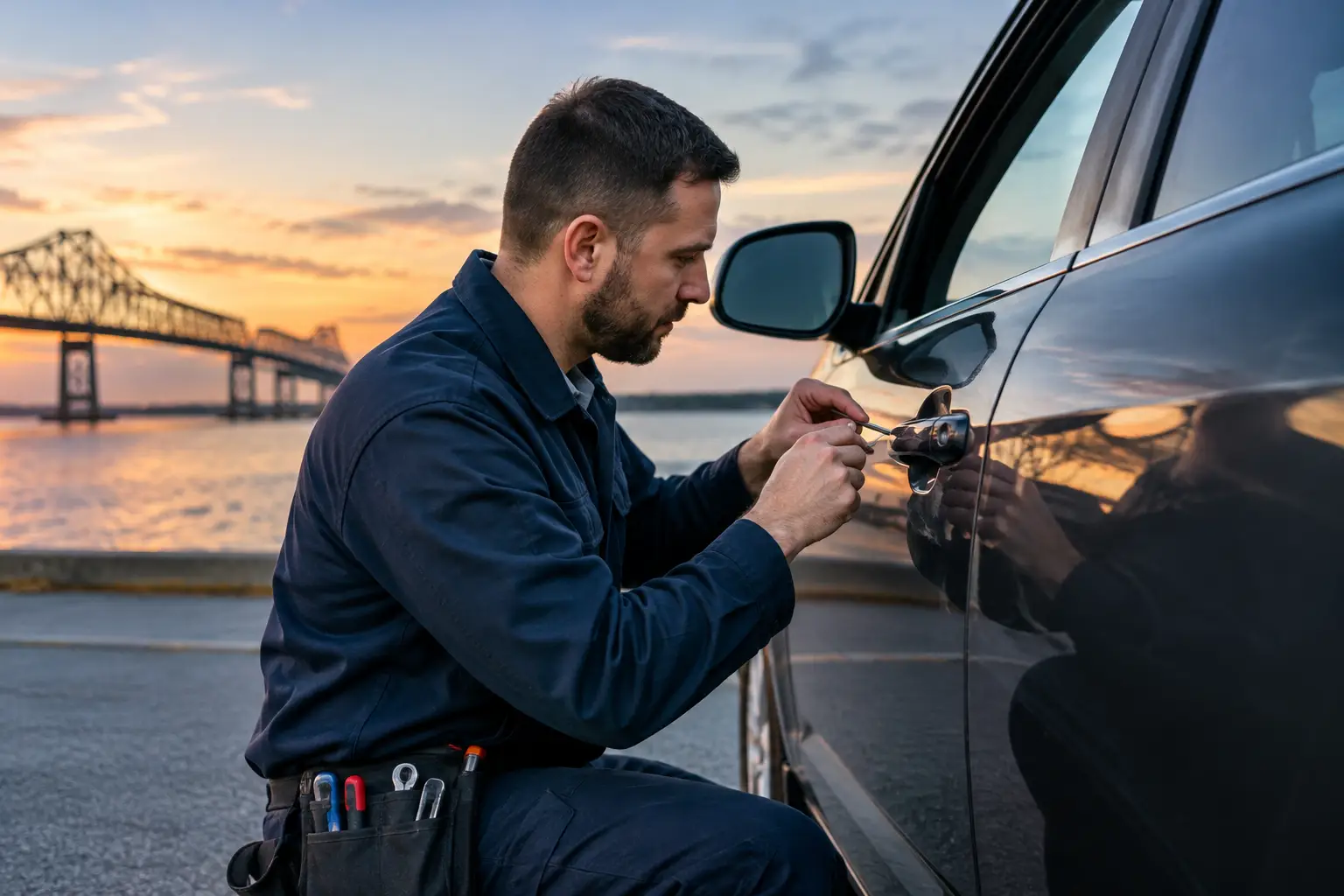
A mobile locksmith comes to the vehicle. That matters when the problem is preventing the vehicle from moving in the first place. A properly equipped automotive locksmith can assess the lock, key, fob, ignition, and basic programming needs at the roadside, at home, in a workplace parking lot, or wherever the vehicle is safely parked.
Neither option is automatically best. A dealership has direct manufacturer support and may be necessary for a model-specific issue. A mobile locksmith is often built for the urgent, practical problem: restoring access and getting a driver back on the road without adding transport to the process.
When a Mobile Locksmith Is Usually the Better Call
A mobile locksmith is often the practical choice when time and location are the biggest problems. If the keys are locked inside the vehicle, the key is lost, the remote fob is damaged, or the key will not operate the ignition, waiting for dealership hours and moving the vehicle can add unnecessary delay.
You are stranded or cannot move the vehicle
If the vehicle is parked at an apartment, office, highway shoulder, store, or truck stop, on-site service can eliminate the need to tow it solely for key service. This is particularly useful after hours, on weekends, or during a travel delay. The first priority is safely restoring access or starting capability, not transporting a disabled vehicle across town.
For a lockout, the job may be straightforward. For a lost key, the locksmith may be able to create and program a replacement at the vehicle, depending on the make, model, and year. Ask before dispatching whether the provider handles your specific vehicle and key type.
You need a replacement quickly
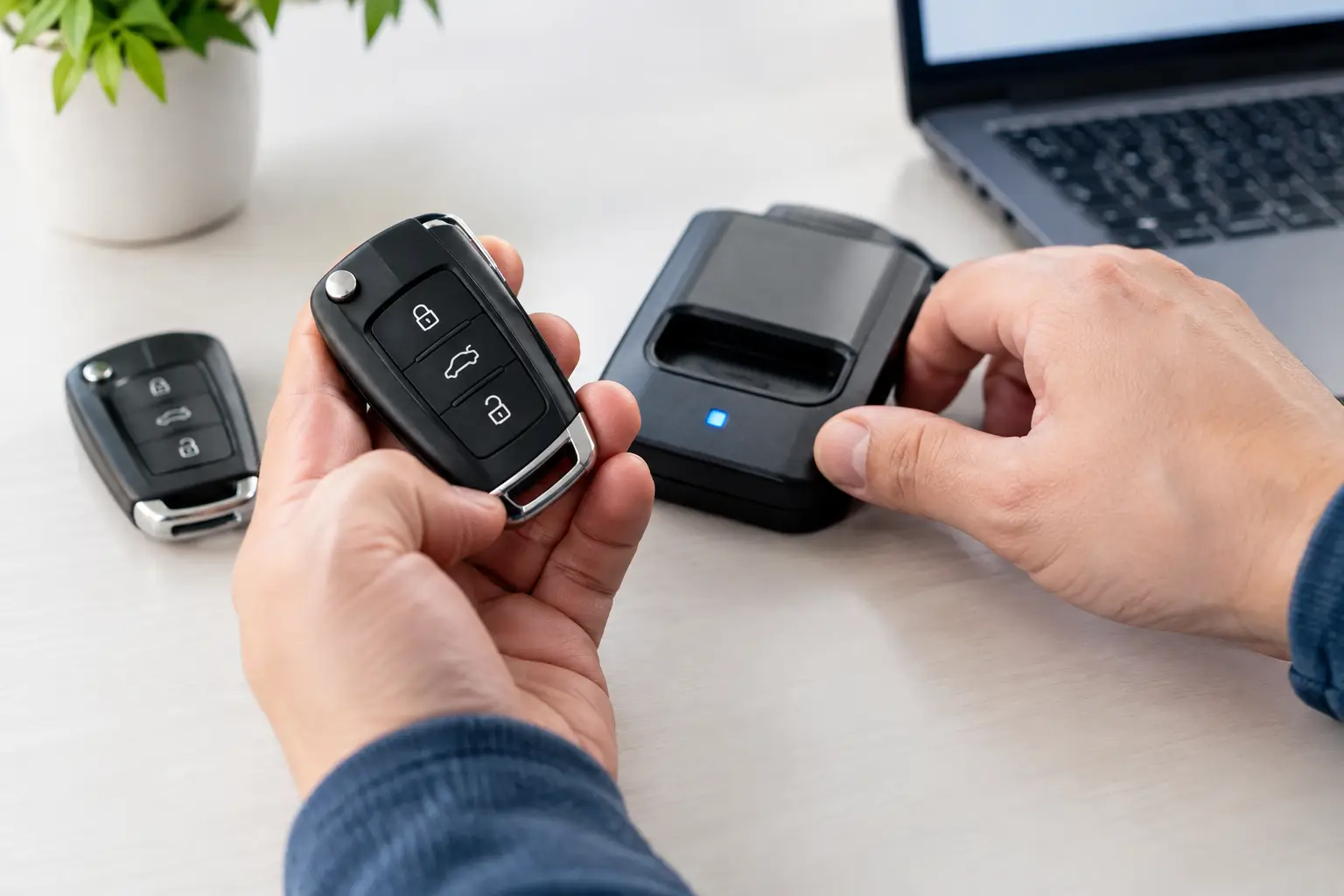
Dealerships may need to order a key or schedule programming around service-bay availability. A mobile locksmith may carry common key blanks, remotes, transponder chips, and programming equipment. That can shorten the gap between losing a key and having a working replacement.
Availability depends on the vehicle. Late-model vehicles, luxury models, and certain European imports may require parts or programming procedures that are less common. A professional locksmith should explain that upfront instead of promising a same-day solution without checking the vehicle details.
You want to avoid separate towing costs
A dealership may be economical if the car is already there for service. If it is disabled somewhere else, the calculation changes. Towing, dealership wait times, and transportation while the vehicle is unavailable can make a simple key issue more expensive and disruptive than expected.
Mobile service has a dispatch cost, but it can remove the need for a tow in many situations. The best comparison is the total cost to return the vehicle to service, not just the price of the key itself.
When the Dealership May Be the Right Choice
A dealership is not the wrong answer. It may be the stronger option when the issue involves manufacturer coverage, a recall, a specific campaign, or an electronic fault that goes beyond the key and immobilizer system.
If a new vehicle is still under warranty, check whether key replacement or programming is covered. Many lost-key situations are not covered, but some electronic failures may be. A dealership can also access manufacturer technical bulletins and original parts for systems that require brand-specific diagnosis.
Some vehicles use highly restricted keys, advanced digital credentials, or programming processes that require dealership authorization. In those cases, a mobile locksmith may still be able to help with entry, towing coordination, or a temporary solution, but the final repair may need the dealer.
A dealer is also worth considering when you are not under immediate pressure, have a spare way to get around, and want original branded components for a newer vehicle. The trade-off is usually convenience and time, especially if the vehicle needs to be transported there.
Cost: Compare the Whole Job, Not One Line Item
Drivers often ask which option costs less. There is no honest flat answer because prices depend on the vehicle, key type, programming requirements, location, and time of service.
A basic metal key costs far less than a proximity fob with a transponder chip. A key that only needs cutting is different from a key that must be programmed to communicate with the vehicle’s anti-theft system. If all working keys are gone, the process can take longer than duplicating an existing key.
When comparing quotes, make sure both providers are quoting the same job. Ask whether the estimate includes the service call, key blank or fob, cutting, programming, taxes, and any additional work required if the ignition or lock is damaged. If a dealership requires towing, add that cost before deciding.
For businesses, cost also includes downtime. An owner-operator missing a delivery window or a fleet vehicle sitting at a customer site has a larger problem than the replacement key price. Fast on-site assessment can be more valuable than the lowest initial quote.
Security and Proof of Ownership Matter
A legitimate automotive locksmith should verify that you have authority to access the vehicle. Be ready to show a driver’s license and vehicle registration, title, insurance documentation, or other appropriate proof of ownership. If documents are inside the locked vehicle, explain that before service begins.
This process protects vehicle owners. Be cautious with anyone willing to make a key or bypass vehicle security without asking for documentation. Clear identification, a written estimate, and an explanation of the planned work are reasonable expectations.
It is also smart to ask what happens to old keys after a replacement. On many vehicles, a locksmith or dealership can remove lost keys from the vehicle’s memory during programming so they no longer start the car. That is especially important if the key was stolen rather than simply misplaced.
What to Have Ready Before You Call
The call goes faster when you can provide the vehicle year, make, model, trim if known, and your exact location. Mention whether you have a working key, whether the key is locked inside, whether the key is broken, and whether the vehicle uses a traditional key, remote fob, push-button start, or key card.
Describe the symptom plainly. “The fob will not unlock the doors” is different from “the car unlocks but will not start.” The first could be a battery or remote issue. The second could involve programming, the vehicle battery, the immobilizer, or another mechanical problem.
For Hammond-area drivers dealing with an urgent lockout or key-access problem, Hopper Roadside can provide mobile roadside and automotive locksmith support where the vehicle is located. Commercial operators should also state whether the vehicle is a passenger vehicle, work truck, or commercial unit so the right response can be arranged.
If you have a spare key available, secure it before the next emergency. If you do not, address a failing fob, damaged key shell, or intermittent ignition before it becomes a roadside problem. A small key issue is easier to handle when the vehicle is parked safely and your schedule is still your own.