

Truck Mobile Diagnostics: What the Codes Tell You
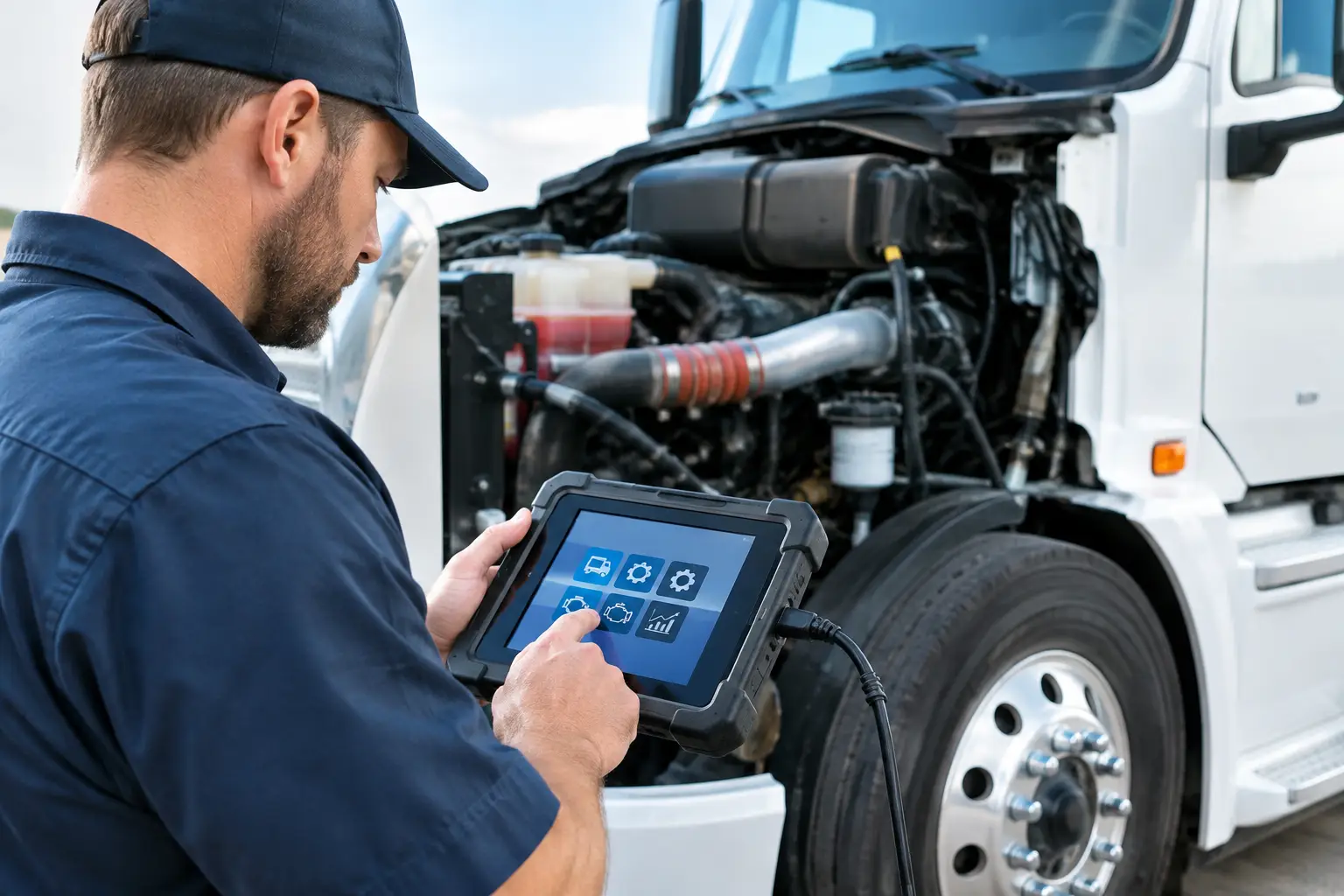
A warning light on a commercial truck does not always mean the same thing. A check engine light, loss of power, no-start condition, or aftertreatment warning can come from a loose connection, a sensor failure, a fuel issue, or a problem that should keep the truck parked. Truck mobile diagnostics bring the initial testing to the truck, so the driver or fleet can get useful answers without guessing.
For an owner-operator, every hour off the road affects the next load. For a fleet manager, one disabled unit can disrupt a delivery schedule, driver hours, and customer commitments. The goal of mobile diagnostics is not to promise that every problem can be repaired roadside. The goal is to identify what the truck is reporting, inspect the likely causes, and make a practical decision about the next move.
What Truck Mobile Diagnostics Includes
Mobile diagnostic work starts with a scan of the truck's electronic systems. Modern commercial trucks monitor engine performance, emissions components, transmission behavior, electrical circuits, and other operating conditions. When a fault occurs, the control module may store a diagnostic trouble code, often called a fault code.
A code is a starting point, not a complete repair answer. For example, a code related to low voltage may point to weak batteries, corroded terminals, damaged cables, a charging issue, or a connection problem. Replacing the first part mentioned by a code description can waste time and money if the real cause has not been checked.
A proper mobile visit combines electronic scanning with a hands-on inspection. That may include checking battery condition, cables and grounds, fuses, visible wiring damage, fluid levels, air system concerns, leaks, and components connected to the reported fault. The technician also needs to know what happened before the problem began: whether the truck shut down while driving, failed to start after a stop, lost power under load, or displayed a warning after a recent repair.
When a Truck Needs Diagnostics Before Repair
Some roadside problems are obvious. A damaged air line, flat tire, dead battery, or broken belt may be visible right away. Others need diagnostic testing because the symptom alone does not identify the failed component.
A truck that cranks but will not start may have a fuel delivery issue, an electrical fault, a sensor problem, or a communication issue between modules. A truck that starts but will not build speed may be in a derate condition caused by an engine or emissions-related fault. A dash full of warning lights can be caused by a serious system failure, but it can also result from low system voltage or a poor connection.
Diagnostics are especially useful when the truck is still movable but not operating normally. Continuing to drive may turn a manageable repair into a larger breakdown. On the other hand, immediately calling for a tow or shop repair without checking the fault can create unnecessary expense. The right choice depends on the warning, the truck's condition, the load, and whether the issue affects safe operation.
Signs That Should Not Be Ignored
A driver should stop and assess the situation when there is active overheating, low oil pressure, a major coolant or fuel leak, brake concerns, severe loss of power in traffic, smoke, burning smells, or unusual engine noise. These conditions can create a safety risk or cause major damage if the truck keeps moving.
Other issues may allow a controlled inspection at the roadside or parking location. A no-start after a rest break, intermittent electrical warnings, a check engine light without obvious drivability problems, or repeated battery trouble are common examples. The truck still needs attention, but a diagnostic check may clarify whether the repair can be handled on-site or requires a shop.
Why Fault Codes Need Context
Fault codes are valuable because they narrow the search. They do not always identify the part that failed. A code may indicate that a sensor signal is outside its expected range, but the sensor itself may be working correctly while a wire, connector, ground, or related mechanical condition is causing the bad reading.
Freeze-frame information and active versus inactive codes can also matter. An active code is currently being detected by the truck. An inactive or stored code may show an issue that happened earlier and may or may not still be present. A technician can use that information with the driver's report and visual inspection to determine where to focus.
This is why clearing codes without finding the cause is rarely a solution. The warning may go away temporarily, but it can return at the worst possible time - during a run, at a customer location, or far from a safe place to stop. Clear documentation of the codes, symptoms, and checks performed gives the driver or fleet a better repair path if the truck must go to a shop.
What to Have Ready When You Call
A quick, accurate service call starts with clear information. The truck's location matters, along with whether it is in a safe parking area, on a shoulder, at a dock, or blocking traffic. Let the dispatcher know if the truck is loaded, if it is pulling a trailer, and whether there are any safety concerns such as leaking fluid or smoke.
It also helps to provide the truck's year, make, model, engine information if available, and the message or warning light shown on the dash. If the driver has access to fault codes, share them, but do not rely on a code search alone to diagnose the truck. Explain whether the truck starts, cranks, runs rough, loses power, or has been shut down.
For fleets, the most useful details often come from the driver who experienced the failure. Ask what changed immediately before the warning appeared. Was the truck idling for a long period? Did the problem start after fueling, after a battery replacement, during rain, under a heavy pull, or after a recent repair? Those details can save diagnostic time.
Roadside Repair or Shop Repair?
After the initial diagnostic process, the decision is usually straightforward: repair the truck where it sits, make a limited repair that allows it to move safely to a shop, or keep it out of service until a larger repair can be completed.
Roadside repair can make sense for accessible electrical connections, batteries, cables, certain air system problems, minor wiring issues, and other repairs that can be completed safely with the right parts and tools. A shop is often the better choice when the truck needs extensive disassembly, specialized equipment, emissions-system repair, internal engine work, or a repair that cannot be verified safely at the roadside.
The cheapest option is not always the best option. Sending a truck back on the road with an unresolved intermittent fault can cost more than arranging the correct repair now. At the same time, not every warning requires a major shop visit. Mobile diagnostics help separate urgent mechanical failures from issues that have a practical on-site fix.
Reduce Downtime Before the Next Breakdown
Diagnostics are most effective when paired with basic preventive attention. Battery terminals, grounds, wiring harnesses, fluid levels, belts, hoses, and air lines deserve regular checks, particularly on trucks that run long routes, sit for extended periods, or work in demanding conditions. Small electrical and connection issues often become roadside events because they are easy to overlook during normal operation.
Drivers should also report warning lights early rather than waiting for the next scheduled service. A truck that is still running may provide more diagnostic information than one that has already shut down. Early reporting gives a fleet more options for scheduling repair instead of reacting to a missed delivery.
When a commercial truck stops in or around Hammond, Louisiana, Hopper Roadside can provide mobile support for drivers who need practical help at the truck's location. The right response starts with finding out what the truck is telling you, checking the condition in front of you, and making the repair decision that protects the driver, equipment, and schedule.