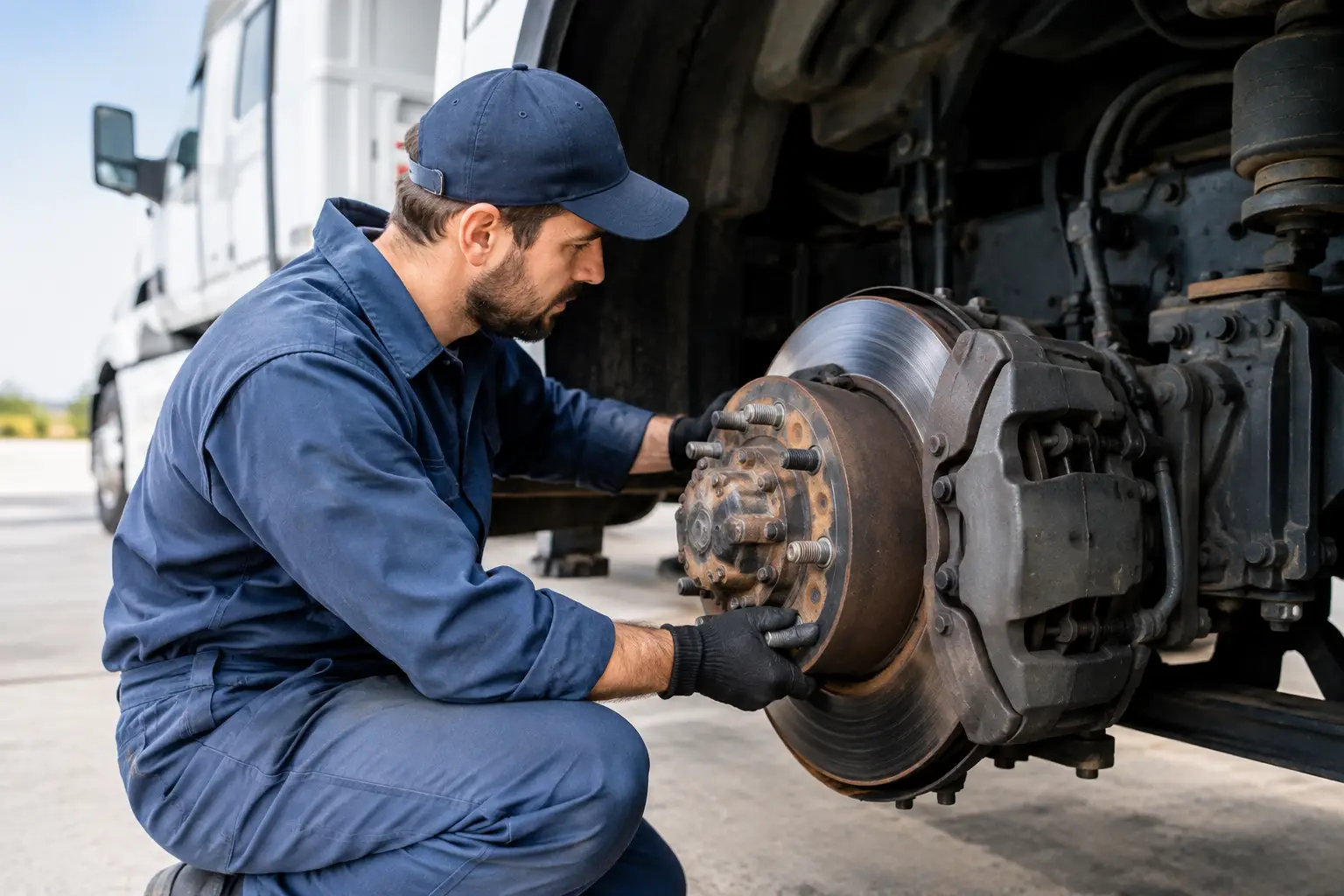

Truck Roadside Repair Case Study That Saves Loads

A truck stopped with an air-pressure warning is not a problem that can wait until morning. In this truck roadside repair case study, a time-sensitive equipment issue is handled at the roadside with one goal: get the driver safe, determine whether a field repair is appropriate, and reduce unnecessary load and fleet downtime.
The scenario below is representative of the calls commercial drivers and fleet managers face in Louisiana. Every breakdown is different, and the right answer is not always a roadside repair. A clear diagnosis matters more than forcing a truck back into service.
The Call: A Loaded Tractor Loses Air Pressure
At 8:40 p.m., a driver hauling a loaded dry van pulls onto a safe shoulder after the low-air warning activates. The truck is still running, but air pressure is dropping faster than the compressor can recover. The driver can hear a steady release of air beneath the tractor.
The dispatcher needs more than a request for "truck repair." The first questions establish the risk and help send the right mobile support: Is the driver in a safe location? Is the trailer loaded? Are the brakes holding? Is the truck leaking air continuously? Has the driver seen damaged hoses, loose fittings, or warning lights?
Those details matter because an air-system issue can range from a serviceable external line problem to a brake-related defect that should not be repaired on the shoulder. The driver is told not to continue driving, not to crawl under an unsecured vehicle, and to keep the tractor-trailer visible to traffic while help is on the way.
On-Site Assessment Comes Before the Repair
A mobile technician arrives with tools, common air-system fittings, hose materials, lighting, and diagnostic equipment. Before touching the truck, the technician confirms the vehicle is positioned as safely as conditions allow and checks for obvious hazards around the work area.
The inspection begins with the reported symptom, not a guess. The technician builds air pressure, listens for the source of the leak, and examines accessible lines and connections. In this case, the problem is a damaged air line near a fitting. Road debris and vibration had worn through the line enough to create a significant leak.
That is a repairable finding, but only after checking the surrounding components. A replacement line alone does not solve the problem if a bracket is loose, a fitting is cracked, or the hose will rub against the same point again once the truck moves. The technician inspects the routing, connection points, and nearby hardware before deciding the repair can be completed on site.
Why the Roadside Repair Was the Right Option
The truck did not need a tow simply because it had an air leak. The failure was accessible, the damaged section could be replaced with appropriate materials, and the technician could test the system after the work was completed.
That decision depends on the condition of the truck. A roadside repair would not be the right call if the issue involved brake chambers, major damage to the air system, a compromised suspension component, unsafe traffic conditions, or a defect that could not be fully tested at the scene. In those situations, arranging a tow or directing the truck to a repair facility protects the driver and everyone sharing the road.
The trade-off is simple: roadside work can reduce downtime when the failure is contained and repairable. It should never become a shortcut around a safety-critical repair.
The Repair: Fix the Leak and Verify the System
The technician isolates the damaged section, replaces the affected line and fitting as needed, and secures the routing to prevent future rubbing. The repair is kept focused on the actual failure rather than adding unnecessary work at the roadside.
Once the replacement is in place, the system is brought back to operating pressure. The technician checks for continued leakage, verifies that pressure builds correctly, and confirms the warning condition has cleared. Brake response and air retention are checked before the driver is cleared to continue.
This final verification is where a quick fix becomes a usable repair. A truck that appears fine for two minutes but loses pressure again five miles down the road has not been properly restored to service. The driver needs a clear answer: proceed, proceed with a follow-up repair scheduled, or remain out of service.
In this case, the pressure holds and no additional damage is found. The driver documents the repair for the fleet and resumes the route without waiting for a tow, moving the trailer to a shop, transferring freight, or missing the next delivery window.
What This Truck Roadside Repair Case Study Shows
For an owner-operator, downtime can mean a missed appointment, lost driving hours, and a difficult conversation with a customer. For a fleet, one disabled truck can affect dispatching, delivery commitments, labor planning, and equipment availability. The financial impact is rarely limited to the repair invoice.
A properly handled truck roadside repair call reduces that impact in three ways. It gets the driver help at the vehicle instead of requiring them to find a repair facility. It identifies whether the truck can be repaired safely where it sits. And it gives the driver or fleet manager a documented next step rather than uncertainty.
The response also protects freight. A loaded trailer may contain scheduled deliveries, temperature-sensitive products, or freight that requires extra handling if the tractor cannot move. Restoring the truck safely can prevent a chain of avoidable delays. But if the defect is serious, protecting the load may require a tow, trailer transfer, or alternate equipment. The best service decision is based on the truck's condition, not the pressure of the schedule.
Information That Speeds Up Commercial Truck Service
The call goes faster when the driver or dispatcher can provide the truck's location, unit number, basic issue, and whether the vehicle is loaded. Photos of visible damage can help when it is safe to take them, but they are not required to request help.
Drivers should also report warning lights, noises, fluid leaks, smoke, tire damage, or changes in steering and braking. A small detail can change the repair plan. For example, an air leak at an accessible line is different from air loss paired with brake trouble. A no-start condition after a long stop is different from a no-start after visible battery-cable damage.
Fleet managers can help by keeping unit information, service history, and driver contact details readily available. That does not eliminate breakdowns, but it shortens the time between a call for help and an informed repair decision.
When a Roadside Repair Should Stop
The most capable mobile response includes knowing when not to proceed. Roadside work may be limited by traffic exposure, weather, poor visibility, missing parts, extensive damage, or a repair that requires shop equipment. A technician may recommend a tow or a controlled move to a facility when the truck cannot be safely returned to service at the scene.
That is not a failed roadside call. It is a correct assessment. The immediate value may be diagnosing the problem, helping secure the vehicle, and giving the driver and fleet a practical recovery plan instead of sending them forward with an unreliable truck.
For commercial operators around Hammond and across Louisiana, the right response starts with a direct call for commercial truck repair when the truck first shows a serious symptom. Hopper Roadside can assess the situation where the truck is stopped and help determine whether a safe roadside repair is possible or the next recovery step is needed.
When a warning light comes on or a system starts failing, the best time to act is before a manageable defect becomes a roadside shutdown in a less safe location.